What Is Composite Geogrid and Why Is It Growing in Demand?
Understanding what is composite geogrid is essential for engineers and contractors who want to strengthen road bases, improve foundation stability, and reduce long-term maintenance costs. Over the past few years, this product has become one of the fastest-growing reinforcement materials in civil engineering. Its combination of tensile strength, stiffness, and bonding ability makes it a standout choice for demanding applications.
So, what exactly makes composite geogrid so effective—and why are more projects turning to it? Let’s break it down clearly and practically.
What Is Composite Geogrid?
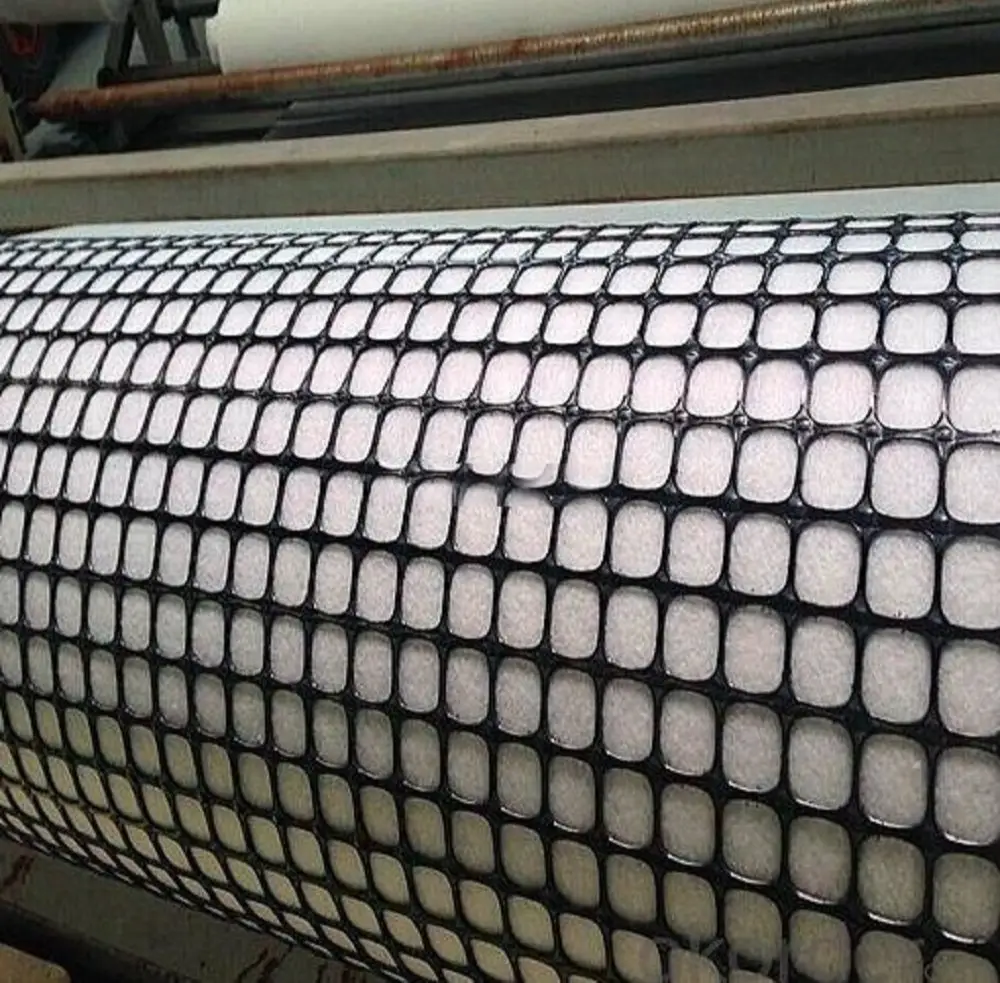
To put it in the simplest terms, what is composite geogrid can be explained as a reinforcement material that combines two components: a geogrid and a geotextile. The geogrid provides tensile strength, while the geotextile delivers separation, filtration, and improved bonding with soil or aggregates.
This hybrid structure solves multiple engineering problems at the same time, which is something traditional single-layer geogrids can’t always do. It is typically used in base reinforcement, road rehabilitation, soft soil improvement, and areas requiring both strength and filtration.
Typical Structure of a Composite Geogrid
Most composite geogrids feature:
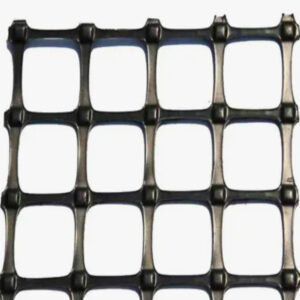
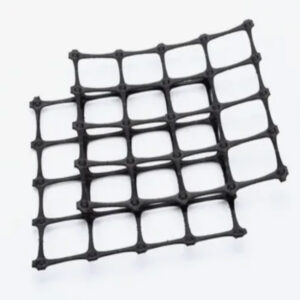
- A biaxial or triaxial geogrid (usually PP or PET)
- A nonwoven geotextile bonded to one side
- Thermal bonding or coating technology that locks both layers together
The geogrid handles tensile reinforcement and load distribution, while the geotextile prevents soil intrusion and enhances stability. When combined, they form a multifunctional reinforcement layer with impressive overall performance.
Why Composite Geogrid Is Becoming More Popular
The rising demand for composite geogrids is no coincidence. Engineers are turning to this solution because modern infrastructure requires stronger, longer-lasting, and more cost-effective materials. Roads, railways, foundations, and industrial yards face heavier traffic loads than ever before. Composite geogrids help projects meet these stricter performance expectations.
Below are the main reasons behind the rapid growth.
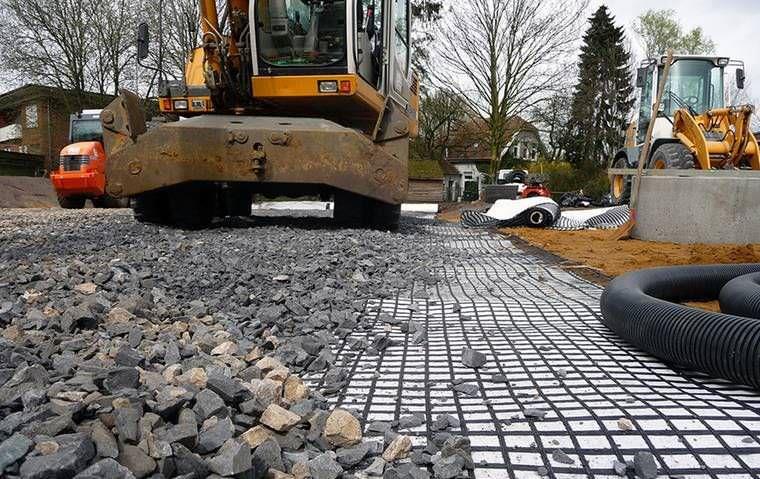
1. Stronger Reinforcement on Weak Subgrades
Soft soils like clay, silt, and peat are notorious for causing rutting and settlement. A standard geogrid improves stability, but a composite geogrid performs even better because the geotextile prevents mixing between different soil layers.
Why this matters:
- The subgrade remains stable under heavy loads
- Soil migration is blocked
- The base structure keeps its shape for a longer time
This dual-layer effect significantly boosts overall reinforcement strength.
2. Better Load Distribution and Reduced Rutting
Engineers often choose composite geogrids for road construction because they spread loads more evenly across the pavement structure. The geogrid interlocks with aggregates, creating a rigid layer, while the geotextile keeps the base from deforming.
Benefits include:
- Less cracking in asphalt
- Reduced rutting under traffic
- Longer pavement service life
- Lower maintenance costs
When heavy trucks or construction machines drive over the road, the composite geogrid absorbs and disperses the load, protecting the layers beneath.
3. Improved Separation and Filtration
To understand what is composite geogrid, you also need to understand one of its key features: separation. The geotextile layer prevents fine soil particles from moving upward into the base material. Without this separation, the soil structure weakens over time, leading to deformation and instability.
What the geotextile does:
- Stops soil contamination
- Maintains drainage
- Prevents clogging
- Keeps aggregates clean and effective
This combination makes the composite geogrid a versatile choice for long-term soil stabilization.
4. Enhanced Efficiency and Cost Reduction
Because composite geogrids deliver multiple functions in one product, they reduce the need for additional construction materials. That means:
- Less aggregate needed
- Reduced excavation
- Faster installation
- Lower overall project costs
In remote locations or regions with expensive aggregates, composite geogrids can significantly lower the budget.
5. Excellent Performance on High-Traffic Infrastructure
Composite geogrids are especially effective for infrastructure that faces heavy dynamic loads. Their ability to control movement, maintain layer integrity, and distribute stress makes them ideal for:
- Highways
- Railroads
- Container yards
- Industrial roads
- Airports
- Mining haul roads
Wherever traffic is heavy and uninterrupted support is needed, composite geogrids have proven their reliability.
6. Better Bonding With Asphalt and Base Layers
The geotextile layer creates strong friction and bonding between the soil and the geogrid, which improves shear resistance. This bonding effect helps maintain the shape of the reinforced layer even after temperature changes or repeated traffic cycles.
In short:
The geogrid strengthens, the geotextile stabilizes, and both layers work as one unified system.
Common Applications of Composite Geogrid
Now that we’ve clarified what is composite geogrid, it’s helpful to understand where it is most commonly used.
1. Road Base and Subbase Reinforcement
Composite geogrids help prevent settlement and rutting in flexible and rigid pavements.
2. Railway Track Stabilization
They reduce ballast degradation and improve load distribution.
3. Soft Soil Improvement
Perfect for projects built on clay, silt, and peat.
4. Parking Lots and Industrial Platforms
These areas require strong reinforcement due to heavy dynamic loads.
5. Embankments Over Weak Soil
Composite geogrids help control settlement and slide risks.
6. Asphalt Reinforcement
The geotextile enhances bonding, while the geogrid controls cracking.
Types of Composite Geogrids
While the concept of what is composite geogrid remains consistent, the products differ based on structure and materials.
1. PP Biaxial Composite Geogrid
- Balanced strength in two directions
- Ideal for base reinforcement and separation
2. Triaxial Composite Geogrid
- Excellent load distribution in all directions
- Great for heavy traffic projects
3. PET Composite Geogrid
- High tensile strength
- Suitable for long-term retaining structures
4. Self-Adhesive Composite Geogrid
- Designed for asphalt overlays
- Enhances bonding with pavement
Each type serves a different engineering goal, but all share the same combined reinforcement benefits.
How Composite Geogrid Is Installed
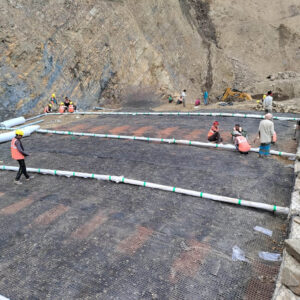
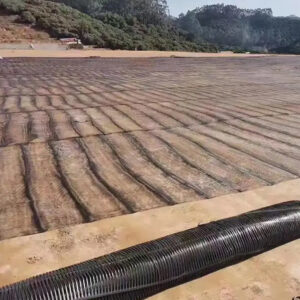
The installation method is straightforward and does not require specialized equipment.
Basic steps:
- Prepare and level the subgrade
- Roll out the composite geogrid with the geotextile side facing downward
- Overlap edges according to engineering requirements
- Anchor the material to prevent movement
- Place aggregate infill carefully
- Compact the layers
- Proceed with upper layers
The process is fast, efficient, and ideal for projects with tight timelines.
Why Composite Geogrid Is Growing in Demand
Government infrastructure projects and private construction companies are adopting composite geogrids at a rapid rate. Their multifunctional performance reduces failures, strengthens weak subgrades, and lowers long-term maintenance costs.
Key reasons for rising demand:
- Higher traffic loads worldwide
- Increasing need for reliable pavement systems
- Rising interest in cost-efficient construction methods
- More awareness of geosynthetics in engineering
- Strong performance in challenging soil conditions
In short, composite geogrids solve modern engineering challenges better than many traditional materials.
Conclusion
Now that you understand what is composite geogrid, it’s clear why it has become such a popular reinforcement material. Its combination of a geogrid and geotextile creates a powerful system that improves load distribution, prevents soil mixing, strengthens weak ground, and extends the life of pavements and foundations.
Whether you’re building roads, railways, platforms, or embankments, composite geogrids offer a smart, efficient, and cost-effective solution for long-term stability. Contact us now to get a quotation.