If you are involved in civil engineering, infrastructure projects, or environmental protection works, you may have heard this question more and more often: what is cement blanket? Over the last few years, cement blanket has gained global attention as a fast, efficient, and highly durable concrete solution that simplifies traditional construction methods.
Unlike conventional poured concrete, cement blanket comes in a flexible, fabric-based form that hardens after hydration. This innovation saves time, reduces labor costs, and delivers reliable performance even in challenging environments. Understanding what is cement blanket and where it is best used can help engineers and contractors make smarter project decisions.
What Is Cement Blanket?
So, what is cement blanket exactly?
Cement blanket, also known as concrete canvas, is a rollable, flexible cement-impregnated fabric that hardens when hydrated. It consists of three main layers:
- A top fiber surface that allows water penetration
- A dry concrete layer embedded in the fabric
- A waterproof backing membrane to prevent moisture loss and protect the subgrade
Once the material is laid out and sprayed with water, a chemical hydration reaction occurs. Within hours, the blanket begins to set, and within 24 hours, it forms a durable, thin concrete layer.
In simple terms, what is cement blanket can be described as “concrete in a roll” that requires no mixing, no formwork, and minimal equipment.
How Cement Blanket Works
Understanding what is cement blanket also means understanding how it functions on-site.
The working principle is straightforward:
- The cement blanket is unrolled onto the prepared surface
- It is fixed in place using anchors or ground pins
- Water is applied evenly to activate hydration
- The material hardens into a strong concrete layer
Because the cement is already uniformly distributed inside the fabric, the final hardened layer has consistent strength and thickness. This eliminates common problems associated with traditional concrete, such as uneven curing or material segregation.
Key Advantages of Cement Blanket
Engineers increasingly choose cement blanket because it delivers multiple benefits in a single product. Once you clearly understand what is cement blanket, these advantages become obvious.
1. Rapid Installation
Cement blanket can be installed up to ten times faster than conventional concrete. No mixing plants, no formwork, and no heavy equipment are required.
2. Reduced Labor Costs
Fewer workers are needed on-site, making it ideal for remote areas or emergency projects.
3. Consistent Quality
Because the concrete is factory-controlled, strength and thickness are uniform across the entire surface.
4. High Durability
Once cured, cement blanket offers excellent resistance to erosion, weathering, fire, and chemicals.
5. Low Environmental Impact
It reduces material waste, minimizes site disturbance, and often requires less excavation.
These benefits explain why what is cement blanket is becoming a common question in modern construction planning.
Where Is Cement Blanket Used?
Now that we understand what is cement blanket, let’s explore where it is most commonly applied. Its versatility makes it suitable for a wide range of civil and environmental engineering projects.
1. Slope Protection and Erosion Control
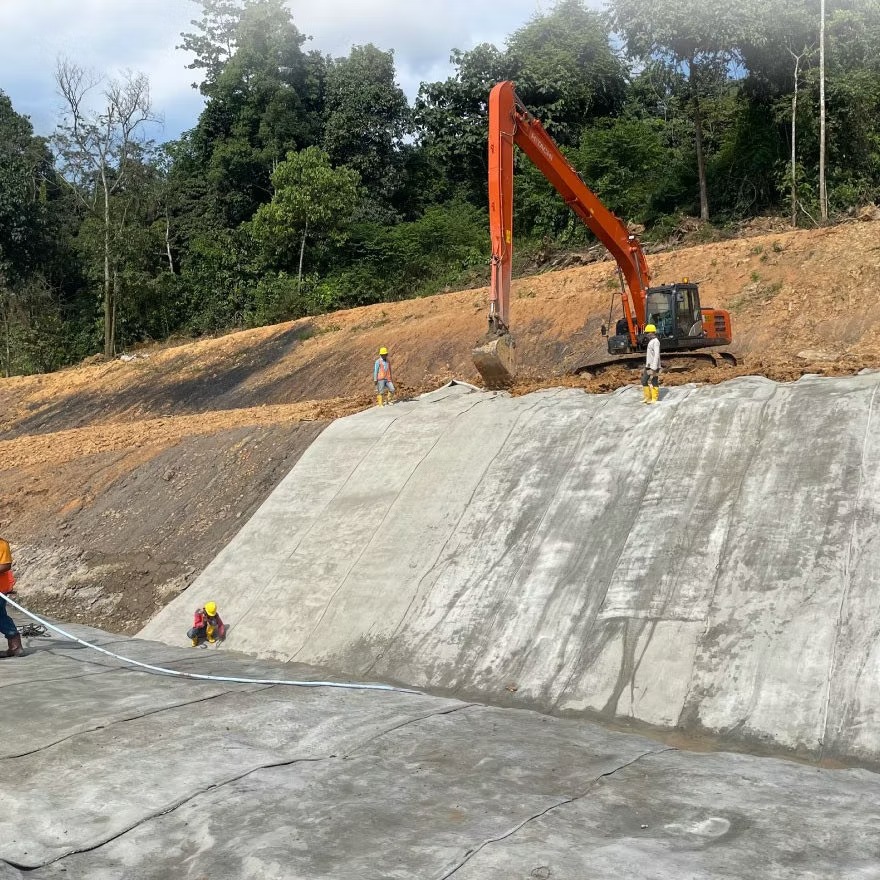
One of the most popular uses of cement blanket is slope stabilization. When installed on embankments, hillsides, or cut slopes, it forms a protective concrete layer that prevents soil erosion caused by rainfall or runoff.
Typical applications include:
- Highway and railway slopes
- Landfill embankments
- Mining site stabilization
Because it conforms easily to uneven surfaces, cement blanket is especially effective on complex terrain.
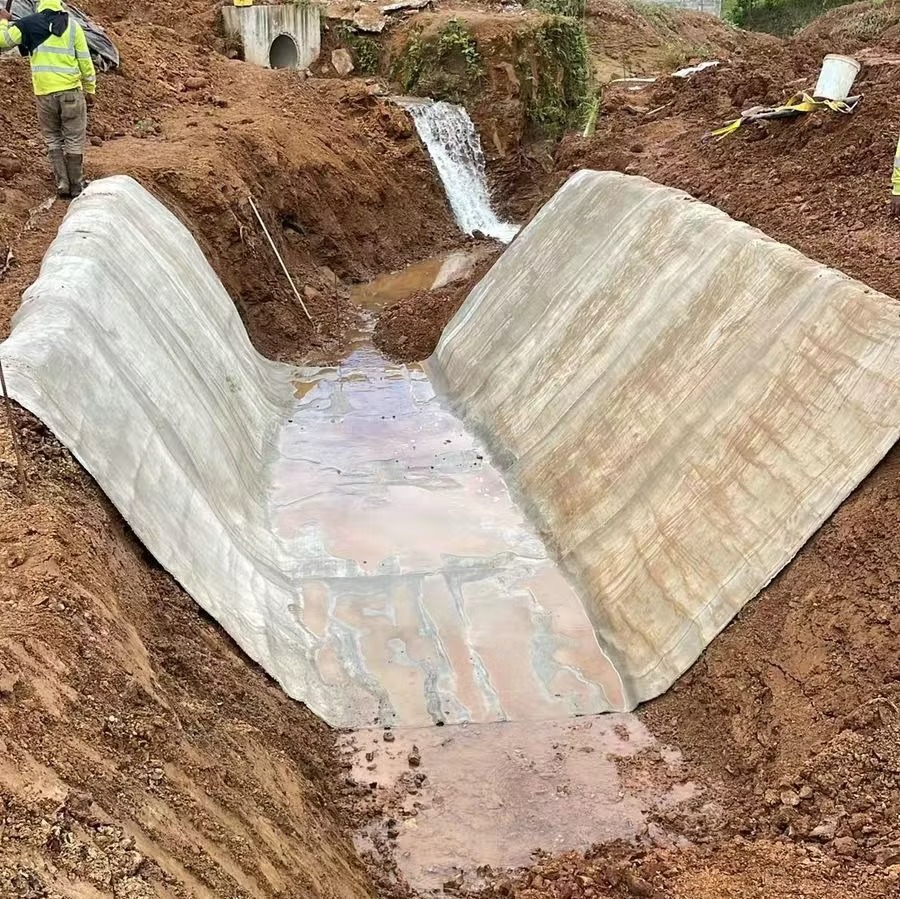
2. Drainage Channels and Ditches
Cement blanket is widely used for lining drainage channels, canals, and ditches. Compared with traditional concrete, it offers faster construction and better crack control.
Key benefits in drainage projects include:
- Smooth water flow
- Reduced sediment buildup
- Long-term structural stability
This application alone has driven significant interest in what is cement blanket among water management engineers.
3. Culvert and Pipe Protection
Cement blanket provides excellent protection for culverts and exposed pipelines. It shields infrastructure from erosion, impact damage, and environmental exposure.
Common uses:
- Culvert inlets and outlets
- Pipe encasement
- Utility trench protection
4. Environmental Protection Projects
In environmental engineering, cement blanket is often used to protect sensitive areas while minimizing site disturbance.
Typical projects include:
- Riverbank protection
- Wetland restoration
- Contaminated soil isolation
Because installation is quick and clean, it reduces environmental disruption compared to traditional concrete methods.
5. Military and Emergency Applications
Another reason engineers frequently ask what is cement blanket is its role in emergency construction.
Cement blanket is used for:
- Rapid shelter construction
- Temporary roadways
- Flood control barriers
Its ability to be deployed quickly with minimal resources makes it ideal for disaster response and military operations.
6. Industrial and Mining Sites
In mining and industrial environments, cement blanket provides a durable surface for:
- Haul road lining
- Tailings channel protection
- Equipment access paths
Its abrasion resistance and long service life reduce maintenance costs significantly.
Why Engineers Prefer Cement Blanket Over Traditional Concrete
Understanding what is cement blanket also explains why it is often chosen instead of poured concrete.
Comparison Advantages:
- No need for concrete mixing
- No formwork required
- Faster curing time
- Lower transportation costs
- Reduced construction errors
In many projects, cement blanket delivers comparable performance at a fraction of the time and effort.
Installation Best Practices
Although cement blanket is easy to use, proper installation ensures optimal performance.
Key recommendations:
- Prepare a smooth, compacted subgrade
- Overlap adjacent sheets according to specifications
- Ensure uniform hydration
- Avoid movement during initial curing
Following these steps maximizes strength and service life.
Service Life and Durability
Once cured, cement blanket typically offers a design life of 50 years or more, depending on application and environmental conditions. It resists UV exposure, freeze-thaw cycles, and chemical attack, making it suitable for harsh climates.
This long-term performance is another reason what is cement blanket has become a frequent topic among infrastructure planners.
Conclusion
So, what is cement blanket and why is it used? It is a flexible, cement-impregnated fabric that transforms into durable concrete after hydration. Its speed, reliability, and versatility make it an ideal solution for slope protection, drainage, erosion control, and emergency construction.
For engineers and contractors seeking a modern alternative to traditional concrete, cement blanket offers a practical, cost-effective, and high-performance solution that continues to grow in global demand.
If you need help selecting specifications or matching cement blanket to a specific project, I can assist with technical recommendations tailored to your application. Contact us now to get a solution.