How UX Geogrid Wall Stability Improvements Enhance Retaining Wall and Slope Performance
Retaining walls, embankments, and steep slopes are essential components of transportation and landscape infrastructure. However, they are constantly challenged by lateral earth pressure, unstable subgrade conditions, groundwater infiltration, and long-term settlement risks.
To ensure safe and durable performance, engineers rely on geosynthetic reinforcement — particularly UX geogrids, also known as unidirectional geogrids. Their high tensile strength in one primary direction enables significant UX geogrid wall stability improvements by anchoring reinforced soil into a stable mass.
This technical guide explains why UX geogrids are the preferred reinforcement solution for engineered walls and slopes, focusing on interaction mechanisms, performance benefits, and design considerations.
1️⃣ What Is a UX Geogrid?
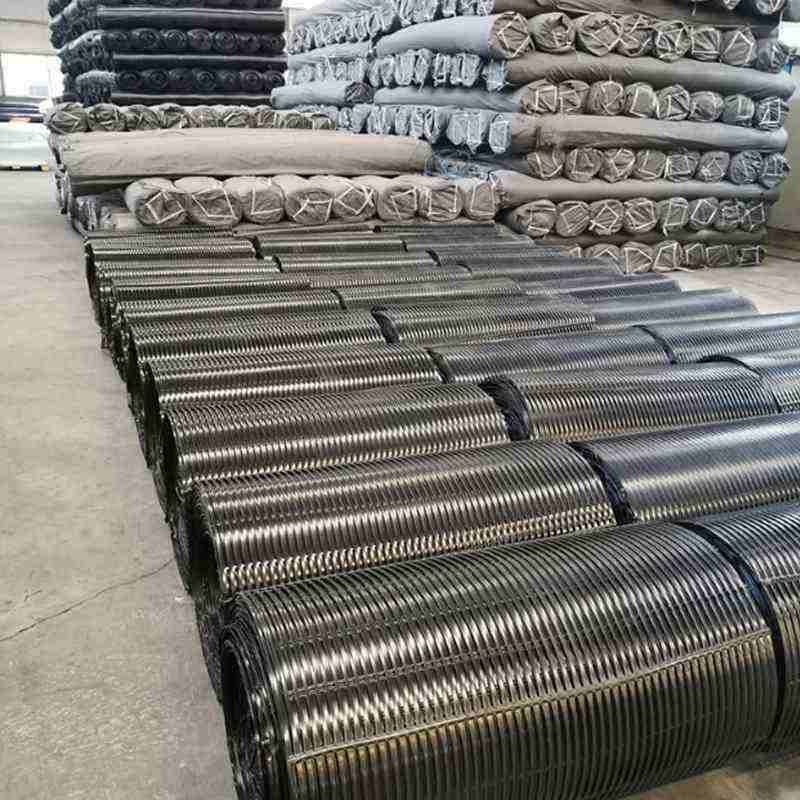
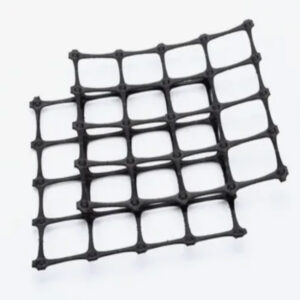
A UX geogrid is a unidirectional polymer reinforcement product manufactured from high-density polyethylene (HDPE) or polypropylene (PP) using extruding and drawing processes. Key characteristics include:
- Very high tensile strength in the machine direction (MD)
- Low creep deformation under long-term loads
- Robust rib structure and durable junctions
- Chemical resistance to UV, microorganisms, and corrosion
Why “Unidirectional” Matters
Retaining wall and slope forces act primarily outward — so tensile reinforcement must predominantly resist movement in one direction. UX geogrids are engineered specifically for this function.
2️⃣ How UX Geogrid Improves Wall Stability
UX geogrid reinforcement creates a reinforced soil mass that behaves like a stable gravity structure. Three major mechanisms contribute to UX geogrid wall stability:
✔ Soil–Geogrid Interface Friction
Geogrid ribs lock with backfill particles through:
- Mechanical interlock
- Frictional resistance
- Pullout anchorage force
This prevents soil from sliding outward.
✔ Tensile Strength Mobilization
As horizontal soil displacement occurs, geogrid tensile strength is mobilized to counteract:
- Lateral earth pressure
- Hydrostatic pressure forces
- Differential settlement
The grid stretches slightly, redistributing stress back into the soil.
✔ Composite Structural Behavior
The wall system acts as a single, stable composite mass, reducing:
- Facing displacement
- Shear failure and overturning risk
- Internal erosion and instability
This ensures long-term reinforcement reliability — even under heavy surcharge loads.
3️⃣ Engineering Advantages of UX Geogrid Reinforcement
| Key Performance Benefit | Contribution to Wall Stability |
|---|---|
| High tensile strength | Greater resistance to lateral forces |
| Low creep deformation | Maintains reinforcement capability over decades |
| Improved load distribution | Reduces pressure on facing elements |
| Efficient soil confinement | Prevents shear and sliding failures |
| Better seismic performance | Dissipates energy under dynamic loads |
| Corrosion-free | Suitable for harsh environments vs. steel reinforcement |
By integrating UX geogrids into retaining walls, engineers achieve structurally sound and cost-efficient systems.
4️⃣ Applications of UX Geogrids in Retaining Structures
UX geogrid reinforcement is widely used in:
Mechanically Stabilized Earth (MSE) Walls
- Highway and railway retaining structures
- Bridge abutments on piled or soft foundations
- Vertical and near-vertical gravity walls
Reinforced Slopes and Embankments
- Slope angle enhancement from 30° to 70+°
- Landslide remediation
- Cut-and-fill sidehill stabilization
Landscaping and Commercial Walls
- Garden retaining walls
- Building basement walls
- Waterfront structures
Wherever lateral stability is critical, UX geogrids deliver engineered reinforcement.
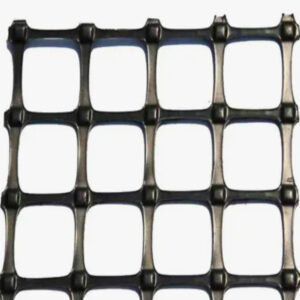
5️⃣ UX Geogrid vs. BX (Biaxial) Geogrid for Walls
| Feature | UX Geogrid | BX Geogrid |
|---|---|---|
| Tensile direction | One strong direction | Two moderate directions |
| Wall reinforcement suitability | ★★★★★ Best | ★★ Limited |
| Soil–grid interaction | Optimized for pullout resistance | General base reinforcement |
| Creep resistance | Excellent | Moderate |
| Cost efficiency in walls | Higher | Lower |
📌 Engineers should always select UX geogrids for retaining wall applications, not biaxial, due to required unidirectional strength.
6️⃣ Design Principles for UX Geogrid Wall Stability
To achieve maximum performance, design must consider:
Design Inputs
- Wall height & slope geometry
- Soil friction angle and cohesion
- Water table and drainage conditions
- External loads: surcharges, seismic, traffic
Structural Parameters
- Geogrid strength and long-term design tensile capacity (LTDS)
- Vertical spacing between reinforcement layers
- Embedment length beyond failure plane
- Facing type compatibility (blocks, panels, gabions)
Drainage Requirements
- Geotextile filters
- Gravel drainage layer
- Weep holes / geocomposite drains
Proper engineering design ensures long-lasting structural stability.
7️⃣ Installation Guidelines for Successful Reinforcement
Correct installation is critical for UX geogrid wall stability optimization:
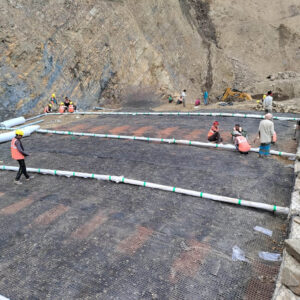
- Lay geogrid perpendicular to the wall face
- Extend required_embedment length into the backfill
- Tension geogrid flat — avoid wrinkles
- Use well-graded, angular aggregate backfill
- Compact each lift to structural specifications
- Connect geogrid to facing units securely (if required)
Every step ensures that design tensile forces are fully mobilized.
8️⃣ Cost & Sustainability Benefits
| Sustainability & Economic Gain | Details |
|---|---|
| Reduced concrete usage | Thinner walls, smaller foundations |
| Cost-effective construction | Lower material + shorter time |
| Extended lifespan | Lower maintenance + fewer repairs |
| Suitable for challenging terrains | Minimizes soil replacement and land modification |
| Lower carbon footprint | Geosynthetics vs. steel/timber solutions |
UX geogrids support environmentally responsible infrastructure development.
Conclusion
UX geogrids are essential structural reinforcements for modern retaining walls and slopes. By providing high unidirectional tensile strength, they:
✔ Reduce lateral earth pressure
✔ Prevent sliding, overturning, and deformation
✔ Convert soil into a stable composite structure
✔ Enhance safety and extend service life
Whether for highways, railways, commercial developments, or residential landscapes, UX geogrid wall stability solutions offer unmatched performance, durability, and cost efficiency.
As infrastructure demands continue to grow, UX geogrids have become a core component in geotechnical engineering for safe, sustainable wall systems.