Riverbank erosion is a persistent challenge in hydraulic engineering and environmental protection projects. Flowing water, fluctuating water levels, rainfall runoff, and wave action gradually weaken soil structure, leading to slope failure, sedimentation, and infrastructure damage.
Among modern erosion control solutions, geomat has become one of the most efficient and economical options for riverbank stabilization. However, not all geomats perform the same. Choosing the correct type directly affects vegetation establishment, slope integrity, and long-term durability.
This article explains which type of geomat works best for riverbank stabilization and how to select the appropriate system for different hydraulic conditions.
Understanding Geomat for Riverbank Stabilization
Geomat—also known as a three-dimensional erosion control mat—is a synthetic polymer mat with an open, multi-layered structure. It is typically manufactured from UV-stabilized polyethylene or polypropylene.
Its primary functions include:
- Protecting soil from surface erosion
- Promoting vegetation growth
- Reinforcing root systems
- Stabilizing slopes against hydraulic forces
In riverbank stabilization projects, geomat works by combining mechanical reinforcement and biological anchoring.
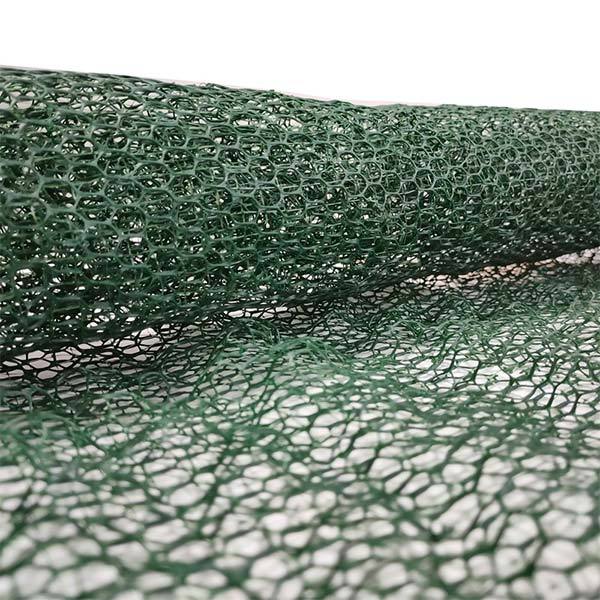
Main Types of Geomat Used for Riverbank Stabilization
Selecting the best geomat depends on slope gradient, flow velocity, soil type, and long-term environmental exposure. The most common types include:
1. Standard 3D Geomat (EM2 / EM3 Type)
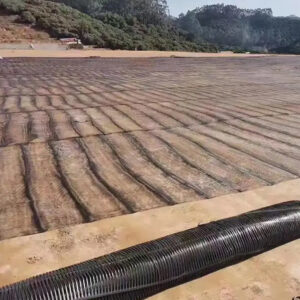
Standard 3D geomat consists of three-dimensional thermally bonded polymer filaments forming a flexible matrix.
Key Features:
- Thickness: 10–20 mm
- Lightweight and flexible
- Excellent vegetation support
- UV-resistant
Best Application Conditions:
- Mild to moderate slope gradients
- Flow velocity up to 2.5–3.0 m/s
- Areas where vegetation establishment is achievable
For low-energy riverbanks, this type is often sufficient. It provides erosion control during early vegetation growth and gradually transitions to root-reinforced soil stabilization.
This is typically the most cost-effective geomat for riverbank stabilization.
2. Reinforced Geomat with Steel Wire Mesh
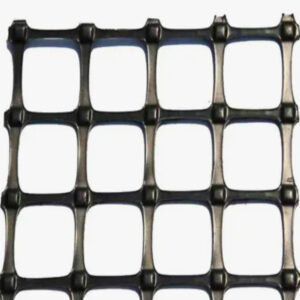
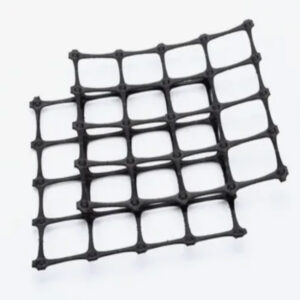
Reinforced geomat integrates galvanized steel wire mesh or high-strength netting within the 3D polymer structure.
Key Features:
- Higher tensile strength
- Increased anchoring resistance
- Better performance under hydraulic shear stress
Best Application Conditions:
- Steeper slopes (1:1.5 or steeper)
- Higher flow velocity (above 3.0 m/s)
- Flood-prone riverbanks
- Areas with fluctuating water levels
This type provides both mechanical stabilization and vegetation reinforcement. The steel mesh increases structural stability during extreme weather events.
For aggressive hydraulic environments, reinforced geomat works best for riverbank stabilization.
3. Biodegradable Erosion Control Mats
These mats are made from natural fibers such as coconut (coir) or straw.
Key Features:
- Fully biodegradable
- Environmentally friendly
- Suitable for ecological restoration
Limitations:
- Lower tensile strength
- Limited lifespan (1–3 years)
- Not suitable for high-flow river systems
Biodegradable geomats work best for temporary riverbank stabilization in environmentally sensitive areas with low hydraulic stress.
Hydraulic Considerations When Choosing the Best Geomat
Determining which type of geomat works best for riverbank stabilization requires hydraulic analysis.
1. Flow Velocity
- < 2.5 m/s → Standard 3D geomat is typically sufficient
- 2.5–4.0 m/s → Reinforced geomat recommended
- 4.0 m/s → Consider combining geomat with geocell or riprap
2. Shear Stress Resistance
Riverbanks with frequent flooding demand geomats with higher shear resistance and anchoring capacity.
Reinforced geomats outperform standard types under high shear conditions.
3. Water Level Fluctuation
Frequent wet-dry cycles require geomats with strong UV resistance and chemical stability. Synthetic polymer geomats outperform biodegradable mats in such conditions.
Vegetation Compatibility
Vegetation plays a critical role in long-term riverbank stabilization.
The best geomat should:
- Allow root penetration
- Retain soil moisture
- Provide microclimate support
- Prevent seed displacement
3D geomats are particularly effective because their open structure promotes root entanglement, creating a composite reinforcement system of soil + roots + geomat.
Over time, the vegetation becomes the primary stabilizing force.
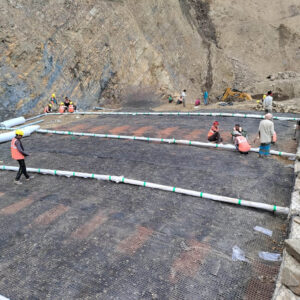
Installation Factors
Even the best geomat will fail if improperly installed.
Important installation considerations:
- Proper slope preparation
- Anchor trench at top of slope
- U-shaped steel pins at regular intervals
- Overlapping seams in flow direction
- Immediate seeding after installation
Reinforced geomats require additional anchoring to ensure stability under hydraulic load.
Comparing Geomat Types for Riverbank Stabilization
| Feature | Standard 3D Geomat | Reinforced Geomat | Biodegradable Mat |
|---|---|---|---|
| Tensile Strength | Medium | High | Low |
| Lifespan | 8–15 years | 10–20 years | 1–3 years |
| Flow Resistance | Moderate | High | Low |
| Vegetation Support | Excellent | Excellent | Good |
| Cost | Moderate | Higher | Lower |
| Best Use | Mild riverbanks | Flood-prone slopes | Temporary protection |
Long-Term Performance
For permanent riverbank stabilization, synthetic 3D geomat or reinforced geomat provides superior durability.
They resist:
- UV degradation
- Microbial attack
- Chemical exposure
- Hydraulic erosion
Biodegradable mats are suitable when the primary goal is short-term soil protection until vegetation fully develops.
When Reinforced Geomat Works Best
Reinforced geomat works best for riverbank stabilization when:
- Riverbanks experience seasonal flooding
- Slopes are steep
- Soil cohesion is low
- There is high risk of surface scouring
- Project lifespan exceeds 10 years
In such cases, the combination of structural mesh and vegetation reinforcement offers maximum stability.
When Standard 3D Geomat Is Sufficient
Standard 3D geomat works best when:
- Flow velocity is moderate
- Slopes are gentle
- Vegetation can establish quickly
- Budget optimization is required
It balances cost efficiency and performance.
Hybrid Solutions
In high-risk zones, engineers often combine:
- Reinforced geomat on lower slope sections
- Standard geomat on upper slopes
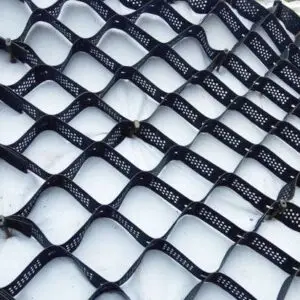
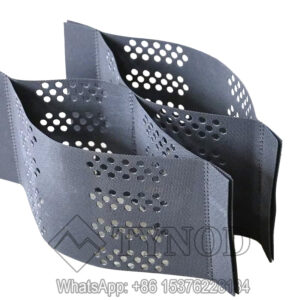
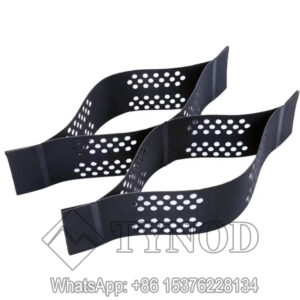
- Geocell at toe protection
- Riprap at waterline
Such layered systems provide comprehensive riverbank stabilization.
Conclusion: Which Type of Geomat Works Best for Riverbank Stabilization?
There is no single universal answer. The best geomat depends on hydraulic intensity, slope gradient, environmental conditions, and design lifespan.
However, in general:
- For mild riverbanks: Standard 3D geomat is sufficient.
- For flood-prone or steep slopes: Reinforced geomat works best.
- For ecological restoration with low hydraulic stress: Biodegradable mats are suitable.
For most medium to high-risk riverbank stabilization projects, reinforced 3D geomat offers the optimal balance of strength, durability, and vegetation support.
Careful site analysis and hydraulic assessment remain essential to selecting the correct geomat type.