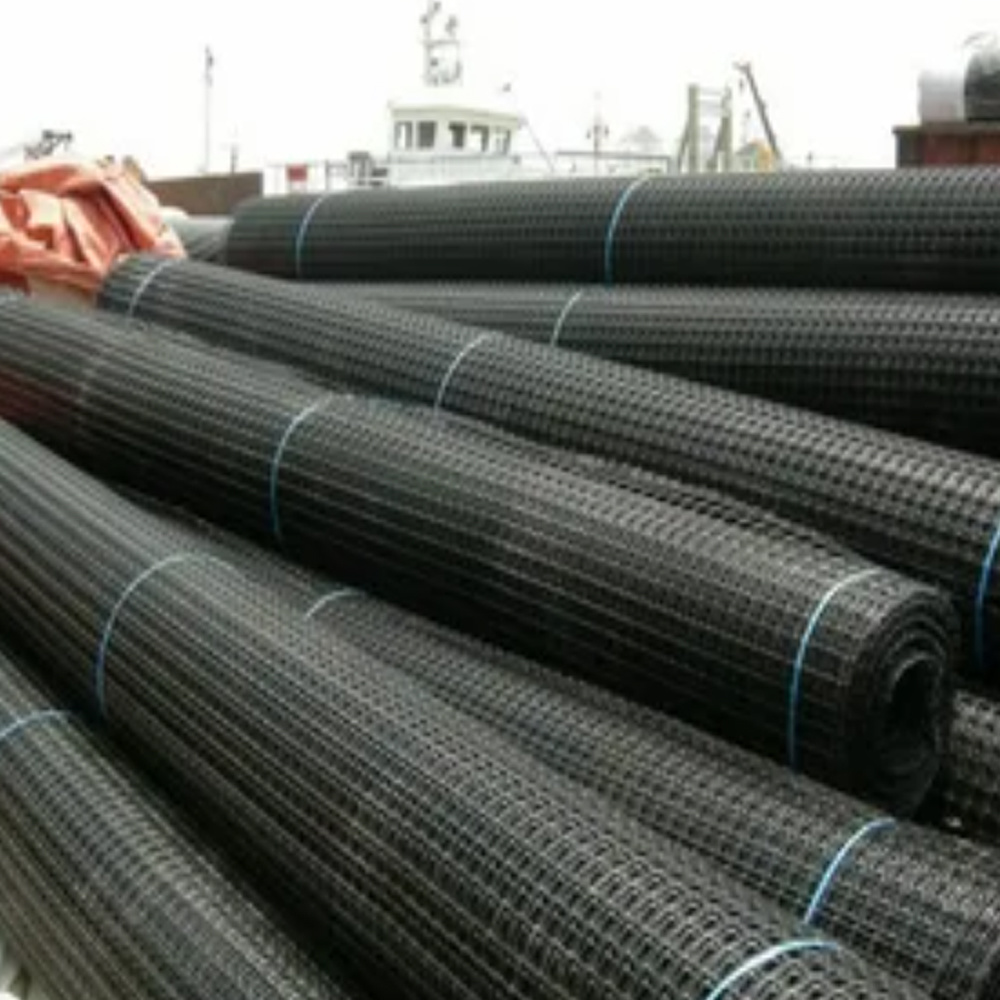
How TX Geogrid Aggregate Interlock Enhances Pavement Strength and Base Stabilization
Efficient ground stabilization is essential for long-lasting roadways, parking lots, railways, and other infrastructure projects constructed over weak soils or subjected to heavy traffic loads. As engineers face rising performance requirements and pressure to optimize construction costs, TX geogrids have emerged as a powerful reinforcement solution. Their triangular aperture geometry delivers superior TX geogrid aggregate interlock, improving mechanical stability and reducing deformation under load.
This detailed technical guide explains why TX geogrids perform better than conventional biaxial geogrids, how aggregate confinement works, and what benefits engineers can expect when incorporating TX geogrids into transportation and civil construction projects.
1️⃣ What Is a TX Geogrid?
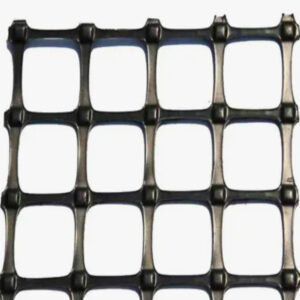
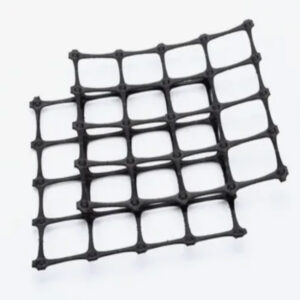
A TX geogrid — often referred to as a triangular geogrid — is a polymeric reinforcement material produced from high-strength polypropylene or HDPE. Unlike traditional square or rectangular geogrids, TX geogrids feature:
- Triangular apertures
- High tensile strength in multiple directions
- Stiff ribs and nodes optimized for load transfer
- Excellent durability in harsh environments
The triangular geometry is engineered to maximize contact area and interlocking capability with aggregate particles in unbound granular layers.
TX geogrids are widely used for:
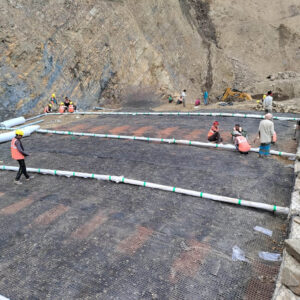
- Road base and subbase reinforcement
- High-traffic pavements and container yards
- Rail ballast stabilization
- Airport taxiway and runway construction
- Mining haul roads
- Ports and heavy industrial platforms
2️⃣ How TX Geogrid Aggregate Interlock Works
The reinforcement performance of any geogrid in a flexible pavement system depends on how effectively it interacts with the surrounding aggregate. TX geogrid aggregate interlock is achieved through three main mechanisms:
✔ Mechanical Interlock
Angular aggregates fit tightly within the triangular apertures:
- Increased frictional interaction
- Reduced particle movement under repeated loads
- Higher lateral restraint and stiffness
Triangular apertures prevent particle rotation more effectively than square openings.
✔ Aggregate Confinement
The ribs of the TX geogrid form a stable three-dimensional structure:
- Constrains aggregate under vertical stress
- Maintains particle orientation and compaction
- Reduces lateral spreading and rutting
This aggregate confinement stabilizes weak soils and surface structures.
✔ Efficient Load Transfer
Engineered for multi-directional load resistance:
- Forces are dispersed evenly in 360° directions
- Reduced shear stress and pavement fatigue
- Higher modulus and system bearing capacity
The result is improved base course performance with less material.
3️⃣ Key Technical Advantages of TX Geogrids
| Performance Factor | TX Geogrid Improvement |
|---|---|
| Permanent deformation (rutting) | ↓ 40–60% |
| Base course thickness | ↓ 20–40% while maintaining design life |
| Load distribution efficiency | ↑ multi-axial stiffness |
| Construction cost savings | Reduced material + faster installation |
| Service life | Significantly extended |
Additional benefits
- Enhanced mechanical interlock geogrid behaviors
- Improved compaction uniformity
- Better performance in soft subgrade conditions
- Long-term chemical and UV resistance
- Faster project delivery with lower trucking cost
Engineers achieve performance-based design optimization with measurable economic gains.

4️⃣ TX Geogrid vs. Biaxial Geogrid
| Feature | TX Geogrid (Triangular) | Biaxial Geogrid (Square) |
|---|---|---|
| Load resistance direction | 360° | Only 2 directions |
| Aggregate contact points | More nodes + ribs | Less contact |
| Interlock efficiency | Superior | Moderate |
| Rutting resistance | Higher | Lower |
| Base reinforcement | Excellent | Good |
| Cost effectiveness | Higher value per m² | Moderate |
Because traffic loads are never applied in straight lines, triangular load distribution performs better in real-world scenarios.
5️⃣ Typical Applications
TX geogrids are used across sectors requiring high structural stability, such as:
Transportation Infrastructure
- Highways, rural roads, temporary access roads
- Airport runways and taxiways
- Bus stations, truck terminals
Industrial and Commercial Grounds
- Logistics yards, port terminals
- Container loading areas
- Mining haul roads
Rail and Earthworks
- Railway ballast stabilization
- Embankments and working platforms
Where heavy loads meet weak soils, TX geogrid aggregate interlock becomes a critical solution.
6️⃣ Design and Installation Guidelines
To achieve optimal performance:
Material Selection
- Choose correct strength grade
- Evaluate aperture size vs aggregate gradation
- Ensure high junction efficiency
Installation Principles
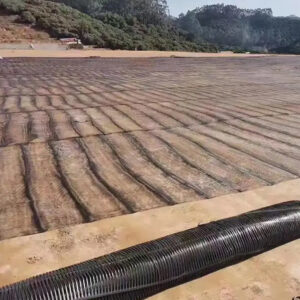
- Compact subgrade before placement
- Lay TX geogrid flat without wrinkles
- Overlap rolls per engineering specifications
- Place aggregate carefully — avoid dragging
- Compact in controlled layers
Proper handling preserves integrity and guarantees maximum geogrid for base stabilization efficiency.
7️⃣ Performance-Based Economic Benefits
TX geogrids do more than increase structural strength. They deliver measurable financial value:
| Cost Saving Component | Impact |
|---|---|
| Reduced aggregate demand | 20–40% material savings |
| Shorter construction time | Lower labor and equipment cost |
| Extended maintenance cycle | Lower life-cycle cost |
| Improved traffic uptime | Reduced disruption |
Lifecycle assessments show TX geogrids provide ROI multiple times construction investment.
8️⃣ Sustainability Contribution
- Less material consumption → lower carbon footprint
- Better long-term durability → reduced waste
- Enhanced resilience to climate stress
- Enables construction on marginal soils → minimizes land use impact
TX geogrids support modern sustainability objectives in civil infrastructure.
9️⃣ Why Triangular Geogrids Are the Future of Road Reinforcement
As infrastructure demands increase, the engineering community has shifted from traditional biaxial products toward advanced solutions offering:
- Higher interaction efficiency
- Better deformation control
- Optimized pavement design
TX geogrids provide a proven approach to improving:
✔ road performance
✔ cost efficiency
✔ environmental compliance
All centered around the superior TX geogrid aggregate interlock effect.
Conclusion
TX geogrids represent a breakthrough technology in geosynthetic reinforcement systems. Their triangular aperture configuration enables exceptional mechanical interlock geogrid capability, enhanced aggregate confinement, and multi-directional load transfer.
By integrating TX geogrids in unbound base and subbase layers, engineers benefit from:
- Higher pavement structural integrity
- Reduced rutting and deformation
- Lower aggregate demand
- Improved long-term economic and environmental performance
For transportation infrastructure and heavy-duty industrial projects, TX geogrids are a proven and efficient reinforcement solution that significantly extends pavement service life while minimizing costs.