Introduction
In modern transportation and infrastructure projects, geogrids play a critical role in improving pavement performance, extending service life, and reducing construction costs. Among the many types of geogrids available on the market, triaxial geogrids and square-aperture geogrids are two of the most commonly compared solutions. Engineers, contractors, and infrastructure owners frequently ask the same question: what makes triaxial geogrid different from square-aperture grids, and how does this difference affect real-world pavement performance?
To answer this question clearly, it is essential to analyze the issue from both a structural and mechanical perspective. The comparison of triaxial geogrid vs biaxial geogrid goes far beyond simple aperture shape. It involves differences in geometry, load transfer mechanisms, aggregate confinement, stiffness distribution, construction practicality, and long-term behavior under traffic loading.
This article provides a comprehensive, engineering-based explanation of triaxial geogrid vs biaxial geogrid. It is written for pavement designers, civil engineers, geotechnical consultants, and B2B buyers who need technically sound information to support specification and procurement decisions.
Overview of Square-Aperture Geogrids
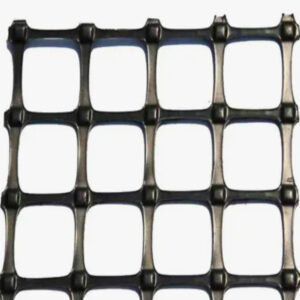
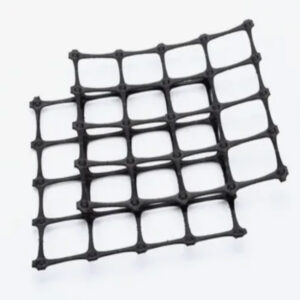
Square-aperture geogrids are typically biaxial geogrids manufactured from polypropylene or polyester polymers. Their structure consists of ribs arranged in two perpendicular directions, forming square or rectangular openings.
Key Characteristics of Square-Aperture Geogrids
- Orthogonal rib orientation (0° and 90°)
- Defined machine direction (MD) and cross-machine direction (CMD)
- Tensile strength concentrated along two principal axes
- Proven performance in many traditional soil and aggregate reinforcement applications
Square-aperture grids have been used successfully for decades in road bases, retaining structures, and soil stabilization projects. However, when evaluating triaxial geogrid vs biaxial geogrid, it becomes clear that square-aperture grids have inherent directional limitations.
Overview of Triaxial Geogrids
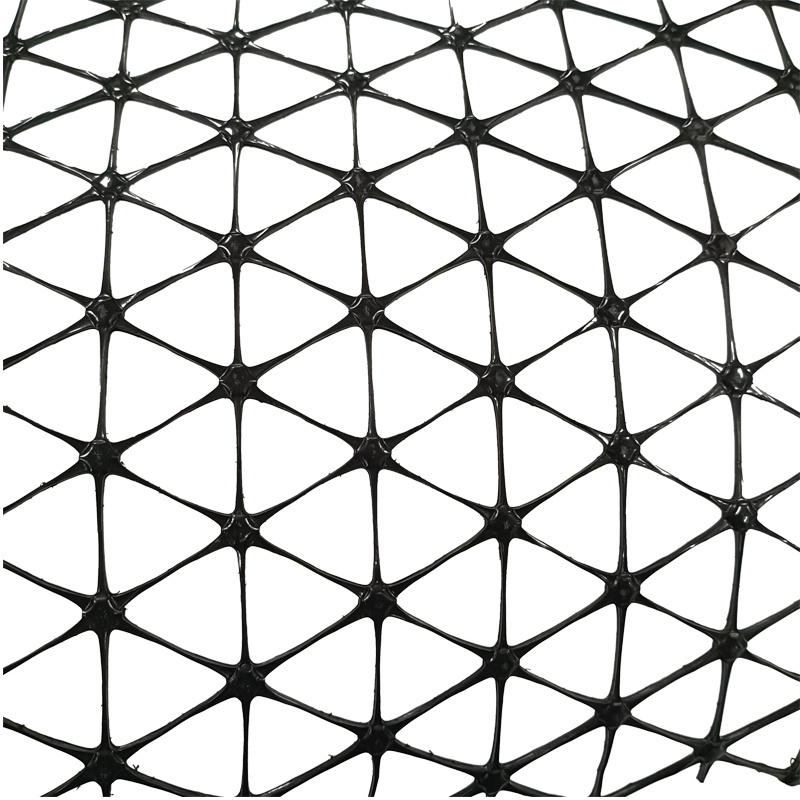
Triaxial geogrids represent an evolution in geogrid design. Instead of square apertures, triaxial geogrids feature a triangular aperture geometry with ribs oriented at approximately 60-degree angles to each other.
Key Characteristics of Triaxial Geogrids
- Triangular aperture configuration
- Multi-directional rib orientation
- Near-isotropic in-plane stiffness
- Optimized for aggregate confinement and load distribution
This unique geometry is the foundation of the performance differences observed in the comparison of triaxial geogrid vs biaxial geogrid.
Structural Geometry: The Fundamental Difference
The most visible distinction between triaxial geogrids and square-aperture grids is geometry. However, the engineering implications of this difference are profound.
Square-Aperture Geometry
Square-aperture grids create load paths primarily aligned with the grid ribs. Stress transfer occurs mainly along two perpendicular directions. Under ideal conditions, this can be effective, but real traffic loads are rarely aligned perfectly with these axes.
Triaxial Geometry
Triaxial geogrids create six primary load paths radiating from each node. This allows stresses to be distributed radially in multiple directions, regardless of load orientation.
This geometric advantage is a core reason why triaxial geogrid vs biaxial geogrid often shows superior performance for triaxial systems under heavy and dynamic traffic loading.
Load Distribution Behavior
Square-Aperture Grids
In square-aperture grids, load distribution is directional. When wheel loads are applied at angles not aligned with the grid ribs, stress concentrations can occur, leading to localized deformation.
Triaxial Geogrids
Triaxial geogrids distribute loads evenly through their triangular structure. This multi-directional load transfer reduces peak stresses and improves the stability of the reinforced layer.
From a pavement engineering standpoint, this is one of the most important distinctions in the comparison of triaxial geogrid vs biaxial geogrid.
Aggregate Interlock and Confinement Efficiency
Aggregate interlock is the primary reinforcement mechanism in geogrid-stabilized pavement layers.
Square-Aperture Geogrids
- Aggregate particles interlock mainly along rib intersections
- Confinement efficiency depends on aggregate size and orientation
- Greater potential for lateral aggregate movement under repeated loading
Triaxial Geogrids
- Triangular apertures create a mechanically stable aggregate skeleton
- Enhanced confinement in all directions
- Reduced aggregate dilation and degradation
Superior aggregate confinement is a major reason why triaxial geogrid vs biaxial geogrid often favors triaxial systems in high-performance applications.
Stiffness and Modulus Characteristics
Square-aperture geogrids typically exhibit anisotropic stiffness, meaning stiffness varies between MD and CMD directions. This can lead to uneven deformation in the pavement structure.
Triaxial geogrids, by contrast, offer:
- More uniform in-plane stiffness
- Quasi-isotropic modulus behavior
- Consistent reinforcement performance under variable load directions
These stiffness characteristics further differentiate triaxial geogrid vs biaxial geogrid.
Performance Under Cyclic and Dynamic Loads
Modern pavements are subjected to millions of load cycles over their design life.
Square-Aperture Grids
- Adequate for moderate traffic volumes
- Performance can degrade under heavy, repetitive loading
Triaxial Geogrids
- Excellent resistance to cyclic loading
- Reduced rutting and permanent deformation
- Improved load spreading over weak subgrades
This performance advantage explains why triaxial geogrid vs biaxial geogrid is a critical decision in high-traffic infrastructure projects.
Construction and Installation Considerations
Square-Aperture Geogrids
- Require correct orientation during installation
- Performance depends on alignment with anticipated load directions
Triaxial Geogrids
- Orientation-independent performance
- Faster and simpler installation
- Lower risk of construction errors
Ease of installation is an often-overlooked factor when comparing triaxial geogrid vs biaxial geogrid, yet it has a direct impact on field performance.
Typical Applications and Use Cases
Square-Aperture Geogrids
- Light to medium traffic roads
- Base reinforcement with predictable loading
- Retaining walls and embankments
Triaxial Geogrids
- Highway and expressway pavements
- Working platforms on weak soils
- Industrial yards, ports, and container terminals
- Airport pavements and heavy haul roads
Application suitability further highlights the differences between triaxial geogrid vs biaxial geogrid.
Cost, Value, and Life-Cycle Performance
Although triaxial geogrids may have a higher initial material cost, they often deliver superior life-cycle value.
Benefits include:
- Reduced aggregate thickness requirements
- Extended pavement service life
- Lower maintenance and rehabilitation costs
When evaluated on a whole-life basis, triaxial geogrid vs biaxial geogrid frequently favors triaxial solutions in demanding conditions.
Conclusion
The question of what makes triaxial geogrid different from square-aperture grids can be answered clearly through engineering principles. Triaxial geogrids differ fundamentally in geometry, load distribution, aggregate confinement, stiffness uniformity, and performance under cyclic loading.
In the comparison of triaxial geogrid vs biaxial geogrid, triaxial geogrids consistently demonstrate superior performance in applications involving heavy traffic, variable load directions, and weak subgrades. Square-aperture grids remain effective for many conventional applications, but triaxial geogrids provide a higher level of structural efficiency and long-term reliability for modern pavement systems.
For engineers and decision-makers seeking optimized pavement reinforcement solutions, understanding the technical differences between triaxial geogrid vs biaxial geogrid is essential to achieving durable, cost-effective infrastructure outcomes. Contact us now to get a quotation of triaxial geogrid or biaxial geogrid.