Understanding triaxial geogrid load distribution is essential for modern road construction, pavement reinforcement, and foundation stabilization. As infrastructure projects face heavier traffic loads, weaker subgrades, and stricter cost controls, engineers are increasingly turning to triaxial geogrids to solve performance problems that traditional reinforcement methods cannot.
Unlike conventional geogrids that primarily work in two directions, triaxial geogrids introduce a fundamentally different approach to load transfer. Their unique triangular structure allows forces to spread more evenly across the ground, reducing deformation, improving bearing capacity, and extending service life.
This article explains how triaxial geogrid load distribution works, why it matters, and when it should be used.
What Is a Triaxial Geogrid?
Before diving into triaxial geogrid load distribution, it is important to understand what a triaxial geogrid actually is.
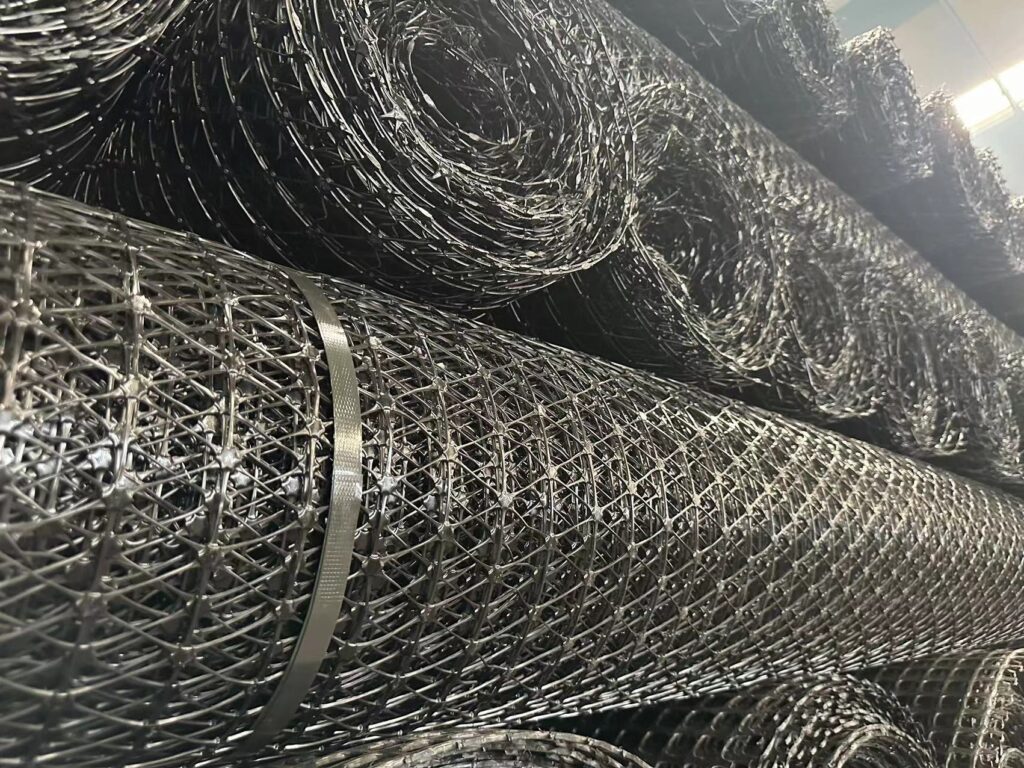
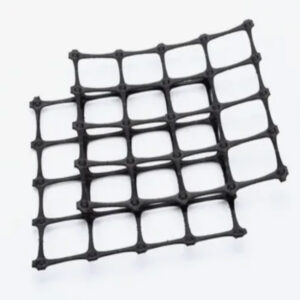
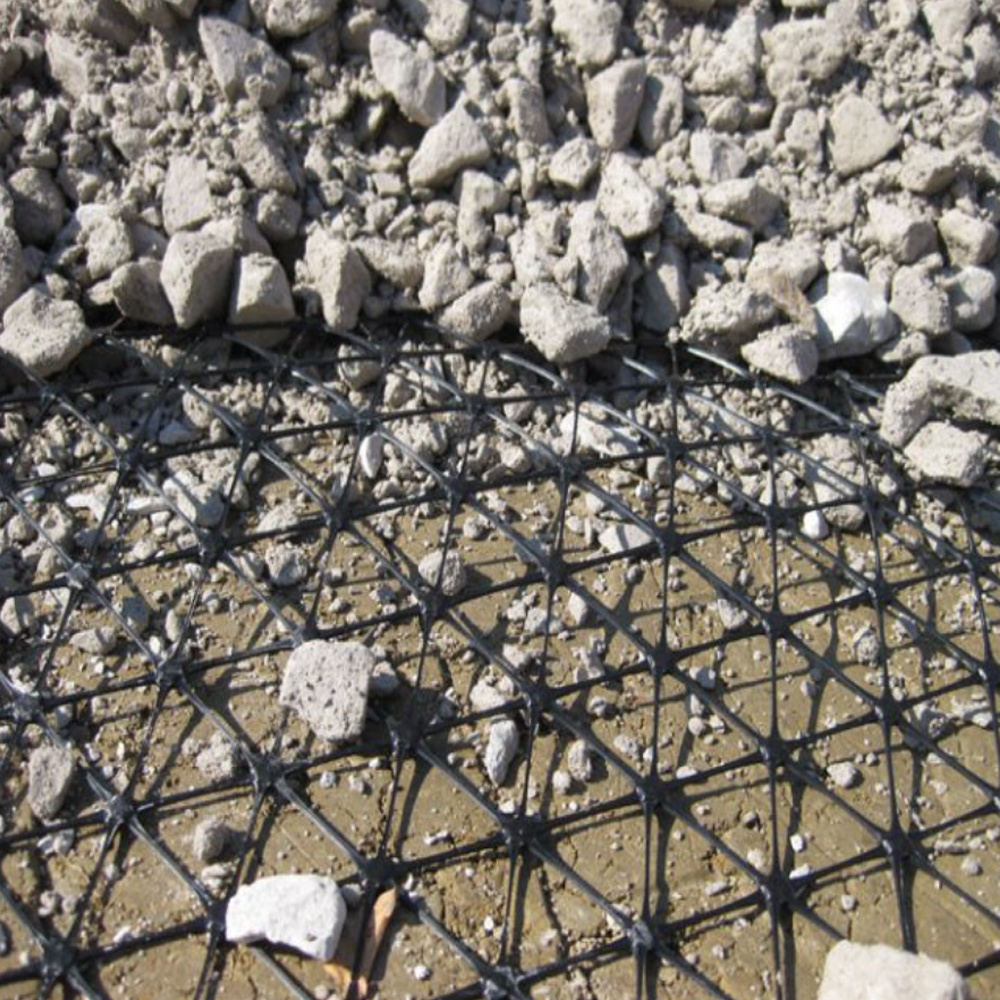
A triaxial geogrid is a rigid, polymer-based geosynthetic reinforcement made from polypropylene (PP). It features a triangular aperture structure formed through a precision punching and stretching process. This geometry allows load transfer in multiple directions rather than along just two perpendicular axes.
Unlike biaxial geogrids, which have rectangular apertures, triaxial geogrids distribute stresses radially. This structural difference is the foundation of their superior load distribution behavior.
Why Load Distribution Matters in Ground Engineering
In any pavement or foundation system, loads applied at the surface must be transferred safely to the subgrade. Poor load distribution leads to:
- Rutting in roads
- Cracking in pavements
- Excessive settlement
- Premature structural failure
Traditional aggregate layers rely on thickness to spread loads. However, increasing thickness raises costs and construction time. This is where triaxial geogrid load distribution becomes a critical engineering solution.
By reinforcing the aggregate layer, triaxial geogrids improve how loads are transferred and reduce stress concentration on weak soils.
How Triaxial Geogrid Load Distribution Works
1. Multi-Directional Stress Transfer
The defining feature of triaxial geogrid load distribution is its ability to spread loads in nearly all horizontal directions.
When a wheel load is applied:
- Forces are transferred through the aggregate
- Aggregate interlocks with the triangular apertures
- Loads disperse radially instead of linearly
This creates a more uniform stress field beneath the pavement.
In contrast, biaxial grids primarily distribute loads in two orthogonal directions, which can lead to stress concentration between ribs.
2. Improved Aggregate Interlock
Triaxial geogrids are designed to maximize mechanical interlock between the grid and the aggregate.
The triangular apertures:
- Restrict aggregate movement
- Reduce lateral displacement
- Increase shear resistance
This enhanced interlock directly improves triaxial geogrid load distribution, as aggregates remain confined under repeated loading.
3. Lateral Restraint Effect
Lateral spreading of aggregate is a major cause of pavement failure. Triaxial geogrids provide strong lateral restraint by:
- Locking aggregate particles in place
- Preventing shear deformation
- Maintaining structural integrity under traffic
This restraint allows the reinforced layer to behave like a semi-rigid platform, distributing loads more efficiently across the subgrade.
4. Reduced Vertical Stress on Subgrade
One of the most valuable outcomes of triaxial geogrid load distribution is the reduction of vertical stress transmitted to the subgrade.
This results in:
- Lower subgrade strain
- Reduced settlement
- Improved performance on weak soils
In many cases, this allows engineers to use thinner aggregate layers without sacrificing strength.
Triaxial vs. Biaxial Geogrid: Load Distribution Comparison
| Feature | Triaxial Geogrid | Biaxial Geogrid |
|---|---|---|
| Load transfer | Radial, multi-directional | Two-directional |
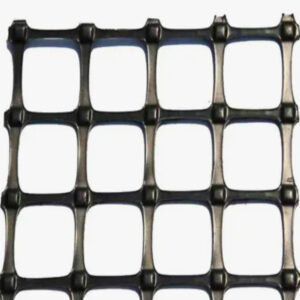
| Aperture shape | Triangular | Rectangular |
| Stress concentration | Low | Higher |
| Aggregate confinement | Excellent | Moderate |
| Performance under traffic | Superior | Standard |
This comparison highlights why triaxial geogrid load distribution is often preferred in high-performance applications.
Key Benefits of Triaxial Geogrid Load Distribution
1. Increased Bearing Capacity
By spreading loads more evenly, triaxial geogrids significantly increase the bearing capacity of reinforced layers. This is particularly valuable for:
- Soft clay subgrades
- Silty soils
- Poorly compacted foundations
2. Reduced Rutting and Deformation
Rutting occurs when aggregate moves laterally under repeated loads. Triaxial reinforcement minimizes this movement, maintaining surface integrity over time.
3. Extended Pavement Life
Better load distribution means lower stress cycles within the pavement structure. This leads to:
- Fewer cracks
- Reduced maintenance
- Longer service life
4. Material and Cost Savings
Because triaxial geogrid load distribution improves structural efficiency, engineers can often:
- Reduce aggregate thickness
- Lower excavation volume
- Cut transportation costs
These savings are especially important for large-scale road projects.
Where Triaxial Geogrid Load Distribution Is Most Effective
1. Road Base and Subbase Reinforcement
Triaxial geogrids are widely used in highway and local road construction to stabilize aggregate layers and reduce pavement distress.
2. Heavy-Duty Pavements
Industrial yards, ports, and container terminals benefit from superior load distribution under heavy equipment.
3. Airport Runways and Taxiways
Aircraft loads demand exceptional load-spreading performance, making triaxial systems a preferred solution.
4. Temporary Access Roads
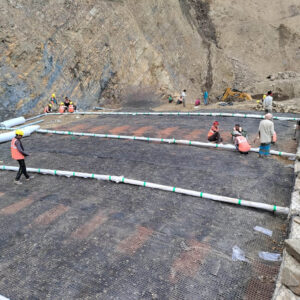
For construction and mining access roads, triaxial geogrids provide fast installation and reliable performance over weak soils.
5. Parking Areas and Hardstands
They help prevent surface deformation in areas with frequent vehicle movement.
How Triaxial Geogrid Improves Performance on Weak Subgrades
Weak subgrades are often the limiting factor in pavement design. Triaxial geogrid load distribution addresses this issue by:
- Reducing stress concentration
- Limiting shear deformation
- Enhancing load-spreading efficiency
This allows pavements to perform reliably even when soil conditions are less than ideal.
Design Considerations for Triaxial Geogrid Use
When designing with triaxial geogrids, engineers should consider:
- Subgrade CBR or modulus
- Traffic loading and repetition
- Aggregate type and gradation
- Required service life
Proper design ensures that triaxial geogrid load distribution is fully utilized.
Installation Best Practices
Correct installation is essential to achieve optimal load distribution:
- Prepare and level the subgrade
- Place the triaxial geogrid flat and tension-free
- Overlap or connect panels as specified
- Place aggregate carefully to avoid grid displacement
- Compact to required density
Following these steps ensures long-term performance.
Why Engineers Prefer Triaxial Geogrids Today
Modern infrastructure demands efficiency, durability, and sustainability. Triaxial geogrids align with these goals by offering:
- Superior load distribution
- Reduced material usage
- Faster construction timelines
- Reliable long-term performance
For these reasons, triaxial geogrid load distribution has become a benchmark solution in pavement engineering.
Conclusion
Triaxial geogrid load distribution fundamentally changes how loads are transferred through pavement and foundation systems. By enabling multi-directional stress dispersion, superior aggregate interlock, and effective lateral restraint, triaxial geogrids deliver stronger, longer-lasting structures with lower overall costs.
For roads, pavements, and foundations built on weak or variable soils, triaxial geogrids are no longer an alternative solution—they are often the optimal one. Contact us now to get a quotation of triaxial geogrid.