Introduction
As global road networks continue to age under increasing traffic loads and harsher environmental conditions, pavement rehabilitation has become a critical focus for highway agencies, contractors, and infrastructure owners. Among the many reinforcement solutions available today, polyester geogrid has emerged as one of the most effective materials for asphalt overlay systems. Understanding polyester geogrid for asphalt reinforcement requires a comprehensive look at pavement distress mechanisms, material properties, structural behavior, and long-term performance benefits.
Asphalt overlays are widely applied to extend pavement service life, restore riding quality, and delay costly full-depth reconstruction. However, overlays alone are often vulnerable to reflective cracking, rutting, fatigue damage, and moisture-related failures. This is precisely polyester geogrid for asphalt reinforcement: it provides tensile reinforcement, crack control, stress redistribution, and durability that conventional asphalt layers cannot achieve independently.
This article explores in detail polyester geogrid for asphalt reinforcement, covering material characteristics, reinforcement mechanisms, performance advantages, applications, design considerations, and economic benefits. The discussion is intended for engineers, pavement designers, contractors, and infrastructure decision-makers seeking technically sound and cost-effective overlay solutions.
Understanding Asphalt Overlay Challenges
Before examining polyester geogrid for asphalt reinforcement, it is essential to understand the primary challenges faced by asphalt overlay systems.
Reflective Cracking
Reflective cracking is one of the most common and destructive forms of overlay distress. Cracks from the existing pavement propagate upward through the new asphalt layer due to traffic loading, thermal movement, and shrinkage stresses. Without reinforcement, reflective cracking can appear within months of overlay placement.
Fatigue and Tensile Stress
Asphalt concrete has relatively low tensile strength. Under repeated traffic loads, tensile stresses develop at the bottom of the overlay layer, leading to fatigue cracking. This mechanism significantly shortens pavement life, especially on heavily trafficked roads.
Rutting and Deformation
High temperatures and heavy axle loads can cause permanent deformation in asphalt overlays. Rutting reduces safety, increases maintenance costs, and negatively affects ride quality.
Moisture Damage
Water infiltration through cracks weakens asphalt layers and underlying base courses. Moisture damage accelerates stripping, reduces stiffness, and contributes to early pavement failure.
These challenges explain polyester geogrid for asphalt reinforcement: it directly addresses the mechanical and environmental weaknesses of conventional asphalt systems.
What Is Polyester Geogrid?
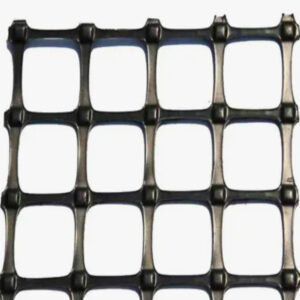
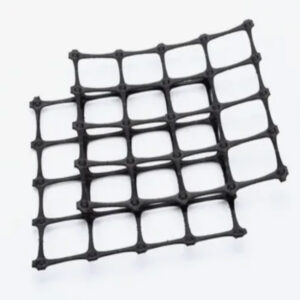
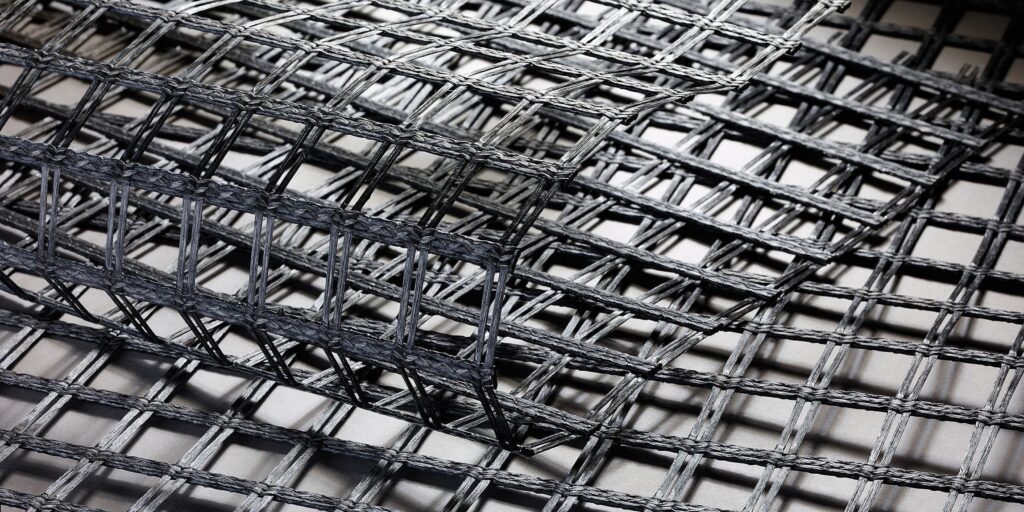
Polyester geogrid is a polymeric geosynthetic manufactured from high-tenacity polyester yarns that are knitted, woven, or bonded into a grid structure and then coated with a protective polymer, typically PVC or bitumen-compatible coatings.
Key material characteristics include:
- High tensile strength at low strain
- Excellent creep resistance
- Superior resistance to temperature variations
- Long-term chemical and environmental durability
- Compatibility with asphalt materials
These properties form the technical foundation for polyester geogrid for asphalt reinforcement.
Why Polyester Geogrid Is Used in Asphalt Overlays for Pavement Reinforcement
1. High Tensile Strength and Low Elongation
One of the primary reasons polyester geogrid for asphalt reinforcement is its high tensile strength combined with low elongation. Polyester geogrids typically mobilize strength at strains below 5%, which closely matches the strain levels experienced in asphalt pavements.
This low-strain behavior allows the geogrid to effectively intercept tensile stresses before cracks can propagate, significantly enhancing fatigue resistance and overlay lifespan.
2. Effective Crack Control and Stress Absorption
Polyester geogrid acts as a stress-absorbing reinforcement layer within the asphalt overlay system. When existing pavement cracks attempt to propagate upward, the geogrid distributes stresses laterally across a wider area.
This mechanism explains polyester geogrid for asphalt reinforcement instead of unreinforced overlays or weaker geosynthetics. The result is delayed reflective cracking and improved surface integrity.
3. Excellent Thermal Stability
Asphalt pavements are subjected to extreme temperature fluctuations. Polyester geogrid maintains stable mechanical properties across a wide temperature range, from cold climates prone to thermal cracking to hot regions susceptible to rutting.
Thermal stability is a critical factor in polyester geogrid for asphalt reinforcement in diverse climatic conditions worldwide.
4. Superior Creep Resistance
Creep deformation under sustained traffic loads can compromise pavement performance. Polyester exhibits excellent creep resistance compared to many other polymer materials.
This long-term dimensional stability is another reason polyester geogrid for asphalt reinforcement, especially in highways, airports, and industrial roads with continuous heavy loading.
5. Strong Bonding with Asphalt Layers
The coating applied to polyester geogrid enhances adhesion with asphalt binders. This ensures effective load transfer between asphalt layers and the geogrid.
Strong interlayer bonding is essential to ensure that the geogrid works as an integral part of the pavement structure, reinforcing polyester geogrid for asphalt reinforcement rather than uncoated or incompatible materials.
Reinforcement Mechanisms of Polyester Geogrid in Asphalt Overlays
Understanding the reinforcement mechanisms further clarifies polyester geogrid for asphalt reinforcement.
Tensioned Membrane Effect
Under traffic loads, the polyester geogrid develops tensile forces that counteract crack opening and deformation. This tensioned membrane effect reduces tensile strain in the asphalt overlay.
Load Distribution
The grid structure redistributes localized stresses caused by wheel loads over a larger area, reducing stress concentration at crack tips.
Crack Bridging
Polyester geogrid bridges existing cracks in the underlying pavement, preventing or significantly delaying their reflection to the surface.
Structural Stiffening
By adding tensile reinforcement, the composite asphalt–geogrid system exhibits higher stiffness and improved resistance to deformation.
These combined mechanisms explain in technical terms polyester geogrid for asphalt reinforcement across a wide range of rehabilitation projects.
Applications of Polyester Geogrid in Asphalt Overlays
Polyester geogrid is widely applied in various pavement scenarios, including:
- Highway and expressway overlays
- Urban road rehabilitation
- Airport runways and taxiways
- Industrial yards and port pavements
- Bridge deck overlays
- Pavement widening projects
In each application, the same fundamental principles apply, reinforcing polyester geogrid for asphalt reinforcement under both heavy traffic and demanding environmental conditions.
Design and Installation Considerations
Proper design and installation are critical to fully realize the benefits and justify polyester geogrid for asphalt reinforcement.
Placement Location
Polyester geogrid is typically installed at the bottom of the asphalt overlay or directly above existing cracked layers to maximize crack control efficiency.
Surface Preparation
The existing pavement surface should be clean, dry, and properly leveled to ensure optimal bonding between layers.
Tack Coat Application
A suitable tack coat is essential to bond the polyester geogrid with asphalt layers and ensure composite action.
Overlay Thickness
While polyester geogrid allows for thinner overlays in some cases, minimum thickness requirements must still be met to protect the geogrid and ensure durability.
Attention to these factors further supports polyester geogrid for asphalt reinforcement in professionally engineered projects.
Economic and Sustainability Benefits
Another important reason polyester geogrid for asphalt reinforcement lies in its economic and environmental advantages.
Extended Pavement Life
By delaying crack initiation and propagation, polyester geogrid significantly extends pavement service life, reducing maintenance frequency.
Reduced Life-Cycle Costs
Although initial costs may be slightly higher, the reduction in future repairs leads to substantial life-cycle cost savings.
Material and Resource Efficiency
Longer-lasting pavements reduce raw material consumption, energy use, and carbon emissions associated with frequent rehabilitation.
These benefits make a strong case for polyester geogrid for asphalt reinforcement from both financial and sustainability perspectives.
Comparison with Other Reinforcement Materials
Compared to fiberglass grids, nonwoven interlayers, or steel meshes, polyester geogrid offers a balanced combination of strength, flexibility, durability, and compatibility with asphalt.
This comparative advantage further explains polyester geogrid for asphalt reinforcement as a preferred solution in modern pavement engineering.
Conclusion
In summary, the answer to polyester geogrid for asphalt reinforcement lies in its ability to address the fundamental weaknesses of asphalt pavements. Through high tensile strength at low strain, excellent crack control, superior creep resistance, thermal stability, and strong bonding with asphalt layers, polyester geogrid significantly enhances overlay performance.
By reducing reflective cracking, extending service life, lowering maintenance costs, and improving overall pavement sustainability, polyester geogrid has become an indispensable component in asphalt overlay systems worldwide. For engineers and decision-makers seeking reliable, long-term rehabilitation solutions, understanding polyester geogrid for asphalt reinforcement is essential to achieving durable and cost-effective infrastructure outcomes. Contact us now to get a quotation or solution of polyester geogrid for asphalt reinforcement.