Introduction
Reflective cracking is one of the most persistent and costly problems in asphalt pavement rehabilitation. Cracks from an existing pavement structure—such as concrete slabs, cement-treated bases, or aged asphalt layers—tend to propagate upward through newly placed asphalt overlays, significantly shortening pavement service life. To mitigate this issue, engineers increasingly specify PET geogrid for reflective cracking control as a proven reinforcement solution.
PET (polyester) geogrid has become a preferred material in asphalt overlay systems due to its high tensile modulus, excellent creep resistance, and strong bonding with asphalt layers. When properly designed and installed, PET geogrid fundamentally alters stress distribution within the overlay, delaying or preventing crack propagation.
This article provides a detailed engineering explanation of how PET geogrid reduces reflective cracking, why it outperforms alternative interlayer systems in many applications, and how correct material selection and installation ensure long-term pavement performance.
What Is Reflective Cracking?
Reflective cracking occurs when existing cracks or joints in an underlying pavement layer propagate upward into a new asphalt overlay. These cracks are driven by repeated traffic loading, thermal movement, shrinkage, and differential deflection between pavement layers.
Common sources of reflective cracking include:
- Transverse and longitudinal joints in concrete pavements
- Shrinkage cracks in cement-treated bases
- Fatigue cracks in aged asphalt layers
- Differential settlement or base movement
Without effective crack control measures, reflective cracking can appear within months after overlay construction, leading to water infiltration, accelerated deterioration, and increased maintenance costs.
What Is PET Geogrid?
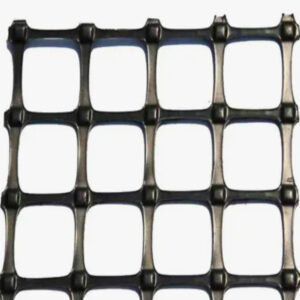
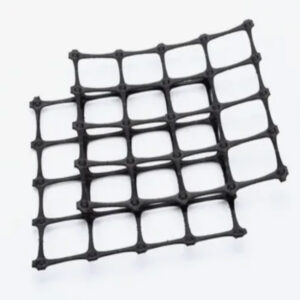
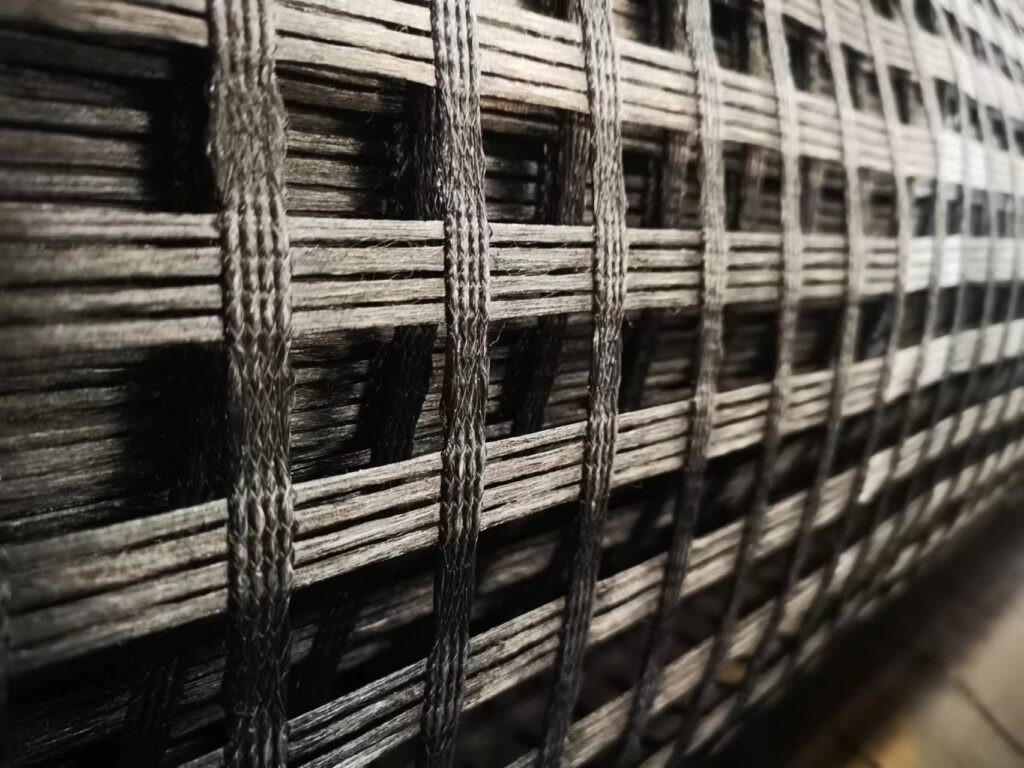
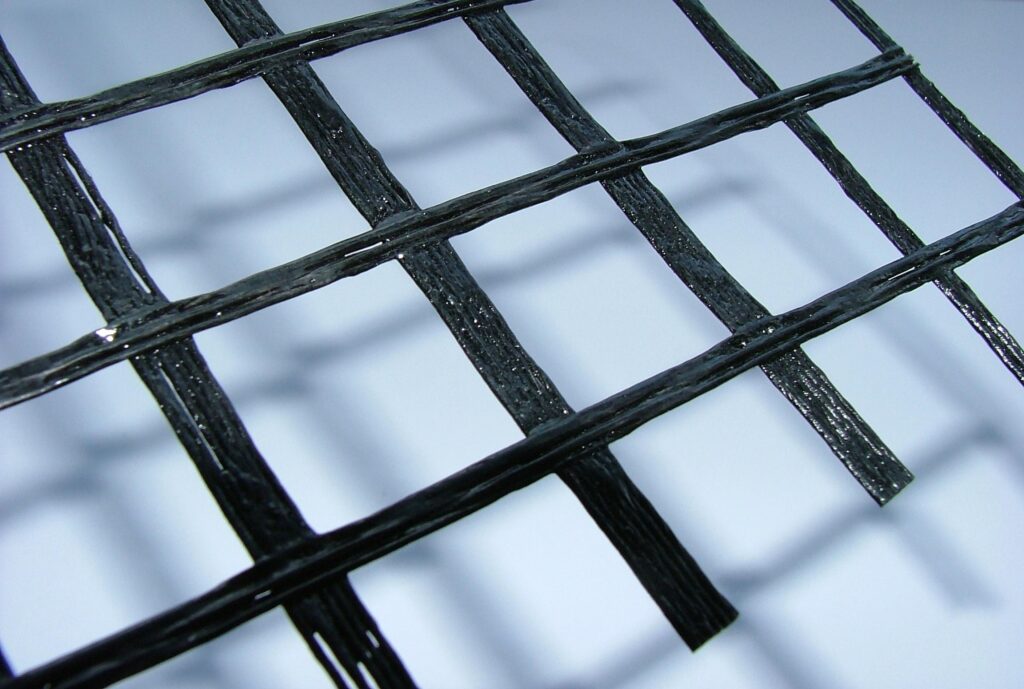
PET geogrid is a polymeric reinforcement manufactured from high-tenacity polyester yarns that are knitted or woven into a grid structure and then coated with a polymer or bituminous layer. This coating enhances durability and promotes strong adhesion with asphalt mixtures.
Key characteristics that make PET geogrid for reflective cracking control highly effective include:
- High tensile strength and modulus
- Excellent resistance to creep under sustained loads
- Thermal stability compatible with asphalt paving temperatures
- Strong interlock and bonding with asphalt layers
Unlike fiberglass grids, PET geogrids provide superior elongation control and long-term stress redistribution under repeated traffic loads.
How Does PET Geogrid Reduce Reflective Cracking?
The effectiveness of PET geogrid in reducing reflective cracking lies in several interrelated reinforcement mechanisms.
Tensile Stress Redistribution
Cracks in the underlying pavement create localized stress concentrations in the asphalt overlay. When PET geogrid is installed at the interface or within the overlay, it acts as a tensile reinforcement layer.
The PET geogrid for reflective cracking control absorbs and redistributes tensile stresses over a wider area, reducing peak stresses directly above existing cracks. This redistribution delays crack initiation in the overlay.
Crack Bridging Mechanism
PET geogrid bridges existing cracks and joints in the underlying pavement. When movement occurs at these discontinuities, the geogrid resists opening through its tensile stiffness, effectively slowing crack propagation.
This crack-bridging effect is one of the primary reasons PET geogrid significantly extends overlay service life.
Stress Absorption and Load Transfer
Traffic-Induced Loading
Repeated traffic loads generate cyclic tensile and shear stresses within asphalt overlays. PET geogrid improves load transfer efficiency by spreading stresses across a larger pavement area.
As a result, localized fatigue damage is reduced, and the overlay exhibits improved resistance to both reflective cracking and fatigue cracking.
Thermal Movement Control
Temperature fluctuations cause expansion and contraction in pavement layers. PET geogrid for reflective cracking control limits differential movement between layers, reducing thermal stress concentrations that initiate cracks.
Role of PET Geogrid Modulus and Creep Resistance
High Tensile Modulus
PET geogrid exhibits a high tensile modulus at low strains, which is critical for crack control applications. This allows the geogrid to mobilize tensile resistance quickly as cracks attempt to propagate.
Long-Term Creep Resistance
Polyester polymers demonstrate excellent resistance to creep under sustained loads. This ensures that the reinforcing effect of PET geogrid remains effective throughout the pavement’s design life.
These properties make PET geogrid for reflective cracking control particularly suitable for high-traffic roads and heavy-duty pavements.
Installation Position and System Configuration
Placement Location
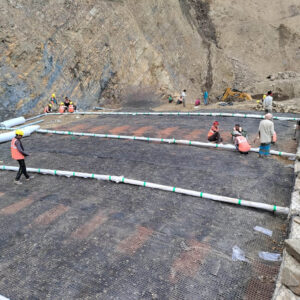
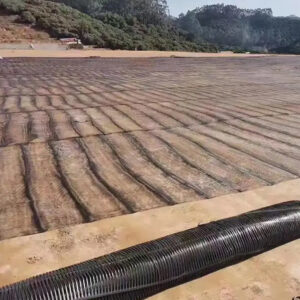
PET geogrid is typically installed between the existing pavement and the new asphalt overlay or within the lower portion of the overlay.
Correct positioning ensures maximum interaction between the geogrid and asphalt layers, which is essential for effective reflective cracking control.
Bonding With Asphalt
The polymer or bitumen coating on PET geogrid promotes strong adhesion with asphalt binder. Proper tack coat application is critical to ensure full bonding and prevent slippage.
Comparison With Other Crack Control Methods
PET Geogrid vs Fiberglass Grid
- PET geogrid offers better elongation control
- Superior fatigue resistance
- Improved long-term performance
PET Geogrid vs Stress Absorbing Membrane Interlayers (SAMI)
- Higher tensile reinforcement capacity
- Better load distribution under traffic
- Longer service life in heavy-duty applications
These comparisons explain why PET geogrid for reflective cracking control is increasingly specified in modern pavement rehabilitation projects.
Design Considerations
Overlay Thickness
PET geogrid performs best when used with an adequate overlay thickness to ensure full stress transfer and durability.
Existing Pavement Condition
Crack width, spacing, and severity influence geogrid selection and layout. Proper evaluation of the existing pavement is essential.
Traffic Level
Higher traffic volumes and heavier loads increase the benefits of PET geogrid reinforcement.
Standards and Field Performance
PET geogrid for reflective cracking control has been validated through laboratory testing and field performance in accordance with:
- AASHTO pavement design guidelines
- ASTM geosynthetics testing standards
- National and regional highway authority specifications
Long-term field studies consistently show delayed crack initiation and extended maintenance intervals.
Economic Benefits
By delaying reflective cracking, PET geogrid significantly reduces maintenance frequency and life-cycle costs. Although initial material costs may be higher than unreinforced overlays, the overall economic return is favorable.
Conclusion
PET geogrid for reflective cracking control works by redistributing tensile stresses, bridging existing cracks, improving load transfer, and limiting differential movement between pavement layers.
When properly designed and installed, PET geogrid significantly extends asphalt overlay service life, reduces maintenance costs, and enhances pavement performance under traffic and environmental loading.
For pavement engineers, contractors, and infrastructure owners, PET geogrid represents a technically sound and economically efficient solution for reflective cracking mitigation.