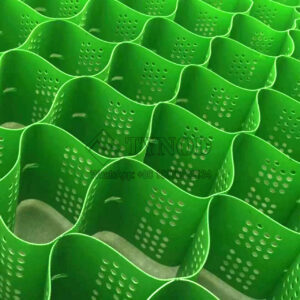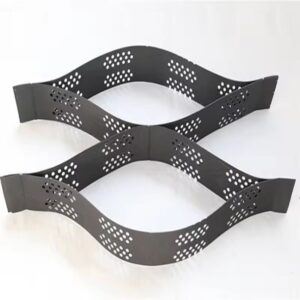
Vegetation is one of the most effective and environmentally friendly methods for slope protection and erosion control. However, on steep slopes, loose soils, and exposed embankments, natural grass growth alone is often insufficient to resist erosion caused by rainfall, runoff, and wind. This is where geomat for grass root growth plays a critical role.
Geomat is a three-dimensional erosion control mat designed to work synergistically with vegetation. It provides immediate surface protection while creating an ideal environment for grass roots to develop, anchor, and reinforce the soil. This article explains how geomat supports grass root growth, its working mechanisms, and why it is widely used in modern ecological engineering.
1️⃣ What Is a Geomat?
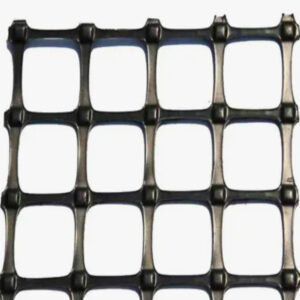
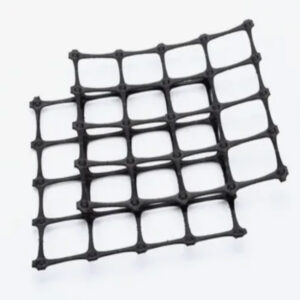
A geomat (also known as a 3D geomat or erosion control mat) is a geosynthetic material typically manufactured from polypropylene (PP) or HDPE. It consists of an intertwined, three-dimensional filament structure forming an open, porous matrix.
Key characteristics include:
- High void ratio for soil and root penetration
- Flexible and lightweight structure
- Strong resistance to UV, chemicals, and weathering
- Long-term durability in outdoor environments
Geomats are commonly installed on slopes and then filled with topsoil and seeded with grass or other vegetation.
2️⃣ The Relationship Between Geomat and Grass Root Growth
The effectiveness of a geomat for grass root growth lies in its ability to integrate with soil and vegetation to form a composite bio-engineering system.
Once grass begins to grow, the geomat and roots interlock, creating a reinforced soil layer that is significantly more stable than soil alone.
3️⃣ How Geomat Supports Grass Root Growth – Key Mechanisms
✔ Mechanical Root Anchorage
The three-dimensional structure of the geomat provides numerous contact points where grass roots can:
- Penetrate through the mat
- Wrap around filaments
- Anchor firmly into the underlying soil
As roots grow, they entangle with the geomat, forming a root–geomat–soil composite system that resists sliding and erosion.
✔ Soil Retention and Stabilization
Before vegetation is fully established, slopes are highly vulnerable to erosion. Geomat:
- Holds topsoil in place
- Prevents soil loss during rainfall
- Reduces surface runoff velocity
This stable soil environment is essential for early-stage grass root growth, allowing seedlings to survive and develop strong root systems.
✔ Moisture Retention and Microclimate Improvement
The porous structure of geomat helps:
- Retain moisture near the soil surface
- Reduce evaporation
- Maintain a favorable temperature for root development
These conditions significantly improve seed germination rates and root expansion, especially in dry or windy environments.
✔ Protection Against External Forces
Geomat acts as a protective layer that shields young grass roots from:
- Raindrop impact
- Surface washout
- Wind erosion
- Mechanical disturbance
This protection ensures that roots can grow undisturbed during the critical establishment period.
4️⃣ Stages of Grass Root Growth with Geomat
Stage 1: Installation and Seeding
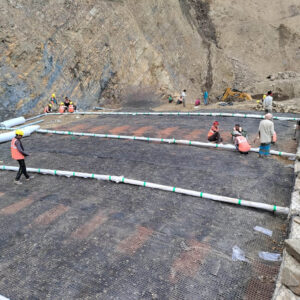
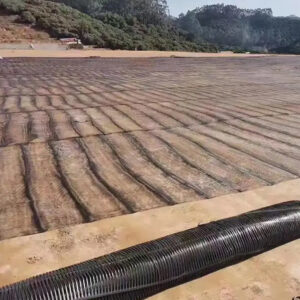
Geomat is laid on the slope, anchored, covered with soil, and seeded. Immediate erosion protection is provided even before vegetation emerges.
Stage 2: Germination and Initial Rooting
Grass roots begin to penetrate the geomat and underlying soil. The mat prevents soil displacement during rainfall.
Stage 3: Root–Mat Interlocking
As roots expand, they interlock with the geomat structure, significantly increasing shear resistance and slope stability.
Stage 4: Long-Term Reinforcement
Fully developed roots and geomat form a permanent reinforced layer that resists erosion and shallow slope failure.
5️⃣ Engineering Benefits of Geomat-Supported Root Systems
| Benefit | Engineering Impact |
|---|---|
| Enhanced erosion resistance | Reduces soil loss and sediment runoff |
| Improved slope stability | Increases shear strength of surface layer |
| Faster vegetation establishment | Shortens vulnerable construction period |
| Reduced maintenance | Long-term stable green slopes |
| Environmentally friendly | Supports ecological restoration |
The combined strength of grass roots + geomat is far greater than either system alone.
6️⃣ Typical Applications of Geomat for Grass Root Growth
Geomats are widely used in:
Transportation Infrastructure
- Highway and railway embankments
- Roadside cut and fill slopes
- Bridge approach slopes
Hydraulic and Environmental Engineering
- Riverbanks and canals
- Reservoir slopes
- Flood control embankments
Landscaping and Ecological Restoration
- Green slopes in urban developments
- Mine rehabilitation
- Landfill capping systems
In all these applications, geomat for grass root growth provides both immediate protection and long-term ecological stability.
7️⃣ Geomat vs Traditional Grass Protection Methods
| Method | Limitations | Geomat Advantage |
|---|---|---|
| Seeding only | High erosion risk before growth | Immediate surface protection |
| Turfing | High cost, limited slope angle | Flexible for steep slopes |
| Concrete or stone | No vegetation, poor ecology | Green, natural appearance |
Geomats bridge the gap between engineering stability and environmental sustainability.
8️⃣ Installation Considerations for Optimal Root Growth
To maximize grass root development, proper installation is essential:
- Prepare slope surface and remove loose debris
- Lay geomat tightly against the soil surface
- Anchor securely with steel pins or anchors
- Cover with suitable topsoil
- Use appropriate grass seed mix for local climate
- Provide initial irrigation if necessary
Correct installation ensures effective integration between soil, roots, and geomat.
9️⃣ Long-Term Performance and Sustainability
Once vegetation is fully established, the geomat continues to:
- Reinforce the root network
- Prevent surface erosion during heavy rainfall
- Maintain slope integrity over many years
Because geomats are durable and resistant to degradation, they provide long-term support for grass root systems, making them ideal for permanent slope protection.
🔟 Conclusion
A geomat for grass root growth is an essential solution for modern erosion control and ecological slope protection. By stabilizing soil, retaining moisture, protecting young vegetation, and mechanically anchoring roots, geomats enable strong and healthy grass root development.
Key advantages include:
✔ Enhanced root anchorage
✔ Improved erosion resistance
✔ Faster and more reliable vegetation establishment
✔ Long-term slope stability
✔ Environmentally friendly engineering solution
For slopes, embankments, riverbanks, and ecological restoration projects, geomats offer a proven and sustainable method to support grass root growth while meeting engineering performance requirements.