
Geocompost Bin Systems for Organic Waste Management and Composting
Durable geotextile compost bins designed for efficient organic waste composting, odor control, and sustainable environmental management.
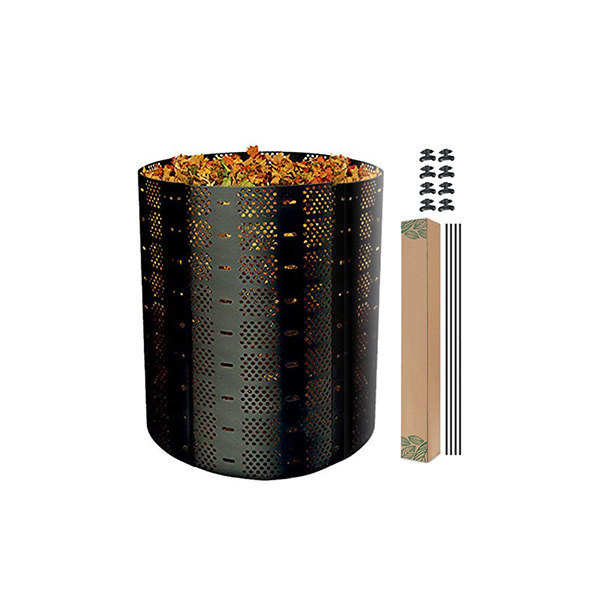
What Is a Geocompost Bin?
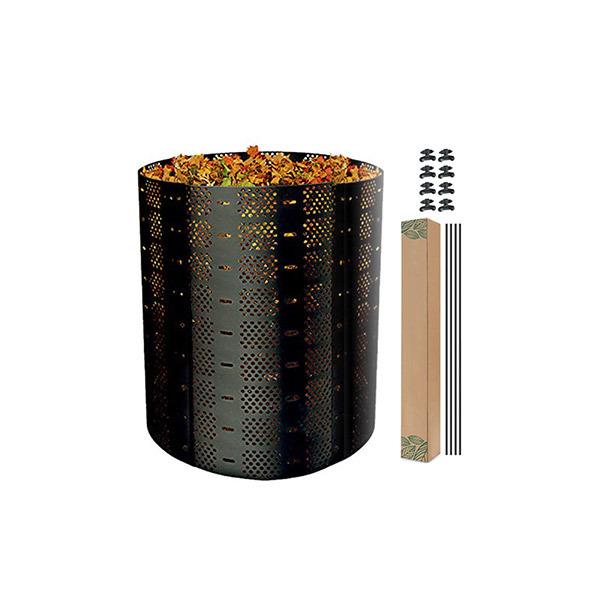
The GeoCompost Bin provides a convenient and efficient solution for composting kitchen scraps and yard waste quickly and easily. Manufactured from high-quality High Density Polyethylene (HDPE), it offers excellent durability, flexibility, and resistance to outdoor environmental conditions.
Designed as a backyard composting system that is easy to set up and operate, the Geo Compost Bin is suitable for users of all experience levels—from beginners to master gardeners. Its flexible structure allows for fast installation without specialized tools, enabling immediate use.
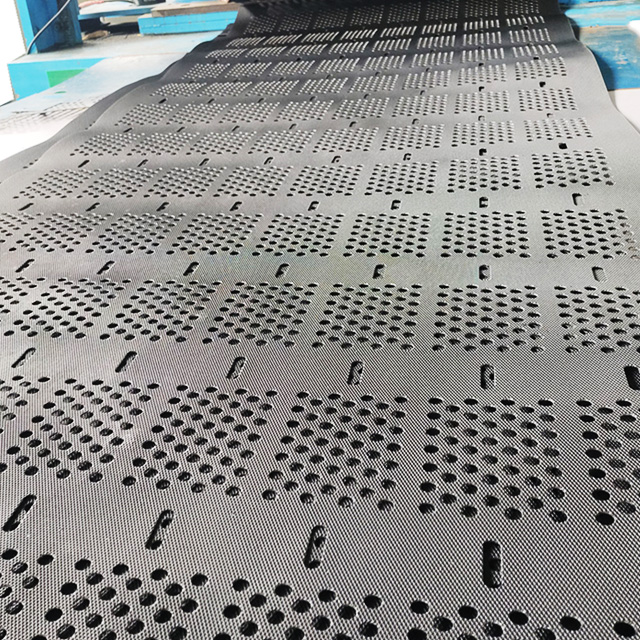
Compared with conventional rigid compost bins on the market, the GeoCompost Bin delivers larger composting capacity at a significantly lower cost. The permeable HDPE structure promotes airflow, supporting aerobic decomposition and accelerating the composting process while minimizing odors.
Once composting is complete, the nutrient-rich compost can be applied around trees, flowers, lawns, and garden plants to improve soil structure, enhance nutrient retention, and support healthier plant growth. By converting organic waste into valuable soil amendments, the GeoCompost Bin helps reduce household waste while improving your outdoor environment in an environmentally responsible way.
Geocompost bin systems are an efficient and sustainable solution for managing organic waste through controlled aerobic composting. Designed with permeable geosynthetic materials, these systems create an optimal environment for microbial activity while maintaining structural integrity and operational convenience. The following advantages highlight why geocompost bins are increasingly adopted in municipal, agricultural, and environmental applications.
One of the most significant advantages is their excellent air permeability for aerobic composting. The geosynthetic structure allows continuous airflow through the compost mass, supplying sufficient oxygen to aerobic microorganisms. This promotes stable biological activity and prevents anaerobic conditions that typically cause foul odors and inefficient decomposition.
As a result, geocompost bin systems accelerate organic waste decomposition. Improved oxygen circulation and controlled moisture levels enable microorganisms to break down organic matter more quickly and uniformly. This leads to shorter composting cycles and higher-quality compost output compared to traditional open piles or enclosed rigid bins.
Another key benefit is their ability to reduce odor and leachate generation. Effective aeration minimizes the formation of odor-causing gases, while the permeable yet controlled structure helps manage excess moisture. This significantly reduces leachate runoff, improving site cleanliness and environmental compliance.
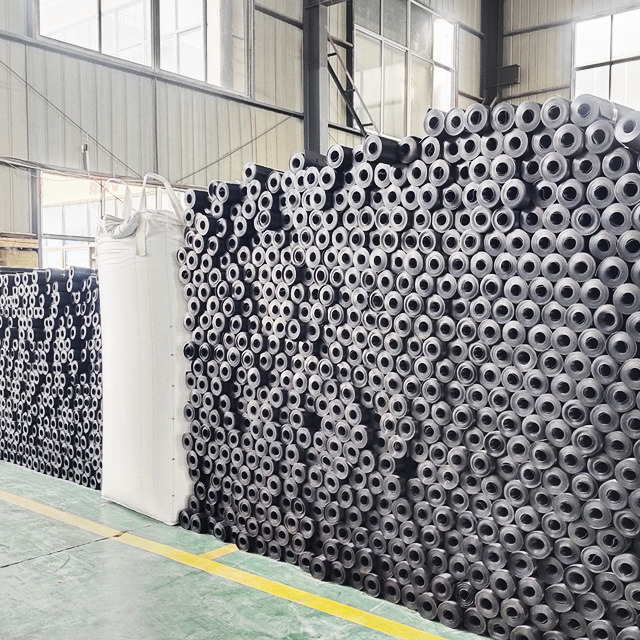
Geocompost bins are also lightweight and easy to assemble, making them ideal for projects requiring fast deployment or temporary composting solutions. They can be transported in compact rolls or panels and assembled on-site with minimal tools or labor, reducing installation time and overall operating costs.
The system offers flexible size and modular configuration, allowing users to adapt bin dimensions based on waste volume, site layout, or composting capacity requirements. Multiple units can be connected or expanded as demand increases, providing excellent scalability.
In addition, geocompost bin systems are resistant to UV exposure, moisture, and biological degradation. Manufactured from durable polymers, they maintain strength and permeability even in outdoor environments, ensuring long-term performance with minimal maintenance.
Finally, these systems are cost-effective compared to rigid compost structures. Lower material, transportation, and installation costs make geocompost bins an economical choice for both small-scale and large-scale composting operations, while delivering reliable and efficient composting performance.
Applications of Geocompost Bins
Municipal Organic Waste Management
Used for household food waste and biodegradable municipal waste composting.
Agricultural & Livestock Farms
Suitable for crop residues, manure, and agricultural organic waste.
Landscaping & Green Waste Treatment
Ideal for leaves, grass clippings, and garden waste composting.
Environmental & Sustainability Projects
Applied in eco-parks, recycling centers, and ESG-driven waste reduction programs.
Geocompost Bin Technical Specifications
| Parameter | Typical Value |
|---|---|
| Material | HDPE(High Density Polyethylene) |
| Air Permeability | High |
| Tensile Strength | 8 – 15 kN/m |
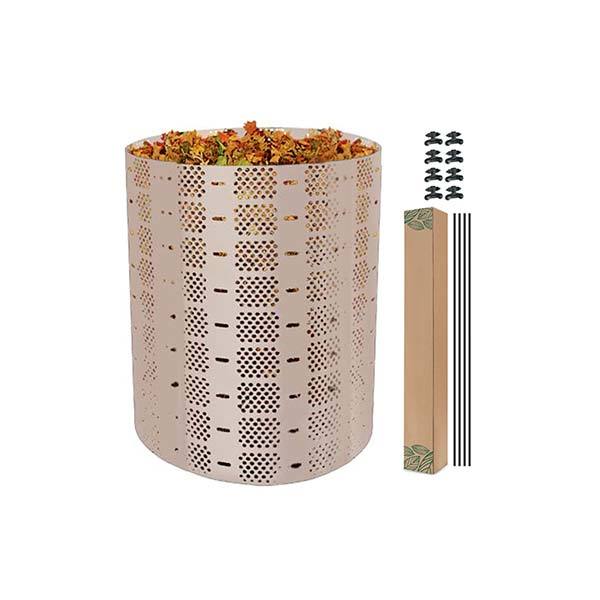
| Color | Black, Green, Sand or customized |
| Moisture Resistance | Excellent |
| Operating Temperature | -20°C to +70°C |
| Typical Size | 335cmx90cm / 131.9inx35.4in |
| Package include | 1 x Composter, 4 x Support Rod, 10 x Buckle key |
Installation and Setup Instructions for Geocompost Bin
Step 1: Unroll and Expand the Composter
Open the composter and lay it flat on the ground to release the natural curl from packaging. Once flattened, gradually expand the material to form a circular shape with your desired diameter.
As your composting capacity increases, the bin can be adjusted to a larger width to accommodate higher volumes of organic waste. For optimal stability and capacity, do not use the first set of slots to close the circle. Instead, use the second set of slots, which allows the composter to reach its largest recommended diameter.
Step 2: Connect and Secure the Composter
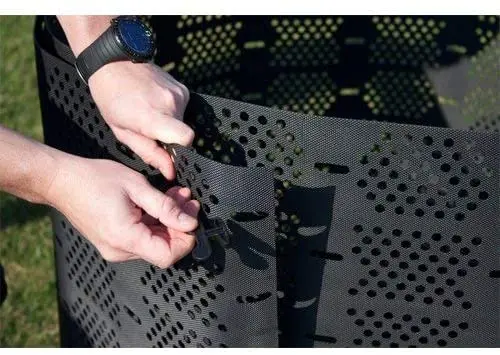
Overlap the edges of the composter at the selected diameter. Insert the compost bin closing key through the aligned slots, then secure it using the locking buckle to ensure a firm connection.
For maximum structural stability, install closure keys at three positions: the top-most slot, the bottom-most slot, and one at the center. This ensures uniform support and prevents deformation during filling and operation.
Step 3: Ready for Use
Once properly secured, the composter is ready for immediate use. Begin adding organic waste materials according to composting best practices to achieve efficient aerobic decomposition.
FAQ
1. Can geocompost bins control odor effectively?
Yes. The breathable geotextile fabric promotes aerobic decomposition, significantly reducing odor.
2. Are geocompost bins reusable?
Yes. They can be reused multiple times depending on operating conditions.
3. Can the size be customized?
Yes. Dimensions and capacity can be tailored to project requirements.