Which is best GSM geotextile for road separation layer? Selecting the right geotextile for road separation is a foundational decision in pavement design that directly influences structural performance, subgrade protection, and lifecycle costs. Among the most critical parameters is GSM (grams per square meter) — the mass per unit area of the geotextile. Choosing the best GSM geotextile for a road separation layer ensures effective soil separation, improved load distribution, and reduced rutting, all of which contribute to pavement longevity and reduced maintenance.
This article provides a professional, engineering-oriented guide to geotextile GSM selection, comparing fabric grades, performance characteristics, and practical considerations for roadway applications.
1️⃣ What Is a Road Separation Layer and Why It Matters
Road separation layers — sometimes called geotextile separation or subgrade separation systems — are installed between the subgrade soil and the granular base course to:
✔ Prevent intermixing of fine subgrade soil with coarse aggregate
✔ Preserve base course integrity under traffic loading
✔ Reduce subgrade pumping and rutting
✔ Improve structural performance and longevity
Inadequate separation leads to contamination of the base course, accelerated deformation, increased maintenance frequency, and potentially premature pavement failure.
Geotextiles designed for this function must combine adequate mechanical strength with filtration and separation performance. The GSM rating directly affects these properties.
2️⃣ What Does GSM Mean in Geotextiles?
GSM (g/m²) is a measure of weight per unit area of a geotextile fabric. Higher GSM typically correlates with:
- Greater tensile strength
- Higher puncture and tear resistance
- Increased durability under construction and traffic loads
However, higher GSM may also reduce permeability and flexibility if not balanced with appropriate material structure.
In practice, geotextiles for road separation layers are categorized into a range of GSM values depending on regional design standards and project requirements.
3️⃣ Why Geotextile GSM Matters for Road Separation
A geotextile performs three primary functions in separation applications:
✔ Separation
Prevents migration of fine soil into the granular base, preserving structural integrity.
✔ Filtration
Allows pore water to pass while retaining soil particles, reducing pore pressure and subgrade instability.
✔ Reinforcement
Contributes tensile resistance along the separation plane to support load distribution.
These performance metrics are influenced by:
- GSM (weight)
- Tensile strength and elongation
- Puncture and tear resistance
- Permittivity and apparent opening size (AOS)
Therefore, selecting the best GSM geotextile for road separation layer is not based on weight alone but on how GSM correlates with these mechanical and hydraulic properties.
4️⃣ Typical GSM Ranges for Road Separation
Geotextile GSM classes commonly used in road separation include:
| GSM Range | Typical Use Conditions |
|---|---|
| 200–300 g/m² | Light traffic or temporary access roads |
| 300–500 g/m² | Low to moderate traffic rural roads |
| 500–800 g/m² | Primary highways and heavy traffic conditions |
| 800–1200 g/m² | Very heavy loads, weak subgrades, industrial pavements |
These are general guidelines — actual specification should follow geotechnical design requirements and field conditions.
5️⃣ Performance Impact of Different GSM Grades
📍 Low GSM Geotextiles (200–300 g/m²)
Advantages
- Lower cost
- Easier handling and placement
- Adequate for light traffic conditions
Limitations
- Lower tensile strength
- Reduced puncture resistance
- Less effective under heavy loading or weak subgrade
Best for:
- Secondary or local roads
- Temporary construction access
📍 Mid GSM Geotextiles (300–500 g/m²)
Advantages
- Balanced strength and flexibility
- Effective separation with good filtration
- Good value for typical rural and low volume highways
Limitations
- May require careful installation to avoid damage
- Not ideal for very soft subgrades without reinforcement
Best for:
- Moderate traffic routes
- Roads crossing cohesive or silty soils
📍 High GSM Geotextiles (500–800 g/m²)
Advantages
- High tensile and puncture resistance
- Excellent separation and reinforcement
- Performs well on weak or variable subgrade
Limitations
- Higher material cost
- Slightly more rigid during installation
Best for:
- Primary highways
- Heavy truck traffic pavements
- Projects with weak subgrades
📍 Very High GSM Geotextiles (800+ g/m²)
Advantages
- Maximum mechanical performance
- Exceptional resistance under severe load and deformation
- Suitable for extreme conditions
Limitations
- Highest cost
- Reduced flexibility (handled with experienced installation crews)
Best for:
- Ports, container yards
- Heavy industrial pavements
- Very soft, highly compressible subsoils
6️⃣ How to Choose the Best GSM Based on Project Conditions
Selecting the optimal GSM geotextile for a separation layer depends on:
🔹 Traffic Loading
- Low traffic: 300–500 g/m² may suffice
- Heavy traffic: 500–800 g/m² recommended
- Very heavy loads: 800+ g/m²
Consider Equivalent Single Axle Loads (ESALs) when estimating design traffic.
🔹 Subgrade Strength
- Good CBR (10%+): Lower GSM may perform adequately
- Weak subgrade (CBR <5%): High or very high GSM is preferred
Weak soils are prone to pumping and deformation — separation fabrics must resist tensile stresses and interface shear.
🔹 Aggregate Type
Angular, well-graded aggregates interlock more effectively with geotextiles. Higher GSM fabrics are better suited to resist punctures from coarse aggregates.
🔹 Environmental Conditions
Consider water table, drainage, and frost potential — geotextiles with appropriate permeability and AOS support long-term subgrade stability.
7️⃣ Standard Tests and Specifications
When specifying a GSM geotextile for separation layer, ensure laboratory data for:
- Tensile strength (ASTM D4632 or ISO 10319)
- Tear resistance (ASTM D4533)
- Puncture resistance (ASTM D6241)
- Apparent Opening Size (AOS – ASTM D4751)
- Permittivity (ASTM D4491)
Match these test results with your design criteria — not just GSM alone.
8️⃣ Installation Best Practices
Proper installation is essential to achieve design performance:
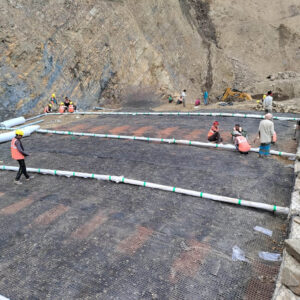
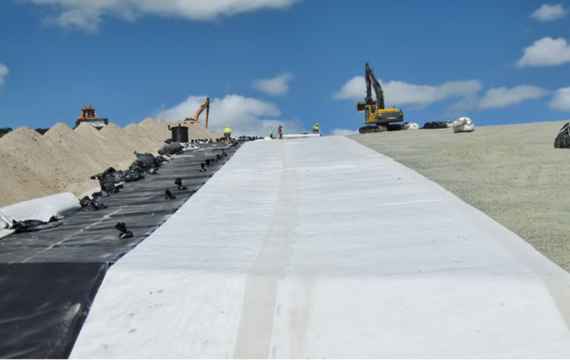
✔ Clear sharp rocks and debris from subgrade
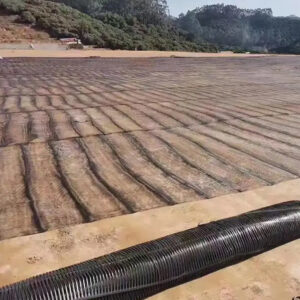
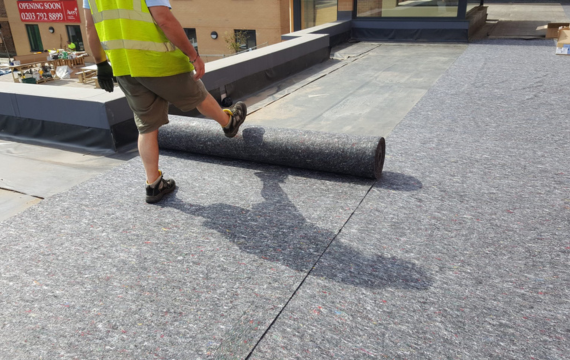
✔ Roll out geotextile smoothly — avoid wrinkles
✔ Overlap panels as per engineering specification
✔ Protect from damage during aggregate placement
✔ Avoid excessive dragging of heavy equipment over the fabric
Higher GSM geotextiles are easier to handle without tearing, but installation quality remains critical for separation performance.
9️⃣ Case Examples of GSM Selection
| Scenario | Recommended GSM | Reason |
|---|---|---|
| Rural feeder road with moderate traffic | 300–450 g/m² | Balanced strength and cost |
| Primary highway over soft clay | 600–800 g/m² | Reinforcement + separation |
| Heavy haul industrial road | 800–1200 g/m² | Extremely high loads |
| Temporary construction access | 200–300 g/m² | Short lifespan and light loads |
These examples illustrate how GSM selection varies by project goals and constraints.
🔟 Cost vs. Performance Considerations
- Lower GSM fabrics cost less but may underperform on heavy loads.
- Higher GSM fabrics cost more upfront but deliver longer service life, reduced maintenance, and better subgrade protection.
- Life-cycle analysis often shows high GSM geotextiles reduce rehabilitation costs, especially on major roads.
Investing in the best GSM geotextile for road separation layer can yield significant long-term savings.
Conclusion: Which GSM Is Best?
There is no one-size-fits-all GSM, but general guidance is:
📌 300–500 g/m² — good all-around choice for typical local and rural roads
📌 500–800 g/m² — best balance for primary highways and heavier traffic
📌 800+ g/m² — optimal for extreme traffic loads or very weak subgrades
For most road separation layers where heavy traffic and weak subgrade conditions exist, a 500–800 g/m² geotextile often represents the best balance of strength, durability, and value.
Engineering judgment should always align GSM selection with site conditions, performance objectives, and budget constraints.