Mining environments are among the most demanding applications for geomembrane liners. Exposure to aggressive chemicals, high loads, sharp aggregates, and extreme weather conditions requires a liner system that delivers durability, chemical resistance, and structural reliability.
Among commonly specified thicknesses, 1.5mm geomembrane is widely used in heap leach pads, tailings storage facilities, evaporation ponds, and process water containment systems. Understanding 1.5mm geomembrane performance in mining projects is essential for determining whether it meets design, environmental, and operational requirements.
This article provides a comprehensive engineering analysis of its mechanical performance, chemical resistance, durability, and suitability for different mining applications.
1. Why Geomembranes Are Critical in Mining
Modern mining operations must comply with strict environmental regulations. Geomembranes serve as:
- Primary containment barrier
- Secondary environmental protection system
- Leak prevention layer
- Chemical-resistant lining system
Failure of a geomembrane liner can result in:
- Environmental contamination
- Regulatory penalties
- Operational shutdown
- Significant financial loss
Therefore, liner thickness selection is a critical engineering decision.
2. What Is a 1.5mm Geomembrane?
A 1.5mm geomembrane typically refers to:
- 1.5 mm thick HDPE (High-Density Polyethylene) liner
- Smooth or textured surface
- Manufactured through extrusion or calendering
It provides a balance between:
- Mechanical strength
- Flexibility
- Cost efficiency
- Weldability
In mining, HDPE is preferred due to its strong resistance to chemicals and UV exposure.
3. Mechanical Performance in Mining Conditions
3.1 Tensile Strength
Typical tensile properties for 1.5mm HDPE geomembrane:
- Yield strength: approx. 22–25 kN/m
- Break strength: approx. 40–45 kN/m
- Elongation at break: > 700%
This allows the liner to:
- Accommodate subgrade settlement
- Withstand installation stresses
- Resist operational loads
3.2 Puncture Resistance
Mining subgrades often contain:
- Crushed rock
- Angular aggregates
- Ore fragments
1.5mm geomembrane offers moderate puncture resistance, typically:
- 600–800 N (depending on standard)
In most heap leach pads, a protective geotextile cushion layer is installed beneath the geomembrane to enhance puncture protection.
3.3 Tear Resistance
Mining liner systems must resist tear propagation caused by:
- Construction damage
- Equipment movement
- Differential settlement
The 1.5mm thickness provides sufficient tear resistance for medium-duty applications.
4. Chemical Resistance OF 1.5MM GEOMEMBRANE PERFORMANCE in Mining Environments
One of the strongest advantages of HDPE geomembrane is chemical resistance.
4.1 Resistance to Acidic Solutions
In gold and copper mining, heap leach operations use:
- Sulfuric acid
- Cyanide solutions
HDPE geomembranes show excellent resistance to:
- Low pH environments
- Oxidizing chemicals
- Metal leachates
4.2 Resistance to Hydrocarbons and Process Water
Mining facilities may contain:
- Process solutions
- Hydrocarbon residues
- Contaminated wastewater
1.5mm HDPE geomembrane maintains structural integrity under prolonged chemical exposure.
5. Stress Crack Resistance (SCR)
Stress cracking is a key long-term failure mode for HDPE liners.
1.5mm geomembranes typically demonstrate:
- High resistance to environmental stress cracking
- Long service life (20–30+ years when properly installed)
Proper resin selection and manufacturing quality significantly influence SCR performance.
6. Performance in Heap Leach Pads
Heap leach pads impose:
- High vertical loads
- Static and dynamic stress
- Elevated temperatures
Is 1.5mm Suitable?
✔ Suitable for small to medium heap leach facilities
✔ Appropriate when proper cushioning is installed
✔ Adequate when subgrade preparation is high quality
However, in large-scale operations with extreme loads, some designers prefer 2.0mm geomembrane for additional safety margin.
7. 1.5MM GEOMEMBRANE Performance in Tailings Storage Facilities
Tailings dams present:
- Long-term static load
- Hydrostatic pressure
- Chemical exposure
1.5mm geomembrane is commonly used in:
- Secondary containment systems
- Small to medium tailings ponds
For high-risk or large-capacity dams, thicker liners may be specified depending on regulatory requirements.
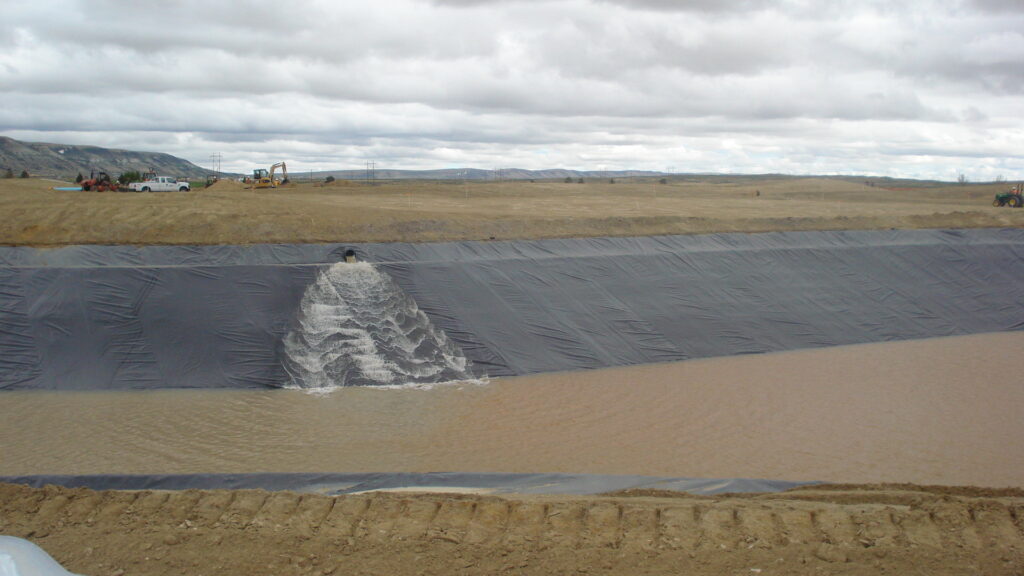
8. UV Resistance and Climate Performance
Mining sites are often located in:
- High-altitude regions
- Desert climates
- Areas with intense UV radiation
HDPE geomembranes contain carbon black for UV stabilization.
1.5mm geomembrane provides:
- Excellent UV resistance
- Resistance to temperature fluctuations
- Stability under freeze-thaw cycles
9. Weldability and Installation Performance
A key advantage of 1.5mm geomembrane is its:
- Good flexibility
- Efficient thermal welding
- Manageable roll weight
Compared to thicker membranes:
- Easier to handle
- Faster installation
- Lower transportation cost
This improves construction efficiency in remote mining sites.
10. Comparison With Other Thicknesses
| Thickness | Typical Application | Performance Level |
|---|---|---|
| 1.0mm | Light containment | Limited durability |
| 1.5mm | Standard mining applications | Balanced performance |
| 2.0mm | Heavy-duty mining | High safety margin |
| 2.5mm | Extreme load conditions | Maximum durability |
The choice depends on:
- Load conditions
- Risk category
- Regulatory requirements
- Budget considerations
11. Advantages of 1.5mm Geomembrane in Mining Projects
- Strong chemical resistance
- Good puncture performance
- Excellent weld integrity
- Balanced cost-performance ratio
- Suitable for most standard mining applications
12. Limitations
1.5mm geomembrane may not be ideal for:
- Extremely high ore stack heights
- Highly aggressive chemical environments
- High seismic risk zones requiring additional safety factor
Engineering assessment is essential before final specification.
13. Long-Term Durability
With proper design and installation:
- Service life can exceed 20–30 years
- Resistant to oxidation and chemical degradation
- Maintains low permeability over time
Durability depends on:
- Resin quality
- Installation quality
- Protective layers
- Environmental exposure
14. Cost-Performance Analysis
From a life-cycle perspective, 1.5mm geomembrane:
- Offers lower material cost than 2.0mm
- Reduces transportation expense
- Provides sufficient protection for most mining operations
It is often considered the industry-standard thickness for balanced risk and cost management.
15. Final Conclusion
So, how does 1.5mm geomembrane performance in mining projects compare?
✔ Provides strong chemical resistance
✔ Offers adequate mechanical strength for most standard mining applications
✔ Ensures reliable long-term containment when properly installed
✔ Balances cost and durability effectively
For most heap leach pads, tailings ponds, and mining water containment systems, 1.5mm HDPE geomembrane represents a reliable and widely accepted solution.
However, for extreme load or high-risk facilities, a thicker geomembrane may be justified based on engineering assessment.