How Does Geogrid Improve Asphalt Fatigue Resistance?
Asphalt pavements are subjected to millions of repeated traffic load cycles during their service life. One of the most critical failure modes under these cyclic loads is fatigue cracking, which gradually weakens the asphalt layer and leads to structural failure. Improving asphalt fatigue resistance is therefore a primary objective in modern pavement engineering.
Geogrid reinforcement has emerged as a proven and widely adopted solution to enhance asphalt fatigue resistance, extend pavement life, and reduce maintenance costs. This article provides a comprehensive engineering explanation of how geogrid improve asphalt fatigue resistance, examining the mechanical mechanisms, design considerations, and practical performance outcomes.
1. Understanding Asphalt Fatigue Failure
1.1 What Is Asphalt Fatigue?
Asphalt fatigue is a progressive cracking phenomenon caused by repeated tensile strain at the bottom of asphalt layers. Under traffic loading:
- Tensile stress develops at the underside of the asphalt layer
- Microcracks initiate and propagate with each load cycle
- Cracks eventually reach the surface, forming alligator cracking
Fatigue damage is cumulative and irreversible.
1.2 Factors Influencing Asphalt Fatigue Resistance
Key factors affecting fatigue performance include:
- Asphalt layer thickness
- Asphalt mixture stiffness
- Temperature variations
- Traffic loading magnitude and frequency
- Quality of bonding between pavement layers
Even well-designed pavements can suffer premature fatigue without reinforcement under heavy traffic conditions.
2. What Is Geogrid Asphalt Reinforcement?
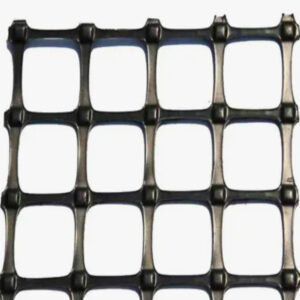
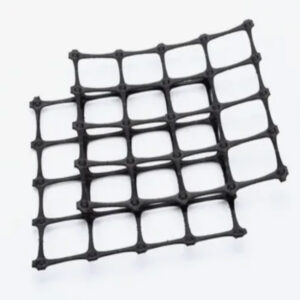
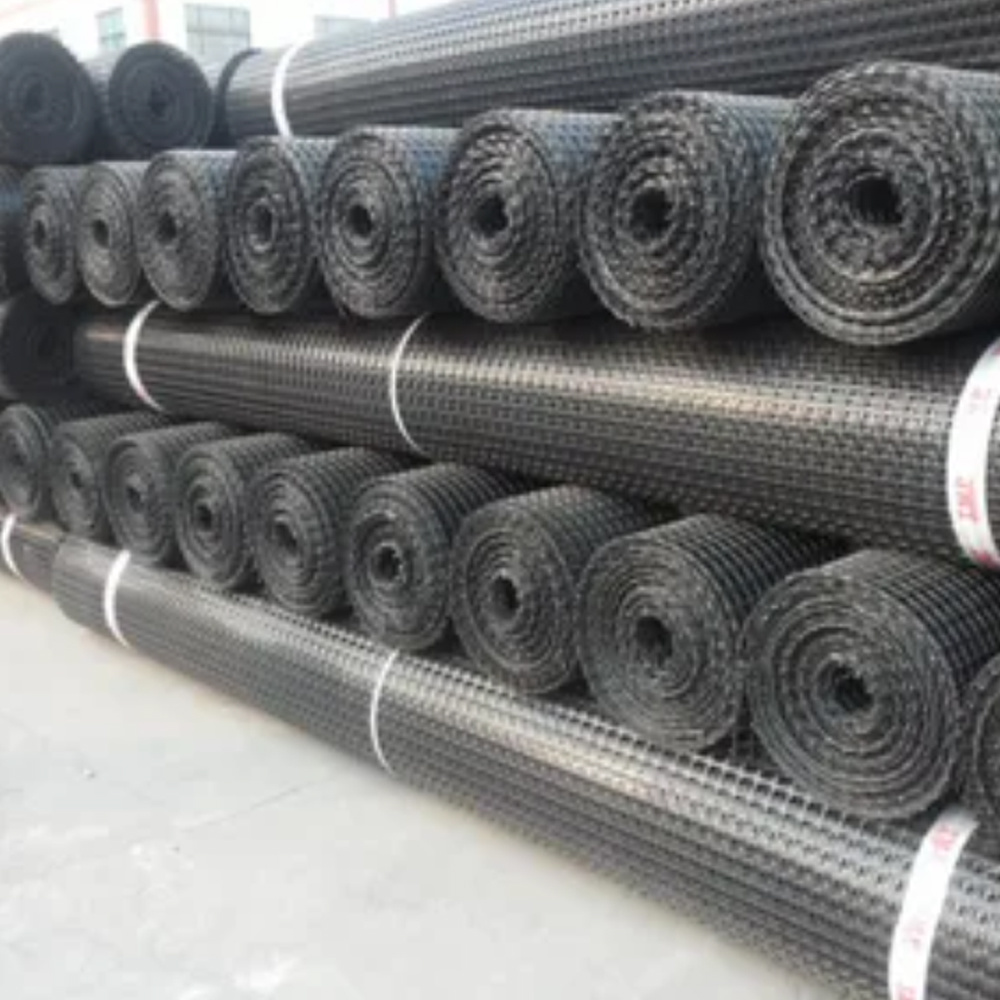
A geogrid used for asphalt reinforcement is typically a high-strength polymer grid installed:
- Within asphalt layers, or
- At the asphalt–base interface
Common materials include:
- Polyester (PET)
- Fiberglass
- Composite geogrids with bonding coatings
The primary function is to absorb tensile stress and delay crack propagation.
3. Why Geogrid Is Effective in Asphalt Pavements
To understand how geogrid improve asphalt fatigue resistance, it is essential to examine its interaction with the asphalt layer under cyclic loading.
Key Functional Roles
- Tensile stress redistribution
- Crack initiation delay
- Crack propagation control
- Improved load spreading
Geogrids do not replace asphalt strength; instead, they work compositely with the asphalt layer.
4. Stress Redistribution Mechanism
4.1 Tensile Stress Reduction
Under wheel loading, tensile stress concentrates at the bottom of asphalt layers. When a geogrid is installed:
- Tensile forces are partially transferred from asphalt to geogrid
- Peak tensile strain is reduced
- Stress is distributed over a wider area
Lower tensile strain directly correlates with longer fatigue life.
4.2 Load Transfer Efficiency
Geogrids improve the load transfer efficiency between pavement layers by:
- Increasing interlayer stiffness
- Reducing localized deformation
This results in a more uniform stress field and reduced fatigue damage accumulation.
5. Crack Control and Propagation Resistance
5.1 Crack Arrest Mechanism
When microcracks form in asphalt:
- Geogrid acts as a physical barrier
- Crack growth rate slows significantly
- Crack energy is dissipated along the grid structure
This mechanism is especially effective against bottom-up fatigue cracking.
5.2 Reflective Crack Mitigation
In overlays placed over cracked pavements:
- Existing cracks tend to reflect upward
- Geogrid reinforcement delays reflective cracking
- Overlay service life is significantly extended
While reflective cracking is not fatigue itself, reducing crack interaction improves overall fatigue resistance.
6. Composite Action Between Asphalt and Geogrid
Geogrids improve fatigue resistance through composite behavior.
Key Requirements for Composite Action
- Proper bonding between geogrid and asphalt
- Adequate tack coat application
- Correct installation temperature and compaction
When bonded correctly, the asphalt–geogrid system behaves as a reinforced composite layer, increasing effective tensile stiffness.
7. Influence on Fatigue Life (Laboratory and Field Evidence)
Numerous laboratory tests and field studies show that geogrid reinforcement can:
- Increase asphalt fatigue life by 2–5 times
- Reduce crack density under repeated loading
- Delay the onset of visible fatigue cracking
The improvement is more pronounced under:
- Heavy traffic
- Thin asphalt layers
- Weak base or subgrade conditions
8. Placement Location and Its Effect on Fatigue Resistance
8.1 Geogrid at Asphalt–Base Interface
Most effective for:
- Bottom-up fatigue cracking
- Structural reinforcement
The geogrid experiences maximum tensile stress where fatigue cracking initiates.
8.2 Geogrid Within Asphalt Layers
Used in:
- Thick asphalt pavements
- High-performance pavement systems
Proper embedment ensures full load transfer and optimal fatigue performance.
9. Role of Geogrid Aperture Geometry
Aperture size and geometry influence fatigue improvement by:
- Enhancing asphalt aggregate interlock
- Improving mechanical bonding
- Ensuring stress transfer efficiency
Optimized aperture geometry allows asphalt to penetrate the grid, creating a strong mechanical lock.
10. Temperature and Viscoelastic Effects
Asphalt is a temperature-sensitive, viscoelastic material.
At High Temperatures
- Asphalt softens
- Tensile strain increases
- Geogrid provides critical tensile restraint
At Low Temperatures
- Asphalt becomes brittle
- Crack initiation risk increases
- Geogrid delays crack formation
Thus, geogrids improve fatigue resistance across a wide temperature range.
11. Pavement Thickness Reduction Potential
By improving fatigue resistance, geogrids may allow:
- Reduced asphalt thickness
- Extended design life at constant thickness
Design optimization must be supported by mechanistic-empirical analysis, but fatigue performance gains are well documented.
12. Design Considerations for Fatigue-Oriented Geogrid Use
To maximize fatigue resistance improvement:
- Select geogrid with high tensile modulus
- Ensure chemical compatibility with asphalt
- Verify long-term durability and creep resistance
Geogrid selection should focus on stiffness at small strains, not just ultimate strength.
13. Installation Quality and Its Impact on Fatigue Performance
Improper installation can significantly reduce benefits.
Common Installation Requirements
- Clean pavement surface
- Uniform tack coat application
- Proper tensioning and alignment
- Adequate asphalt compaction
Poor bonding eliminates composite action and reduces fatigue improvement.
14. Comparison With Unreinforced Asphalt Pavements
| Performance Aspect | Unreinforced Asphalt | Geogrid Reinforced Asphalt |
|---|---|---|
| Fatigue life | Limited | Significantly extended |
| Crack initiation | Early | Delayed |
| Crack propagation | Rapid | Slowed |
| Maintenance frequency | High | Reduced |
| Life-cycle cost | Higher | Lower |
15. Limitations and Misconceptions
Geogrids:
- Do not eliminate fatigue cracking entirely
- Do not compensate for poor structural design
- Must be correctly selected and installed
They are performance enhancers, not substitutes for good pavement engineering.
16. Typical Applications Benefiting From Improved Fatigue Resistance
- Highways and expressways
- Airport runways and taxiways
- Industrial access roads
- Port pavements
- Urban roads with heavy traffic
In these applications, fatigue resistance improvement leads to significant economic benefits.
17. Long-Term Durability and Service Life
Geogrids used in asphalt pavements are designed for:
- Long-term chemical resistance
- Thermal stability
- Resistance to construction damage
When properly specified, geogrid-reinforced asphalt systems can achieve 20–40% longer service life.
18. Final Conclusion
So, how does geogrid improve asphalt fatigue resistance?
✔ By reducing tensile strain at the bottom of asphalt layers
✔ By redistributing traffic-induced stresses
✔ By delaying crack initiation and slowing crack propagation
✔ By creating a reinforced composite asphalt system
In modern pavement design, geogrid reinforcement is a highly effective strategy for enhancing fatigue resistance, extending pavement life, and reducing long-term maintenance costs.
When integrated into a sound pavement design and installed correctly, geogrids provide measurable structural benefits that justify their widespread use in heavy-duty asphalt pavements.