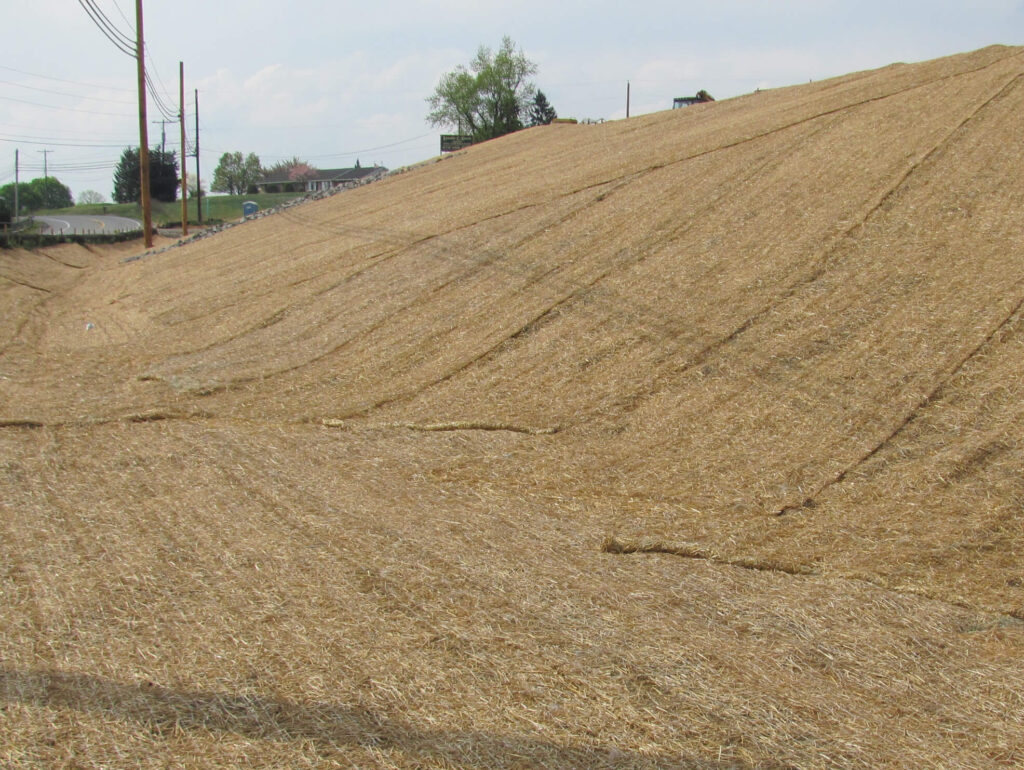
Coir mats (also called coconut fiber erosion control blankets) are a natural, biodegradable solution widely used for soil stabilization, slope protection, and vegetation establishment. One of the most important decisions in specifying coir mats is material thickness — which directly influences performance, durability, moisture retention, and installation outcomes.
This article explains how to choose the right coir mat thickness for erosion control and vegetation support, comparing common thickness grades, performance trade-offs, and practical guidelines for field applications.
1️⃣ What Is a Coir Mat?
A coir mat is a geosynthetic product made from coconut fibers (coir) mechanically intertwined and stitched into a flexible, porous blanket. Coir mats provide:
- Surface protection from rainfall and runoff
- Moisture retention for seed germination
- Reinforcement for root systems
- Biodegradability, supporting ecological restoration
Thickness is a key parameter: thicker mats generally offer greater erosion resistance and longer functional life, but may be more expensive and less flexible.
2️⃣ Standard Coir Mat Thickness Options
Coir mats are commonly manufactured in the following thicknesses:
| Thickness | Common Uses |
|---|---|
| 10 mm | Light erosion control; gentle slopes |
| 15 mm | Moderate erosion control; landscaping |
| 20 mm | Standard erosion control; typical slopes |
| 30 mm | Heavy erosion control; steep slopes |
Each thickness category is engineered to balance protection, root support, and degradation timing.
3️⃣ Key Factors in Choosing Coir Mat Thickness
Selecting the right coir mat thickness involves evaluating several project factors:
📌 Slope Gradient
The steeper the slope, the higher the erosion potential.
- Gentle slopes (<25°): Thinner mats (10–15 mm) often suffice
- Moderate slopes (25–45°): Standard mats (15–20 mm) recommended
- Steep slopes (>45°): Thicker mats (20–30 mm) provide better protection
📌 Soil Type
- Cohesive soils (clay/loam): Lower soil detachment risk — thinner mats may work
- Non-cohesive soils (sand/silty sand): Higher erosion risk — thicker mats improve stability
📌 Rainfall Intensity and Runoff
Heavy rains and high runoff rates increase shear forces on soil surface — thicker coir mats help dissipate energy and reduce soil loss.
📌 Vegetation Goals
Faster seed germination and stronger root development benefit from thicker coir mats, which retain moisture and create a better microenvironment for young plants.
📌 Functional Life Expectations
Thicker mats generally last longer before biodegrading — useful when vegetation establishment may be slow.
4️⃣ Performance Characteristics by Thickness
10 mm Coir Mat
- Best for: low erosion risk areas, landscaping, park grounds
- Advantages: Lightweight, cost-effective, easy handling
- Limitations: Lower resistance to runoff and shear stress
15 mm Coir Mat
- Best for: moderate erosion sites, road verge stabilization
- Advantages: Good balance of protection and cost
- Limitations: May not suffice on steep, high-runoff slopes if vegetation is slow
20 mm Coir Mat
- Best for: typical slope erosion control, embankments
- Advantages: Good structural support, high moisture retention
- Limitations: Slightly heavier and more costly than thinner options
30 mm Coir Mat
- Best for: steep slopes, high rainfall intensity, critical erosion control areas
- Advantages: Maximum erosion resistance; supports strong root systems
- Limitations: Higher cost and slightly more challenging handling

5️⃣ Biodegradation and Vegetation Support
Coir mats naturally biodegrade over time (often 6–36 months depending on thickness and environment). Thickness affects:
- Functional life: Thicker mats persist longer, providing protection until vegetation is established
- Root anchorage: Thicker mats improve root entanglement and reinforcement
For areas where plant growth is slow (dry climates, poor soil), a thicker mat (20–30 mm) helps ensure vegetation becomes established before the mat fully decomposes.
6️⃣ Installation Best Practices
To maximize performance:
✔ Prepare slope surface and remove debris
✔ Lay coir mat flush against soil — avoid gaps or wrinkles
✔ Anchor securely with staples or stakes
✔ Seed directly into mat and cover with light soil if needed
✔ Water as appropriate to promote germination
Proper installation ensures the coir mat works in tandem with vegetation for long-term stabilization.
7️⃣ Typical Applications by Thickness
| Application | Recommended Thickness |
|---|---|
| Park landscaping | 10–15 mm |
| Roadside slopes | 15–20 mm |
| Embankments | 20 30 mm |
| Riverbanks / high flow paths | 30 mm |
| Mine reclamation sites | 20–30 mm |
| Landfill cover slopes | 15–30 mm |
Selecting thickness based on site conditions and design goals ensures optimal performance and cost-effectiveness.
8️⃣ Cost vs Performance Considerations
- Lower thickness mats cost less up front but may require quicker maintenance or replacement.
- Higher thickness mats cost more but deliver longer service life and better erosion control — often reducing overall project costs.
In many cases, the 20 mm coir mat represents the most cost-effective choice for typical road embankments and slope protection.
9️⃣ Environmental and Sustainability Benefits
Coir mats are biodegradable and derived from natural coconut fiber — making them a green alternative to synthetic erosion control products. They:
✔ Decompose naturally
✔ Enhance soil organic content
✔ Support healthy vegetation
✔ Reduce sediment runoff
Choosing the appropriate thickness ensures these ecological benefits are delivered effectively.
🔟 Conclusion: Which Thickness Should You Choose?
There is no single “best” thickness for all projects. However, general guidance is:
📌 10–15 mm — for light erosion control, landscaping, gentle slopes
📌 15–20 mm — for moderate slopes and typical erosion control needs
📌 20–30 mm — for steep slopes, high runoff, slow vegetation growth
📌 30 mm — for critical erosion zones and extreme conditions
For most road slope and embankment applications, a 20 mm coir mat provides the best balance of durability, vegetation support, and cost efficiency.