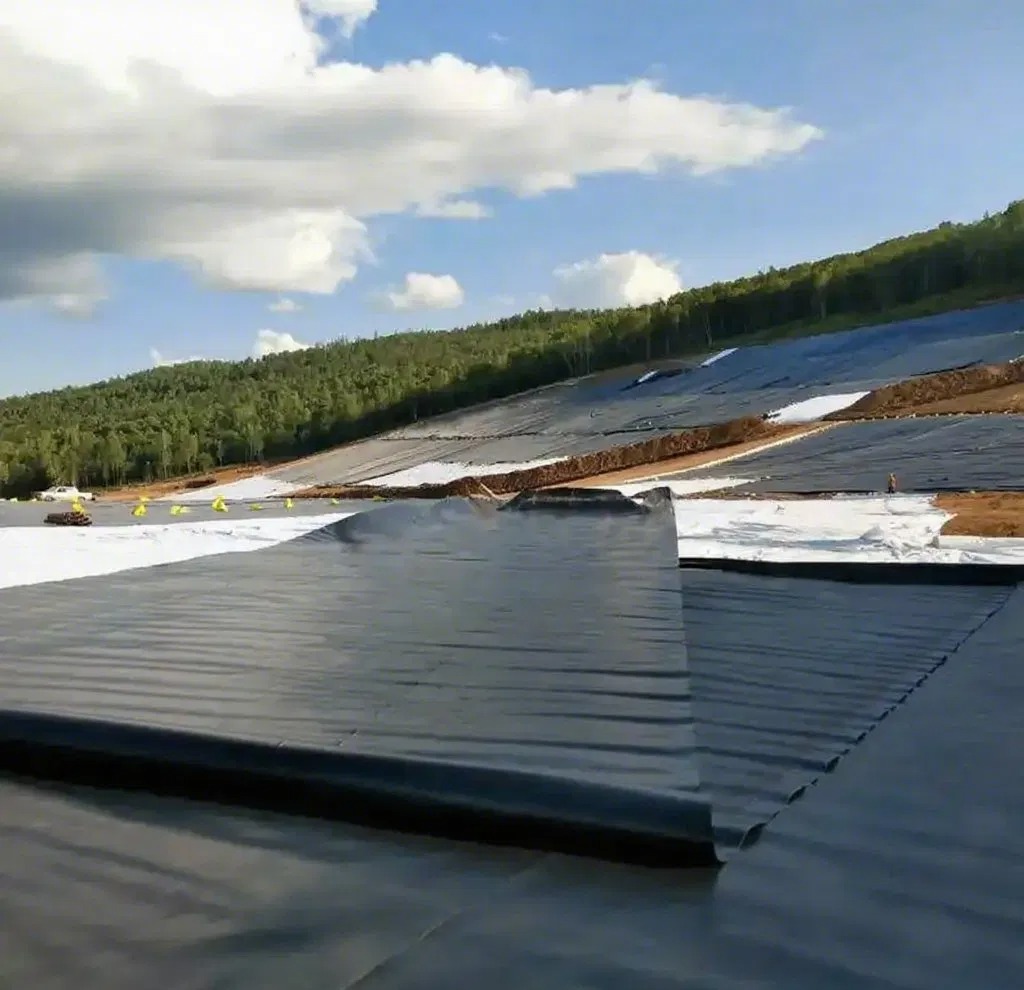
Why Choose 1.0mm HDPE Geomembrane for Landfill Projects?
Modern landfill engineering places extremely high demands on containment systems. Preventing leachate leakage, protecting groundwater, ensuring long-term durability, and meeting environmental regulations are critical requirements for any landfill project. Among available liner materials, 1.0mm HDPE geomembrane for landfill applications has become a widely accepted and proven solution worldwide.
This article explains in detail why 1.0mm HDPE geomembrane is commonly specified for landfill liners, focusing on technical performance, regulatory compliance, installation practicality, and overall cost efficiency.
1️⃣ What Is a 1.0mm HDPE Geomembrane?
A 1.0mm HDPE geomembrane is a high-density polyethylene impermeable liner with a nominal thickness of 1.0 millimeter. It is manufactured using advanced extrusion or calendering processes to achieve:
- Very low permeability
- High tensile strength
- Excellent chemical resistance
- Long service life under harsh landfill conditions
HDPE geomembranes are typically used as primary or secondary liners in landfill containment systems.
2️⃣ Key Performance Requirements for Landfill Liners
Landfill liners must meet strict engineering and environmental standards, including:
- Leachate containment
- Chemical and biological resistance
- Long-term mechanical stability
- Puncture and tear resistance
- UV and aging resistance
- Compatibility with geotextiles and drainage layers
The 1.0mm HDPE geomembrane for landfill balances these requirements effectively.
3️⃣ Excellent Impermeability and Leak Prevention
One of the most critical functions of a landfill liner is preventing leachate migration into surrounding soil and groundwater.
Why 1.0mm HDPE Performs Well
- Permeability coefficient close to zero
- Dense molecular structure blocks liquid and gas transmission
- Heat-welded seams create continuous impermeable barriers
When installed correctly, a 1.0mm HDPE geomembrane forms a highly reliable hydraulic barrier, protecting the environment over decades.
4️⃣ Superior Chemical Resistance
Landfill leachate often contains:
- Organic acids
- Heavy metals
- Hydrocarbons
- Salts and aggressive chemicals
HDPE offers outstanding resistance to these substances. A 1.0mm HDPE geomembrane for landfill does not degrade, swell, or dissolve when exposed to aggressive leachate, making it suitable for:
- Municipal solid waste landfills
- Industrial waste landfills
- Hazardous waste containment systems (with multi-layer design)
5️⃣ Mechanical Strength and Durability
Despite its relatively thin profile, a 1.0mm HDPE geomembrane provides strong mechanical performance:
| Property | Performance Benefit |
|---|---|
| Tensile strength | Resists stress from waste load |
| Elongation at break | Accommodates settlement and deformation |
| Tear resistance | Prevents crack propagation |
| Puncture resistance | Withstands angular aggregates (with protection layers) |
When used with nonwoven geotextiles as cushioning layers, the liner system achieves excellent long-term durability.
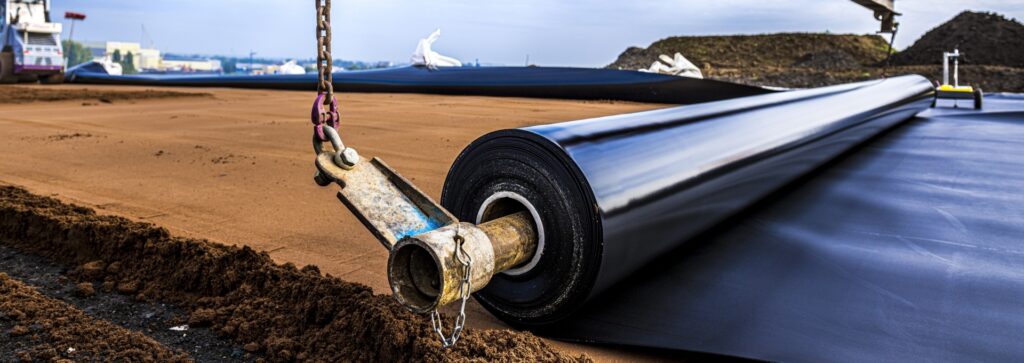
6️⃣ Long Service Life and Aging Resistance
Landfill liners are expected to perform for 30–100 years depending on regulations and waste type.
HDPE Advantages
- Excellent resistance to UV exposure during installation
- Strong oxidation resistance (with antioxidants)
- Stable performance under temperature variation
- Minimal creep deformation under sustained loads
A 1.0mm HDPE geomembrane for landfill delivers a reliable balance between longevity and constructability.
7️⃣ Cost-Effective Thickness Selection
Thickness selection is a key design decision in landfill engineering.
Why 1.0mm Is Often Chosen
- Meets regulatory requirements in many regions
- Lower material cost than 1.5mm or 2.0mm liners
- Easier handling and welding
- Faster installation and reduced labor cost
For small to medium landfills, transfer stations, and secondary liner systems, 1.0mm HDPE offers an excellent cost-performance ratio.
8️⃣ Ease of Installation and Welding Quality
Compared to thicker geomembranes, 1.0mm HDPE offers:
- Better flexibility for slope installation
- Faster deployment over large areas
- Reliable thermal welding with fewer defects
- Easier field quality control (air-pressure and vacuum testing)
These advantages reduce installation risks and improve overall project efficiency.
9️⃣ Typical Landfill Applications of 1.0mm HDPE Geomembrane
A 1.0mm HDPE geomembrane for landfill is commonly used in:
- Municipal solid waste landfill liners
- Landfill capping systems
- Leachate ponds and lagoons
- Intermediate or secondary containment layers
- Waste transfer station floors
- Temporary containment cells
For high-risk hazardous waste landfills, it is often combined with thicker liners in multi-layer composite systems.
10️⃣ HDPE vs Other Liner Materials
| Material | Suitability for Landfill |
|---|---|
| HDPE geomembrane | ★★★★★ Excellent |
| PVC geomembrane | ★★★ Moderate chemical resistance |
| LLDPE geomembrane | ★★★★ Flexible but lower stiffness |
| Clay liners (GCL) | ★★★ Supplementary only |
HDPE remains the industry standard for landfill containment due to its proven performance and regulatory acceptance.
11️⃣ Environmental and Regulatory Compliance
1.0mm HDPE geomembranes comply with major international standards, such as:
- ASTM
- GRI-GM13
- ISO specifications
- Local environmental regulations
Their use supports:
- Groundwater protection
- Soil contamination prevention
- Long-term environmental sustainability
Conclusion
Choosing a 1.0mm HDPE geomembrane for landfill projects provides a reliable, cost-effective, and environmentally responsible containment solution.
Key reasons include:
✔ Excellent impermeability
✔ Superior chemical resistance
✔ Long service life
✔ Strong mechanical performance
✔ Easier installation and welding
✔ Optimized cost-performance balance
For municipal and industrial landfill projects seeking proven liner performance without excessive cost, 1.0mm HDPE geomembrane remains a preferred engineering choice.