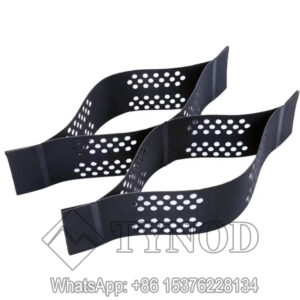

Composite geogrids are among the most effective geosynthetic solutions for reinforcing unbound base course layers in road and highway construction. They improve load distribution, reduce deformation, and extend pavement service life. However, selecting the correct composite geogrid for road reinforcement requires understanding differences in geometry, mechanical performance, installation conditions, and design requirements.
This article gives a professional, engineering-focused guide on how to choose the right composite geogrid for roads, comparing common models and explaining what matters most in practical applications.
1. What Is a Composite Geogrid?
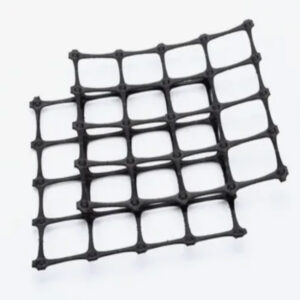
A composite geogrid typically refers to a geogrid that combines multiple materials or structural features to enhance reinforcement performance. Examples include:
- Triangular / TX geogrids — optimized aperture geometry for aggregate interlock
- Biaxial composite geogrids — multi-directional tensile reinforcement
- Coated/laminated geogrids — added durability, UV resistance, or bonding enhancement
Composite geogrids are widely used in:
- Flexible pavements
- Heavy-traffic road networks
- Industrial and logistics pavement sub-bases
- Base stabilization over weak soils
The goal is to improve stiffness, tensile strength, and aggregate interlock to better distribute wheel loads and reduce rutting.
2. Key Technical Factors composite geogrid for road reinforcement
When choosing a composite geogrid for roads, the most important parameters include:
a) Tensile Strength
Measured in kN/m — higher values indicate greater load-bearing capacity.
- Low strength (e.g., 30–40 kN/m): suitable for light traffic or low-volume roads
- Medium strength (e.g., 50–80 kN/m): for secondary highways
- High strength (e.g., 100+ kN/m): for major highways, heavy truck routes, and industrial pavements
b) Modulus (Stiffness)
Indicates resistance to deformation. Higher modulus means better lateral restraint of aggregate and improved load spread.
c) Aperture Geometry
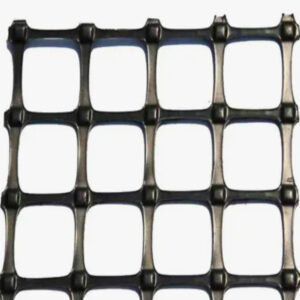
Composite geogrids with optimized aperture shapes (e.g., triangular) provide superior aggregate interlock, which is critical for base course performance.
d) Junction Efficiency
Good junction efficiency ensures the geogrid ribs act as a unified reinforcement network under load.
e) Durability
Resistance to installation damage, environmental conditions, and chemical/biological degradation.
3. Composite Geogrid Models Compared
Below is a practical comparison of typical composite geogrid types you might choose for roads:
| Model Type | Tensile Strength | Best For | Key Advantage |
|---|---|---|---|
| TX Triangular Composite Geogrid | Medium to High | Heavy traffic roads | Superior aggregate interlock |
| Biaxial Composite Geogrid | Medium | Low to medium traffic | Multidirectional reinforcement |
| High-Modulus Composite Geogrid | High | Major highways & industrial pavements | Maximum stiffness & load spread |
| Coated / Laminated Geogrid | Variable | Harsh environments | Enhanced durability & bonding |
4. When to Choose Each Model
TX Triangular Composite Geogrid
Best choice when:
- High aggregate interlock is critical
- Traffic intensity is medium to high
- Base layers are thin
- Pavement needs improved load distribution
TX geogrids improve mechanical interaction with aggregate, helping to prevent rutting and deformation under repeated loads.
Biaxial Composite Geogrid
Best for:
- Lower traffic volumes
- Reinforcing multiple directions in shallow base layers
- Budget-sensitive projects
Biaxial models provide balanced tensile strength in longitudinal and transverse directions — beneficial for general base stabilization.
High-Modulus Composite Geogrid
Best when:
- Heavy truck traffic or high axle loads exist
- Subgrade support is weak
- Long service life is required
This model achieves maximum stiffness and load distribution, reducing the design thickness of unbound layers and lowering life-cycle cost.
Coated / Laminated Geogrid
Choose when:
- Installation conditions are rough (e.g., gravel haul roads)
- There are exposure concerns (UV, chemicals)
- Long-term durability matters
Coatings enhance life expectancy and maintain reinforcement properties under adverse conditions.
5. Engineering Design Considerations
Selecting the right model should align with pavement structural design. Consider:
Traffic Loading
Use AADT (annual average daily traffic) and equivalent single axle loads (ESALs) to determine design severity.
Subgrade Strength
Weak subgrade (low CBR/PI) increases demand for geogrid stiffness and tensile performance.
Aggregate Properties
Well-graded, angular aggregates interlock better with composite geogrid apertures.
Design Life
Higher performance geogrids extend maintenance intervals and can yield lower life-cycle costs even if initial material cost is higher.
6. Installation Guidelines
To get full performance benefits, follow these practices:
- Level and compact the subgrade before geogrid placement
- Lay geogrid taut and flat — avoid wrinkles
- Overlap rolls per engineering specification
- Place aggregate carefully — avoid dragging that could damage the grid
- Compact in controlled lifts to manufacturer specifications
Proper installation ensures that design tensile forces are fully mobilized and that composite geogrid reinforcement performs as intended.
7. Practical Project Examples
Below are typical scenarios and recommended models:
Low-Volume Rural Road
- Light traffic
- Moderate subgrade quality
Recommended: Biaxial composite geogrid
Bus Terminal or Municipal Road
- Medium traffic
- Mixed load types
Recommended: TX triangular composite geogrid
Heavy Truck/Industrial Pavement
- High axle loads
- Weak subgrade
Recommended: High-modulus composite geogrid
Harsh Environment Pavement
- Exposure to chemicals, moisture
Recommended: Coated / laminated geogrid
8. Cost vs. Performance Considerations
Higher performance models generally cost more per unit area, but:
- They often reduce total base thickness
- They can reduce maintenance cycles
- They improve long-term serviceability
A life-cycle cost analysis often shows that choosing a higher-performance composite geogrid for demanding projects yields better economic value.
9. Conclusion
Choosing the right composite geogrid for road reinforcement depends on project demands:
✔ Traffic load intensity
✔ Subgrade condition
✔ Aggregate interaction requirements
✔ Design life expectations
✔ Installation and environment conditions
In most medium to heavy traffic road applications, triangular composite geogrids provide the best balance of aggregate interlock and load distribution. For extremely heavy loads or poor subgrades, high-modulus composite geogrids are recommended. Biaxial models remain suitable for lighter pavement reinforcement.
Matching the geogrid model to engineering requirements ensures improved pavement performance, fewer failures, and lower total cost of ownership over the pavement lifecycle.