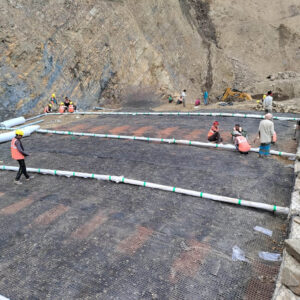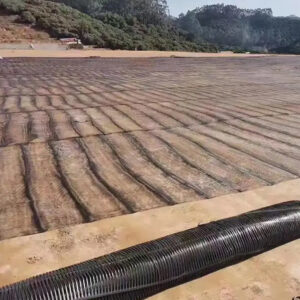
Slope stability and vegetation restoration are crucial for infrastructure safety, environmental conservation, and long-term erosion control. In many civil engineering and ecological projects, coir blanket for slope re-vegetation has become a widely applied solution due to its natural fiber strength, biodegradability, and facilitation of vegetation growth. This article provides a comprehensive technical insight into how coir blankets work, why they are effective, where they are used, and how they compare to synthetic geomats.
1️⃣ What Is a Coir Blanket for Slope Re-Vegetation?
A coir blanket, also known as a coir erosion control mat, is manufactured from long coconut fibers derived from the husk of coconut shells. The fibers are mechanically woven into a net-like structure, typically supported by jute or biodegradable mesh for stability.
✔ Technical Features
- Fiber type: natural coir (coconut husk fibers)
- Thickness: 8–15 mm standard
- Mass per unit area: 400–900 g/m²
- Tensile strength: 7–20 kN/m (depending on weave)
- Degradation life: 3–5 years (slow biodegradation rate)
- Water absorption: high moisture retention
- UV performance: naturally resistant
This makes coir erosion control mats different from straw or jute, which degrade much faster and offer weaker structural consistency.
2️⃣ Why Is Coir Blanket Highly Effective for Slope Re-Vegetation?
Coir blankets provide a triple protection mechanism:
| Stage | Condition | Coir Blanket Functional Role |
|---|---|---|
| Initial stage | Soil bare, no roots yet | Physical erosion shield |
| Middle stage | Seed germination | Moisture retention + temperature buffering |
| Long-term stage | Roots expanding | Structural reinforcement + biodegradation into fertilizing humus |
Thus, coir blanket for slope re-vegetation supports both erosion control and plant ecological restoration at the same time.
3️⃣ Engineering Functions of Coir Blankets
🎯 3.1 Soil Erosion Control
- Reduces shear stress from rain splash and surface runoff
- Maintains soil integrity during high-rainfall events
- Prevents sediment transportation into downstream waterways
Coir fiber’s rough texture enhances friction against the soil, improving slope surface stability.
🌱 3.2 Vegetation Enhancement
- Retains water around seeds → improved germination rate
- Allows sunlight penetration to promote photosynthesis
- Maintains soil temperature for root development
- Prevents seed wash-off from rainfall or wind
🧩 3.3 Soil Reinforcement and Protection
As plants root through the coir geotextile:
- Roots intertwine with fibers
- A natural soil-fiber-root composite system forms
- Provides long-term slope stabilization even after the blanket degrades
🔥 3.4 UV and Weather Durability
Coir fiber has lingin content >45%, which provides:
- Strong UV resistance
- Slow biodegradation (3–5 years)
- Sustained protection until vegetation fully matures
This lifespan is ideal for permanent slope revegetation.
4️⃣ Performance Comparison With Other Slope Stabilization Solutions
| Property | Coir Blanket | Jute Blanket | Straw Mat | Synthetic Geomat |
|---|---|---|---|---|
| Biodegradability | ★★★★★ | ★★★★☆ | ★★★☆☆ | ★☆☆☆☆ |
| Durability | ★★★★☆ | ★★★☆☆ | ★★☆☆☆ | ★★★★★ |
| Strength on Steep Slopes | ★★★★☆ | ★★★☆☆ | ★★☆☆☆ | ★★★★★ |
| Vegetation Growth Support | ★★★★★ | ★★★★☆ | ★★☆☆☆ | ★★★☆☆ |
| Environmental Value | ★★★★★ | ★★★★★ | ★★★★★ | ★★☆☆☆ |
Coir geomat offers the best balance of environmental protection and mechanical strength.
5️⃣ Applications of Coir Blanket for Slope Re-Vegetation
Coir erosion control mats are suitable for:
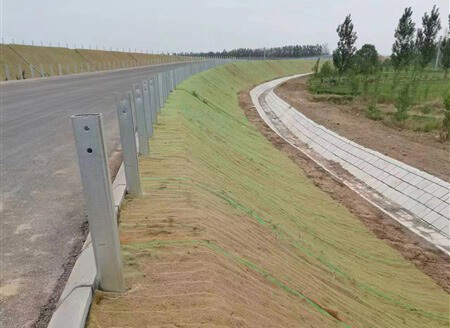
- Highway and Railway Embankments
- Riverbanks and Shorelines
- Landfills and Reclamation Slopes
- Mine Site Ecological Rehabilitation
- Coastal Dune Stabilization
- Desertification Control Projects
- Parks and Landscape Restoration
Its flexibility allows application on various slope geometries including steep or irregular surfaces.
6️⃣ Installation Guidelines for Maximum Effectiveness
1️⃣ Soil should be prepared — smooth, loose, seeded/fertilized
2️⃣ Lay the coir blanket with fiber contact to soil
3️⃣ Ensure full contact without air gaps
4️⃣ Anchor using wooden or steel pegs (recommend spacing 0.5–1.0 m)
5️⃣ Overlap edges by at least 10 cm
6️⃣ Watering after installation ensures successful seed settling
These installation practices significantly enhance vegetation restoration results.
7️⃣ Expected Longevity and Biodegradation Behavior
The coir erosion control mat lifespan typically follows:
| Year | Condition | Function |
|---|---|---|
| 0–6 months | High tensile strength | Primary erosion control |
| 6–18 months | Gradual fiber decomposition | Roots reinforce slope |
| 18–36 months | Stable vegetation coverage | Permanent stabilization |
| 36–60 months | Full biodegradation | Soil fertility improvement |
This aligns perfectly with permanent ecological engineering timelines.
8️⃣ Case Study Insights: Coir Blanket Effectiveness
A highway embankment project using coir geotextile demonstrated:
| Parameter | Before Installation | After 9 Months |
|---|---|---|
| Vegetation Coverage | <5% | >85% |
| Soil Loss per Season | 21 t/ha | 2.5 t/ha |
| Slope Stability | Poor | Stable & reinforced |
| Maintenance Cost | High | Very low |
These results highlight the functional effectiveness of coir blanket for slope re-vegetation in real-world engineering.
9️⃣ Advantages & Limitations Summary
✔ Key Advantages
- Long-lasting biodegradable erosion protection
- Excellent water retention and growing conditions
- Strong natural fiber strength for slope stability
- Eco-friendly and supports carbon-neutral strategies
- Compatible with most plant species
❗ Limitations
- Higher initial cost than straw/jute
- Requires correct anchoring on very steep slopes
- Gradual degradation may vary with climate
Even with these limitations, it remains the preferred green solution for permanent slope vegetation projects.
How Effective Is Coir Blanket for Slope Re-Vegetation?
10️⃣ Standards, Specifications & Quality Parameters
To ensure expected engineering performance, coir erosion control mats should conform to recognized international standards such as:
- ASTM D6475 – Breaking tensile strength
- ASTM D4595 – Wide-width tensile properties
- ASTM D5261 – Unit weight testing
- EN 13253 – Erosion control products for earthworks
- ISO 10319 – Geotextile tensile testing
- BS 8661 – Environmental erosion control applications
Key Quality Indicators of Coir Blanket for Slope Re-Vegetation
| Parameter | Typical Value | Function |
|---|---|---|
| GSM (mass) | 400–900 g/m² | Determines strength & lifespan |
| Tensile Strength | 7–20 kN/m | Stability against erosion |
| Fiber Length | 15–30 cm | Soil interlocking |
| Thickness | 8–15 mm | Protection cover |
| Mesh Size | 1.5–4.5 cm | Seed retention & drainage |
| Degradation Life | 3–5 years | Long-term ecological support |
Proper certification assures buyers of reliable slope reinforcement and vegetation performance.
11️⃣ Environmental Sustainability Contribution
The main purpose of a biodegradable erosion control blanket made from coir is environmental regeneration. Sustainability benefits include:
🌍 Ecological Advantages
- 100% natural coconut fiber — no microplastic pollution
- Improves soil organic matter after decomposition
- Promotes carbon sequestration through vegetation growth
- Rehabilitates degraded land & prevents desertification
- Supports biodiversity and ecosystem restoration
♻ Circular Economy Value
- Coconut husk is an agricultural by-product
- Reusing waste reduces landfill disposal
- Production energy consumption is low vs. synthetic materials
Thus, coir geomats align with global green infrastructure goals and ESG engineering requirements.
12️⃣ Hydraulic and Hydrological Effects
On slopes with heavy rainfall, water runoff contributes significantly to erosion.
Coir blanket for slope re-vegetation provides:
✔ Increased Manning’s roughness coefficient
✔ Reduced runoff velocity
✔ Enhanced vertical water infiltration
✔ Improved drainage to prevent surface saturation
✔ Moisture balance ideal for plant germination
By acting as a temporary hydraulic regulator, the blanket prevents soil wash-out while encouraging deeper root penetration.
13️⃣ Design Guidelines for Different Slope Conditions
| Slope Gradient | Recommended Coir Blanket Specification | Anchoring Requirements | Additional Notes |
|---|---|---|---|
| 1:3 or gentler | 400–600 g/m² | 3–4 pins/m² | Standard vegetation slopes |
| 1:2 slopes | 600–700 g/m² | 4–6 pins/m² | Higher rainfall zones |
| 1:1.5 steep slopes | 700–900 g/m² | 6–10 pins/m² | May require turf reinforcement mat combination |
| >1:1.5 cliff surfaces | Dense reinforced mat + soil nails | Engineering evaluation required | Vegetation species selection important |
When slopes exceed 45°, coir blanket should be combined with:
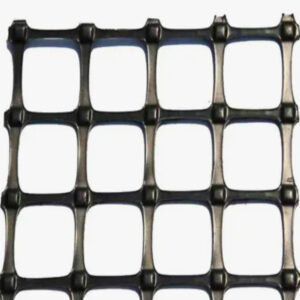
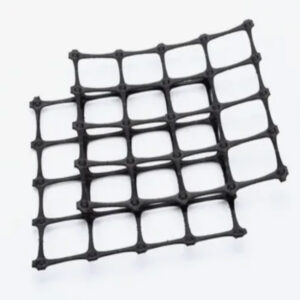
- coir geogrid
- hydraulic seeding
- geostrap reinforcement
- bio-engineering retaining strategies
14️⃣ Best Vegetation Selection for Coir Erosion Control Mats
Recommended Plant Types
- Native grasses (e.g., Bermuda grass, Ryegrass)
- Shrub seedlings with strong root systems
- Fast-growing ground cover species
- Wetland species for riverbanks (e.g., Vetiver grass)
- Wildflowers for landscaping rehabilitation
The blanket stabilizes early-stage soil so root systems can later provide permanent reinforcement.
15️⃣ Risk Management — Failures & Preventive Measures
While highly effective, improper design or installation can reduce performance.
Common Issues & Solutions
| Risk | Cause | Prevention |
|---|---|---|
| Blanket slippage | Insufficient anchoring | Increase anchor density and overlap |
| Poor vegetation growth | Incorrect seed choice or low watering | Select native species & irrigation plan |
| Premature degradation | Low-quality fiber | Ensure certified coir content |
| Soil erosion under blanket | Uneven soil contact | Compact and smooth slope before installation |
A design-build-maintenance lifecycle approach ensures effectiveness.
16️⃣ Cost Efficiency & Lifecycle Value
Coir blanket solutions reduce costs by:
✔ Lower maintenance requirements
✔ Eliminating concrete or rip-rap in many cases
✔ Long-term slope stabilization without replacement
✔ Environmental compliance avoiding penalties
Lifecycle economic benefit is significantly higher than cheap short-life products like straw mats.
| Solution Type | Initial Cost | Maintenance | Service Life | Cost-Benefit Score |
|---|---|---|---|---|
| Coir Blanket | Medium | Very Low | 3–5+ Years | ★★★★★ |
| Straw Mat | Low | High | <1 Year | ★★☆☆☆ |
| Synthetic Geomat | High | Low | 10+ Years | ★★★★☆ |
Coir erosion control mat remains the best value for natural revegetation engineering.
17️⃣ Future Development of Coir-Based Bioengineering Materials
Growth of eco-restoration technology is accelerating:
Emerging innovations include:
- Coir + biodegradable PLA hybrid geotextiles
- Pre-seeded coir vegetation mats
- Coir composites with microbial soil enhancers
- Smart moisture-retaining coatings
These innovations will further extend the application of coir blanket for slope re-vegetation into demanding climate zones.
Final Engineering Conclusion
Coir blanket for slope re-vegetation is a scientifically proven, environmentally compliant, and durable erosion control solution that:
- Physically stabilizes soil from day one
- Supports rapid and healthy vegetation establishment
- Provides root-reinforced, long-term slope stability
- Biodegrades into beneficial organic matter
- Reduces maintenance and environmental risks
Coir erosion control mats represent the ideal balance between strength, sustainability, vegetation success, hydraulic protection, and economic viability for modern slope engineering.
⭐ Recommended for:
Highways | Railways | Landfills | Mines | Riverbanks | Coastal Slopes | Ecological Parks