Introduction
Soil instability is a common challenge in civil and geotechnical engineering projects, particularly in road construction, embankments, foundations, and working platforms built over weak or variable subgrades. Excessive deformation, loss of bearing capacity, and progressive settlement can compromise structural performance and significantly increase maintenance costs. To address these challenges, engineers increasingly specify composite geogrid 20-200 for soil stabilization as a reliable and cost-effective reinforcement solution.
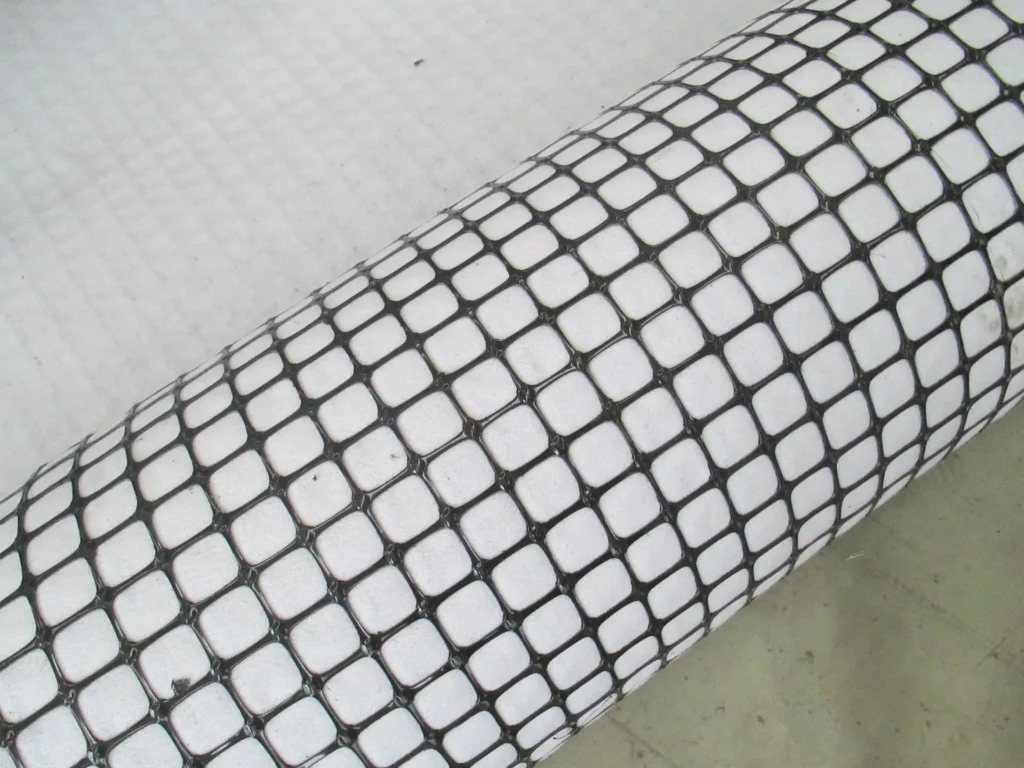
Composite geogrid 20-200 integrates the tensile reinforcement function of a geogrid with the separation and filtration capabilities of a geotextile. This combined structure allows the material to simultaneously improve load distribution, restrict soil movement, and maintain subgrade integrity. As a result, composite geogrid 20-200 plays a critical role in enhancing soil stability under both static and dynamic loading conditions.
This article provides a comprehensive engineering explanation of how composite geogrid 20-200 improves soil stability, focusing on reinforcement mechanisms, interaction with soil, and performance benefits across common applications.
What Is Composite Geogrid 20-200?
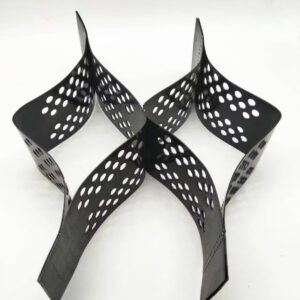
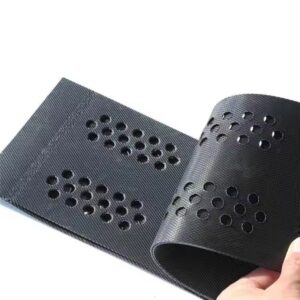
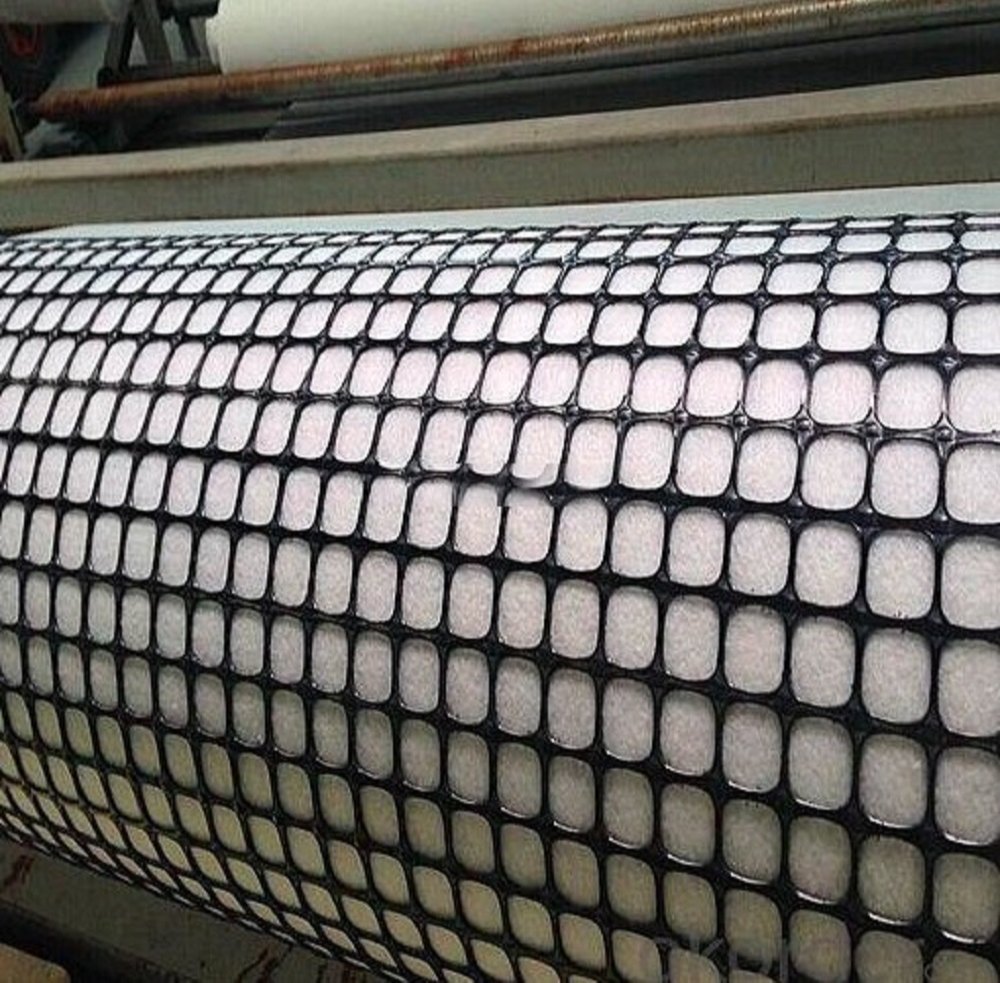
Composite geogrid 20-200 is a geosynthetic reinforcement product formed by bonding a biaxial geogrid with a nonwoven or woven geotextile. The designation “20-200” typically refers to a tensile strength of approximately 20 kN/m in the principal directions of the geogrid combined with a geotextile mass of around 200 g/m².
This configuration creates a multifunctional material capable of providing:
- Tensile reinforcement through the geogrid structure
- Separation between aggregate layers and subgrade soils
- Filtration to prevent fine soil migration
- Improved constructability over weak ground
The synergy between these functions is the foundation of composite geogrid 20-200 for soil stabilization.
Key Components and Their Roles
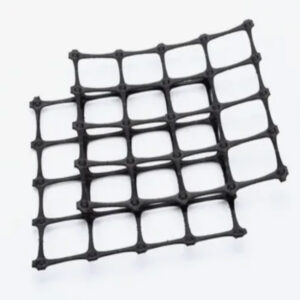
Biaxial Geogrid Layer
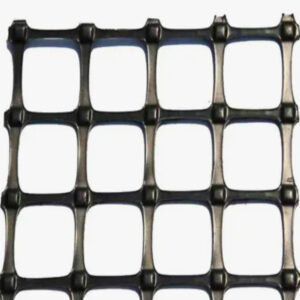
The geogrid layer provides tensile reinforcement in two orthogonal directions. This allows composite geogrid 20-200 to resist lateral soil movement and distribute applied loads over a wider area.
Geotextile Layer
The geotextile layer performs separation and filtration functions. It prevents fine-grained soils from pumping into the aggregate layer while allowing water to pass through, maintaining drainage and long-term stability.
Together, these layers create an integrated system that significantly enhances soil performance.
How Does Composite Geogrid 20-200 Improve Soil Stability?
The effectiveness of composite geogrid 20-200 in soil stabilization results from several interrelated reinforcement mechanisms.
Tensile Reinforcement and Lateral Restraint
When loads are applied to soil, particles tend to move laterally, leading to deformation and reduced bearing capacity. The geogrid component of composite geogrid 20-200 for soil stabilization provides tensile resistance that restrains this lateral movement.
By interlocking with aggregate particles, the geogrid mobilizes tensile forces that confine the soil mass and improve its apparent stiffness.
Load Distribution and Bearing Capacity Improvement
Composite geogrid 20-200 spreads applied loads over a larger area, reducing stress concentrations on weak subgrades. This load distribution mechanism increases effective bearing capacity and minimizes differential settlement.
As a result, thinner aggregate layers can often be used without compromising performance.
Separation and Prevention of Soil Mixing
One of the most important contributions of the geotextile layer is separation. Without separation, fine soils migrate into aggregate layers under traffic loading, leading to loss of strength and rutting.
Composite geogrid 20-200 prevents this contamination, preserving aggregate integrity and long-term soil stability.
Filtration and Drainage Control
The geotextile component allows water to pass while retaining soil particles. This filtration function prevents pore pressure buildup and reduces the risk of softening and instability in saturated conditions.
Effective drainage is essential for maintaining soil stability over the design life of the structure.
Soil–Geogrid Interaction Mechanisms
Aggregate Interlock
The apertures of the geogrid allow aggregate particles to penetrate and lock into the grid structure. This mechanical interlock enables efficient load transfer between soil and reinforcement.
Confinement Effect
As lateral movement is restricted, the soil mass experiences increased confinement, leading to higher shear strength and reduced deformation.
These interaction mechanisms are central to the performance of composite geogrid 20-200 for soil stabilization.
Performance Under Traffic and Cyclic Loading
In roadways and working platforms, soils are subjected to repeated cyclic loading. Composite geogrid 20-200 reduces permanent deformation by maintaining aggregate confinement and preventing progressive shear failure.
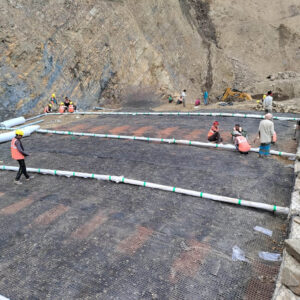
This makes the material particularly effective for access roads, construction platforms, and temporary haul roads.
Typical Applications
Road Base and Subbase Stabilization
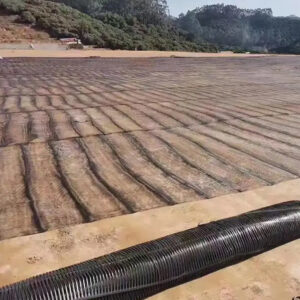
Composite geogrid 20-200 improves load distribution and reduces rutting in road base layers constructed over weak subgrades.
Embankments on Soft Soil
In embankment construction, composite geogrid 20-200 enhances stability by reinforcing the foundation soil and controlling lateral spreading.
Industrial Yards and Storage Areas
Heavy loads from containers and equipment require stable ground conditions. Composite geogrid 20-200 provides reliable reinforcement under these demanding conditions.
Comparison With Single-Layer Solutions
Composite Geogrid vs Geotextile Alone
- Higher bearing capacity improvement
- Better rutting resistance
- Enhanced load distribution
Composite Geogrid vs Biaxial Geogrid Alone
- Added separation and filtration
- Reduced risk of soil contamination
- Improved long-term stability
These comparisons highlight why composite geogrid 20-200 for soil stabilization is widely adopted.
Design Considerations
Subgrade Strength
The benefits of composite geogrid 20-200 are most pronounced over weak or soft subgrades.
Aggregate Thickness
Proper design ensures adequate aggregate thickness to maximize interlock and load distribution.
Installation Quality
Correct placement, tensioning, and overlap are critical to achieving expected performance.
Standards and Engineering Practice
Composite geogrid 20-200 is commonly specified in accordance with:
- AASHTO pavement design guidelines
- ISO and ASTM geosynthetics standards
- National highway authority specifications
Field performance data consistently supports its effectiveness in soil stabilization.
Economic and Long-Term Benefits
By improving soil stability and reducing deformation, composite geogrid 20-200 lowers life-cycle costs through:
- Reduced maintenance
- Extended service life
- Optimized material usage
Conclusion
Composite geogrid 20-200 for soil stabilization improves ground performance through tensile reinforcement, load distribution, separation, and filtration. By combining multiple geosynthetic functions into a single product, it provides a robust and efficient solution for stabilizing weak soils under a wide range of loading conditions.
For engineers, contractors, and infrastructure owners, composite geogrid 20-200 represents a technically sound and economically advantageous approach to soil stabilization.