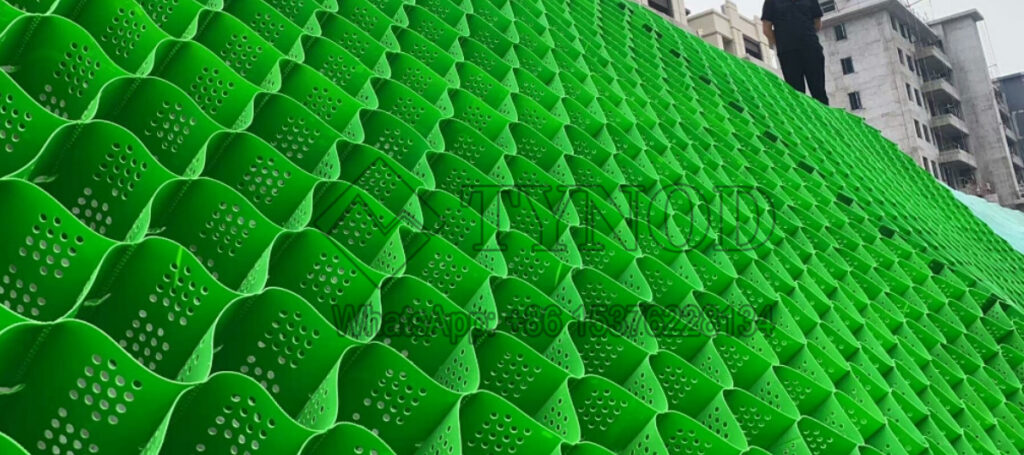
Slope instability, erosion, and soil failure are persistent challenges in civil and geotechnical engineering. From highway embankments and railway cuttings to landfills and riverbanks, maintaining slope integrity is critical for safety, performance, and long-term cost control. Over the last two decades, HDPE geocell for slope protection has emerged as one of the most effective and widely adopted solutions to address these challenges.
This article explains why HDPE geocell systems are increasingly specified for slope protection projects, how they function, and when they deliver the greatest engineering value.
Understanding HDPE Geocell for Slope Protection
Before evaluating performance, it is important to clearly understand what HDPE geocell for slope protection actually is.
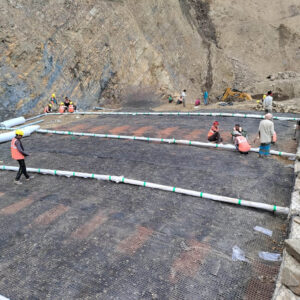
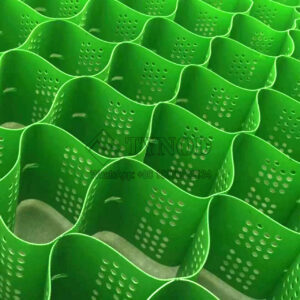
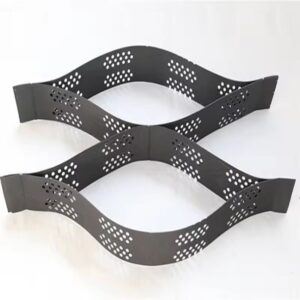
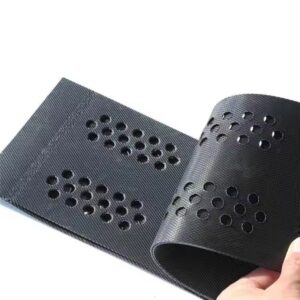
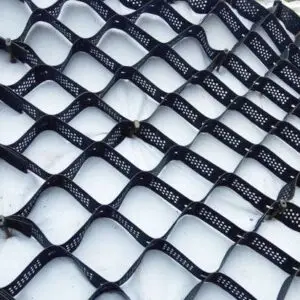
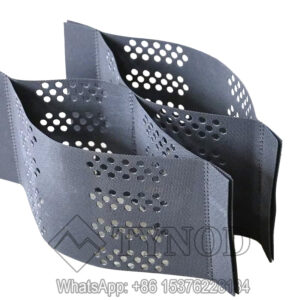
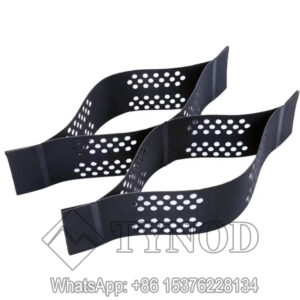
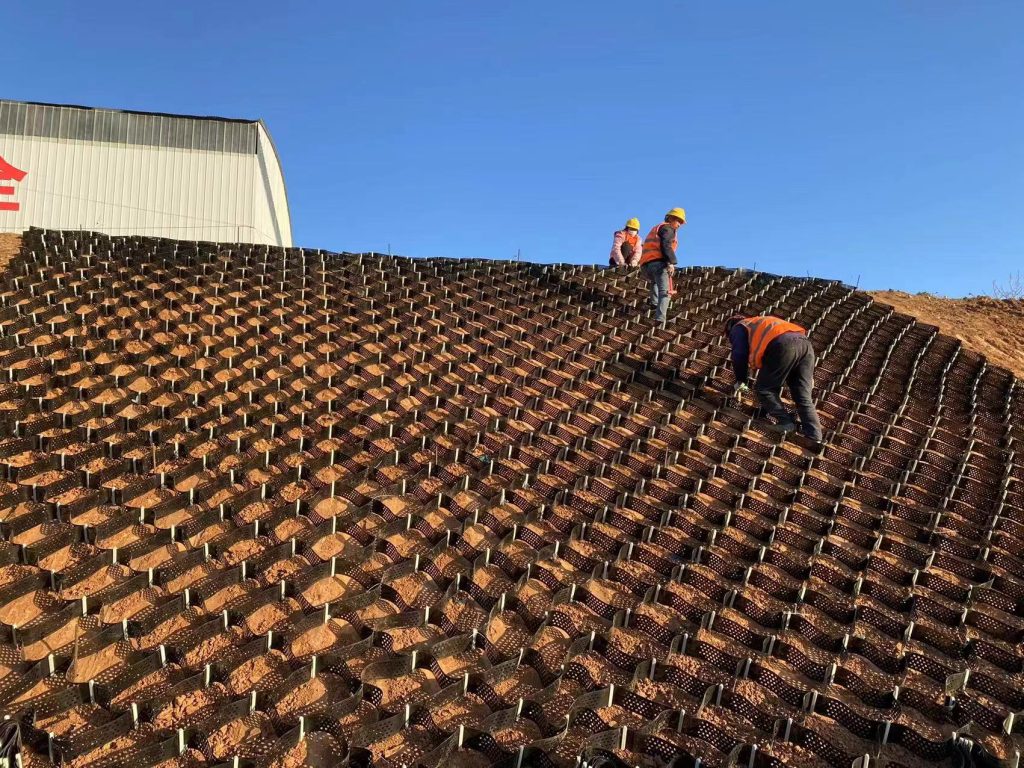
HDPE geocell is a three-dimensional cellular confinement system manufactured from high-density polyethylene sheets that are ultrasonically welded to form a honeycomb structure. When expanded on-site and filled with soil, aggregate, or concrete, the system creates a stable, load-distributing, and erosion-resistant layer across the slope surface.
Unlike traditional surface protection methods, geocells work by confining material in three dimensions, which significantly improves shear resistance, slope stability, and surface durability.
Why Slopes Fail Without Proper Protection
Slope failure rarely occurs suddenly. In most cases, it is the result of progressive degradation caused by environmental and mechanical factors, including:
- Rainfall infiltration and surface runoff
- Loss of soil cohesion
- Freeze–thaw cycles
- Wind erosion
- Vegetation loss
- Repeated loading or vibration
- Inadequate drainage
Traditional slope protection methods such as riprap, concrete lining, or simple vegetation often address only one aspect of the problem. HDPE geocell for slope protection, by contrast, provides a comprehensive mechanical solution that stabilizes the soil mass while protecting the slope surface.
How HDPE Geocell for Slope Protection Works
1. Three-Dimensional Soil Confinement
The defining feature of HDPE geocell systems is three-dimensional confinement. Once the cells are filled, each individual cell restricts lateral movement of the infill material. This confinement:
- Increases internal friction
- Improves shear strength
- Reduces soil displacement
- Prevents surface sliding
This mechanism is particularly important on steep slopes where gravity-driven soil movement is a constant risk.
2. Load Transfer and Stress Distribution
On slopes exposed to traffic loads, construction equipment, or dynamic forces, HDPE geocell for slope protection distributes stress across the entire cellular network rather than concentrating it at isolated points. This prevents localized failures and surface deformation.
3. Surface Erosion Control
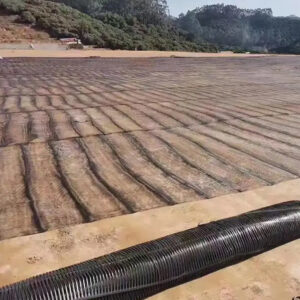
Rainfall and runoff are major causes of slope degradation. Geocells interrupt water flow paths and reduce surface velocity, allowing water to dissipate energy before it can wash away soil. When combined with vegetated infill, geocells create a reinforced green slope with long-term erosion resistance.
4. Integration with Vegetation
Unlike rigid slope protection systems, HDPE geocell for slope protection works exceptionally well with vegetation. The cell walls protect root systems, retain moisture, and prevent soil loss during early growth stages, resulting in faster and more reliable vegetation establishment.
Key Advantages of HDPE Geocell for Slope Protection
Superior Structural Stability
Geocells convert loose slope materials into a mechanically stable layer capable of resisting sliding, slumping, and surface erosion even under severe environmental conditions.
High Adaptability to Slope Geometry
HDPE geocell systems easily conform to complex slope shapes, variable gradients, and curved surfaces. This flexibility makes them suitable for both engineered slopes and natural terrain.
Reduced Material Requirements
By confining locally available soil, HDPE geocell for slope protection significantly reduces the need for imported aggregate or concrete, lowering material costs and environmental impact.
Long Service Life
HDPE material offers excellent resistance to UV radiation, chemicals, moisture, and biological degradation. Properly designed systems can perform effectively for decades with minimal maintenance.
Environmentally Responsible Solution
Geocells support vegetation growth, reduce carbon-intensive material usage, and minimize landscape disruption, making them suitable for environmentally sensitive projects.
Common Applications of HDPE Geocell for Slope Protection
Road and Highway Embankments
Geocells stabilize embankment slopes, prevent erosion from rainfall, and protect road infrastructure from slope failure.
Railway Cuttings and Fill Slopes
Railway slopes experience vibration and dynamic loading. HDPE geocell for slope protection enhances surface stability while allowing drainage and vegetation growth.
Riverbanks and Channel Slopes
Geocells protect slopes from hydraulic erosion while allowing natural water interaction and ecological restoration.
Landfills and Waste Containment Facilities
Slope stability is critical in landfill design. Geocells provide durable surface protection and integrate with geomembrane and drainage systems.
Mining and Industrial Slopes
Heavy rainfall and equipment movement make mining slopes vulnerable. HDPE geocell systems reduce maintenance requirements and improve safety.
Design Considerations for HDPE Geocell Slope Protection
Proper design is essential to achieve optimal performance.
Slope Gradient
Steeper slopes typically require higher cell depth and smaller cell sizes to maximize confinement.
Cell Height
Common heights range from 75 mm to 200 mm. Higher cells provide greater resistance to downslope movement.
Perforated vs Non-Perforated
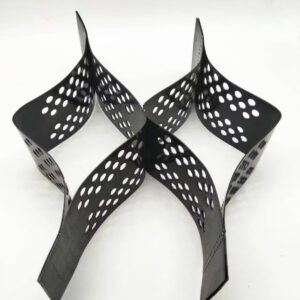
Perforated geocells improve drainage and soil interlock, making them ideal for vegetated slope protection.
Anchoring System
Anchors, tendons, or stakes must be designed to resist gravitational forces and hydraulic uplift.
Infill Material
Soil, sand, gravel, or concrete can be used depending on load requirements and environmental conditions.
Installation Process of HDPE Geocell for Slope Protection
- Slope Preparation
Grade and compact the slope surface. - Geocell Expansion and Placement
Expand panels and secure them at the crest and toe of the slope. - Anchoring
Install anchors according to design spacing and depth. - Infill Placement
Place infill material evenly to avoid cell deformation. - Compaction
Light compaction ensures full confinement without damaging cells. - Vegetation (If Required)
Seed or plant vegetation for ecological integration.
HDPE Geocell vs Traditional Slope Protection Methods
| Method | Limitations | Geocell Advantage |
|---|---|---|
| Riprap | High cost, heavy material | Lightweight, flexible |
| Concrete lining | Poor drainage, cracking | Permeable, adaptable |
| Shotcrete | Expensive, rigid | Soil-friendly, green |
| Vegetation alone | Erosion during early growth | Immediate protection |
Why Engineers Prefer HDPE Geocell for Slope Protection
Engineers favor solutions that balance performance, cost, constructability, and sustainability. HDPE geocell for slope protection satisfies all these requirements by delivering predictable mechanical performance while remaining adaptable to diverse project conditions.
It reduces risk, simplifies construction, and extends service life—three factors that directly influence project success.
Conclusion
The growing adoption of HDPE geocell for slope protection is not accidental. Its three-dimensional confinement mechanism, erosion resistance, structural reliability, and environmental compatibility make it one of the most effective slope stabilization solutions available today.
For projects involving embankments, cut slopes, riverbanks, or environmentally sensitive terrain, HDPE geocell systems provide a proven, cost-efficient, and future-ready approach to slope protection. Contact us now to get a quotation of Tynod HDPE Geocell.