Introduction
Aquaculture pond lining is a critical engineering decision that directly affects water retention, fish health, operational costs, and long-term maintenance. Among the many liner options available, 0.5mm geomembrane for fish ponds is frequently discussed due to its attractive cost and ease of installation. However, a common and valid question arises among fish farm owners, contractors, and material buyers: is a 0.5mm geomembrane strong enough for fish ponds?
The answer is not simply yes or no. The suitability of a 0.5mm geomembrane depends on multiple engineering factors, including subgrade condition, pond size, water depth, fish species, installation quality, and environmental exposure. Understanding the mechanical and durability performance of 0.5mm geomembrane is essential to making an informed decision.
This article provides a comprehensive technical evaluation of 0.5mm geomembrane for fish ponds, analyzing strength, puncture resistance, service life, application limits, and best practices based on engineering principles and field experience.
What Is a 0.5mm Geomembrane?
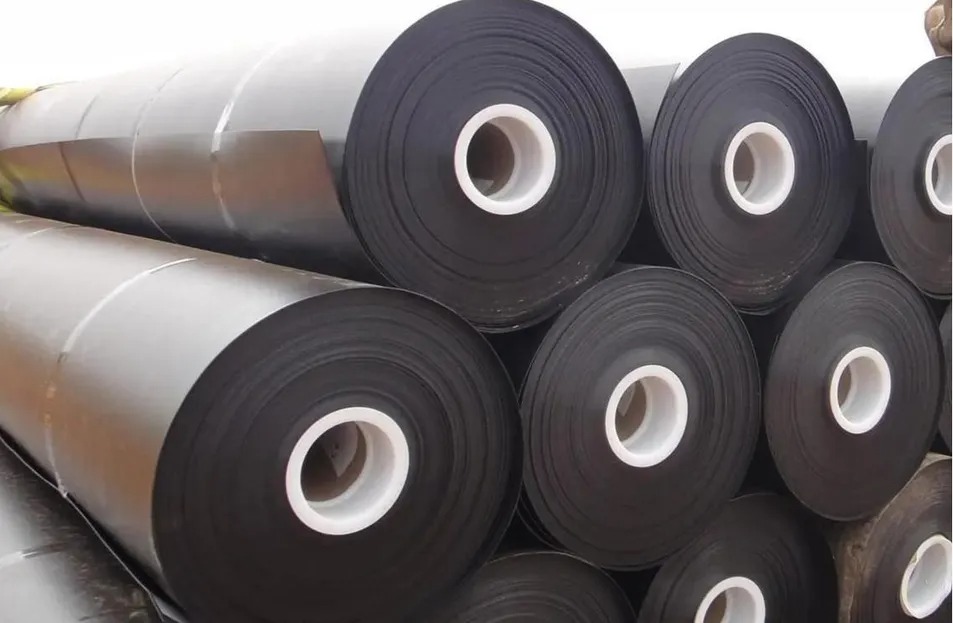
A 0.5mm geomembrane is a thin impermeable polymer liner commonly manufactured from high-density polyethylene (HDPE), linear low-density polyethylene (LLDPE), or PVC. The thickness of 0.5mm (500 microns) places it at the lower end of the geomembrane thickness range typically used in containment and lining applications.
For fish ponds, HDPE and LLDPE geomembranes are most commonly used due to their chemical resistance, UV stability, and durability in continuous water immersion.
Typical Properties of 0.5mm HDPE Geomembrane
- Tensile strength: moderate compared to thicker liners
- Elongation at break: high (especially for LLDPE)
- Impermeability: excellent
- Weight: lightweight and easy to handle
- Cost: relatively low
These characteristics explain why 0.5mm geomembrane for fish ponds is popular in small-scale and budget-sensitive aquaculture projects.
Strength Requirements for Fish Pond Liners
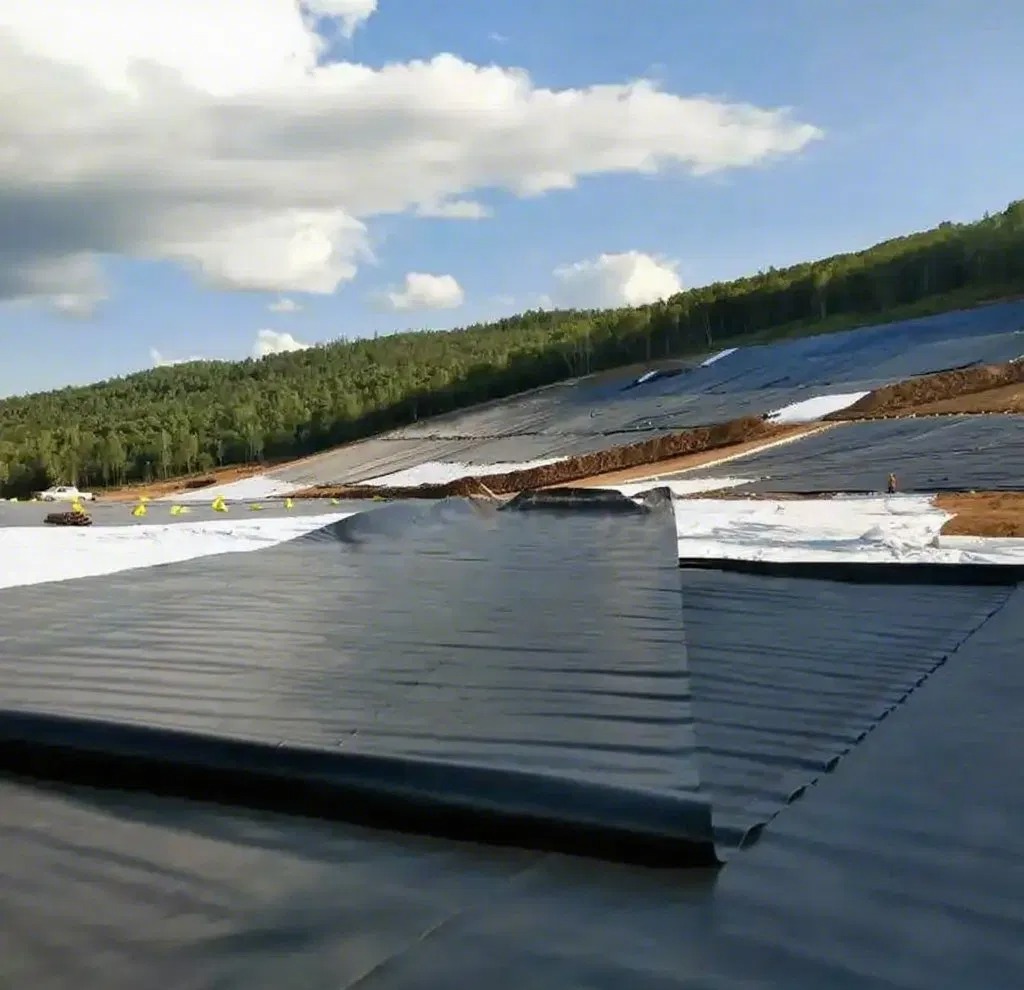
To determine whether a 0.5mm geomembrane is strong enough, it is necessary to understand the actual stresses acting on a fish pond liner.
Key Loads Acting on Pond Liners
- Hydrostatic pressure from stored water
- Subgrade irregularities and settlement
- Foot traffic during maintenance
- Fish activity and equipment contact
- Thermal expansion and contraction
- UV exposure (for exposed liners)
Contrary to common belief, water pressure alone does not typically govern geomembrane failure. Instead, puncture resistance, tear strength, and installation-related damage are often the controlling factors.
Tensile Strength and Elongation Performance
Tensile Strength Considerations
A 0.5mm geomembrane has lower tensile strength than thicker liners such as 0.75mm or 1.0mm geomembranes. However, tensile strength requirements for fish ponds are generally modest, as liners are supported by the underlying soil.
When properly installed on a smooth, well-prepared subgrade, 0.5mm geomembrane for fish ponds can adequately resist tensile stresses caused by water loading and minor ground movement.
Elongation and Flexibility
LLDPE geomembranes at 0.5mm thickness exhibit excellent elongation, allowing them to accommodate minor settlement and deformation without cracking. This flexibility can be advantageous in small ponds with uneven ground.
Puncture Resistance: The Critical Factor
Subgrade Preparation
Puncture resistance is the most critical performance factor for thin geomembranes. Sharp stones, roots, and debris beneath the liner significantly increase puncture risk.
For 0.5mm geomembrane for fish ponds, proper subgrade preparation is essential:
- Removal of sharp objects
- Fine soil bedding or sand layer
- Optional protective geotextile underlay
Without these measures, puncture damage is likely regardless of liner quality.
Operational Puncture Risks
Fish pond operations involve activities that may damage thin liners, including:
- Walking inside empty ponds
- Using nets and equipment
- Aerator installation
- Harvesting operations
In such cases, the margin of safety for a 0.5mm geomembrane is limited.
Durability and Service Life
UV Resistance
If the geomembrane is exposed to sunlight, UV resistance becomes critical. HDPE geomembranes with adequate carbon black content can resist UV degradation, but thinner liners degrade faster if left exposed.
Chemical and Biological Resistance
0.5mm geomembrane for fish ponds performs well in terms of chemical resistance to water, feed residues, and fish waste. Biological attack is generally not a concern for polyethylene geomembranes.
Expected Service Life
- Buried or covered 0.5mm geomembrane: 5–10 years or more
- Fully exposed 0.5mm geomembrane: shorter service life depending on UV exposure
Service life is highly dependent on installation quality and operating conditions.
Pond Size and Water Depth Considerations
Small Fish Ponds
For small ponds with controlled access and limited mechanical activity, 0.5mm geomembrane for fish ponds can be sufficient when installed with care.
Large or Commercial Ponds
In large-scale aquaculture ponds with heavy equipment, frequent harvesting, and higher water depths, thicker geomembranes (0.75mm–1.0mm) are generally recommended to improve safety margins.
Comparison With Thicker Geomembranes
0.5mm vs 0.75mm Geomembrane
- Higher puncture resistance at 0.75mm
- Improved durability
- Higher initial cost
0.5mm vs 1.0mm Geomembrane
- Significantly higher strength and service life at 1.0mm
- Better suited for commercial aquaculture
These comparisons highlight that 0.5mm geomembrane for fish ponds is best suited for low-risk applications.
Installation Best Practices for 0.5mm Geomembrane
To maximize performance, the following best practices are essential:
- Proper subgrade smoothing and compaction
- Use of protective geotextile underlay
- Careful handling during installation
- Avoiding sharp tools and footwear
- Controlled access during maintenance
Following these measures significantly improves the reliability of thin geomembranes.
Economic Considerations
Although 0.5mm geomembrane has a lower upfront cost, repair and replacement costs must be considered. In some cases, investing in a slightly thicker liner provides better long-term value.
When Is 0.5mm Geomembrane Strong Enough?
0.5mm geomembrane for fish ponds is generally strong enough when:
- Pond size is small to medium
- Subgrade is well prepared
- Protective layers are used
- Mechanical activity is limited
- Budget constraints are significant
It may not be suitable for intensive commercial aquaculture without additional protection.
Conclusion
So, is a 0.5mm geomembrane strong enough for fish ponds? The technical answer is that 0.5mm geomembrane for fish ponds can be adequate under controlled conditions, but it offers limited safety margins compared to thicker liners.
For small-scale or low-risk ponds with proper installation and protection, 0.5mm geomembrane provides an economical and functional solution. For larger or more demanding aquaculture operations, thicker geomembranes are recommended to ensure long-term durability and reduced maintenance risk.
Understanding these engineering trade-offs allows pond owners and designers to select the most appropriate liner for their specific application. Contact us now to get a solution of geomembrane.